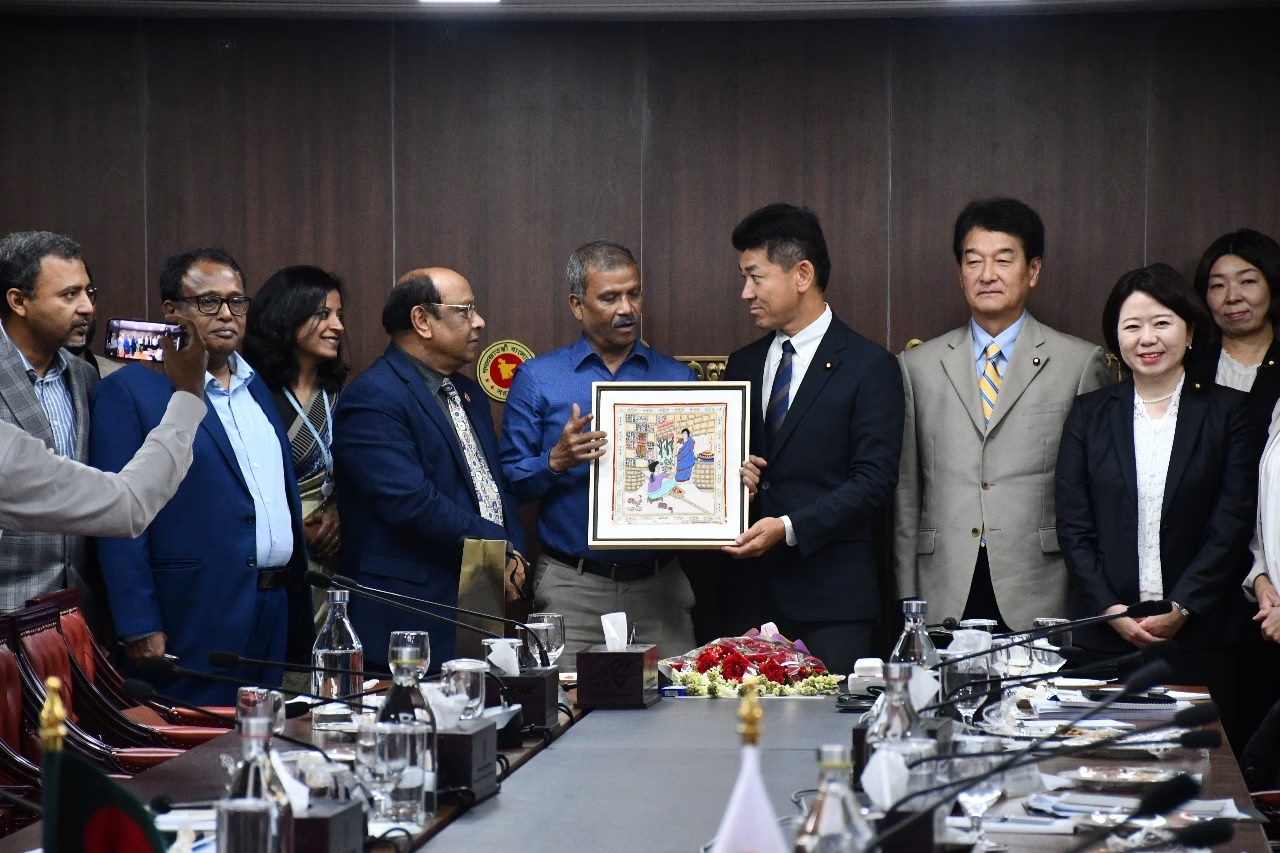

A nine-member delegation of the Japanese Parliamentarian League on ILO activities paid a courtesy visit to Expatriates’ Welfare and Overseas Employment Adviser Dr Asif Nazrul at his office in the ministry in Dhaka on Tuesday.
Michihiro Ishibashi, secretary general of the Constitutional Democratic Party of Japan and a member of the House of Representatives, led the delegation.
During the meeting, they exchanged views on bilateral issues, particularly the sending of skilled workers to Japan.
Asif Nazrul stated that the friendly relations between Bangladesh and Japan have become a unique example on the international stage.

He highlighted Japan’s significant contributions to Bangladesh’s socio-economic development, recalling that Japan was the first country to recognise independent Bangladesh on February 10, 1972.
The adviser also noted that every year, at least 1 million workers from Bangladesh secure employment opportunities abroad, contributing significantly to the country’s economic development.




He also emphasised Bangladesh’s commitment to ensuring safe, orderly, and regular migration under the leadership of Chief Adviser Prof Muhammad Yunus.
Asif Nazrul mentioned that a national steering committee on overseas employment, headed by the chief adviser, is actively working to develop workers’ skills, provide language training, and prepare them for the labour market in Japan.
He also called for Japan’s cooperation in setting up specialised training centres in Bangladesh with the financial support from Japan to ensure quality training and to simplify the visa application process for prospective workers heading to Japan.
He stressed the importance of employing Japanese trainers through JICA for advanced training at existing TTCs in Bangladesh.
Zia Hasan, policy adviser to the Ministry of Expatriates’ Welfare and Overseas Employment, presented the keynote paper.
The paper addressed the challenges and opportunities in sending workers to Japan, future plans, and Bangladesh’s commitment to safe migration.
He pointed out that Japan will need at least 12.2 million workers over the next 15 years to meet demographic challenges.
He emphasised that preparing a large workforce in Bangladesh to tap into this global opportunity is crucial. He also called for the creation of a Bangladesh cell in Japan, post-arrival orientation and help desks for migrants, and the establishment of a specialized skills training zone in Bangladesh for the Japanese market.