The public universities closed early for Ramadan on 9 March, but not for celebratory reasons. The government ordered classes suspended until later in the month to conserve electricity, a drastic measure tied to the global energy crisis triggered by conflict in the Persian Gulf.
Students like Abdullah Al Mahmud Mehedi, a 23-year-old master’s candidate at Dhaka University, said the closures felt less like a holiday and more like disruption.
The concern stems from Bangladesh’s dependence on natural gas, which fuels half of its electricity. Nearly a third of that supply comes from Qatar, and the war has severely disrupted shipments, reports The New York Times.
To manage the shortage, authorities have introduced rolling blackouts and other conservation steps. Without gas, the country risks losing the power that lights homes, and drives factories, threatening its export-based economy.
The crisis coincides with political transition — Tarique Rahman became prime minister in February, following Sheikh Hasina’s ouster in August 2024 after 15 years in power.

Hasina’s downfall was driven by student-led protests over economic mismanagement. Tarique has warned that his government inherits a fragile economy.
Bangladesh’s economic model—garment exports accounting for 85 percent of foreign sales, combined with heavy reliance on imported fuel—makes it vulnerable to global shocks.
The garment industry survived past crises, including the 2013 Rana Plaza collapse and the disruptions from Russia’s invasion of Ukraine, but now faces another test.




Industry leaders argue that overdependence is the country’s weakness. Mohiuddin Rubel, former director of the Bangladesh Garment Manufacturers and Exporters Association, said Bangladesh excels at producing ready-made garments but lacks diversification.
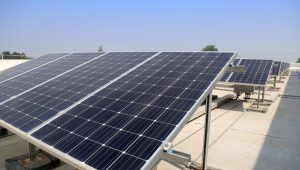
He also criticised the power grid’s limited use of renewable energy. Energy analyst Shafiqul Alam warned that looming gas shortages could force more load shedding, disrupting factories that rely on costly diesel generators as backup.
Summer demand will intensify the strain, with peak consumption expected to exceed 18,000 megawatts by April. Alam urged households to conserve electricity, noting they consume twice as much as factories.
Simple measures, like adjusting air conditioners slightly, could save significant energy. He emphasised the need for public awareness campaigns that encourage conservation without sparking panic.
Diplomatic opportunities may also emerge. Relations with India have been strained since Hasina sought refuge there in 2024, but the country expects monthly diesel shipments from its neighbor. Energy official Aninda Islam Amit described the support as an act of courtesy during crisis.
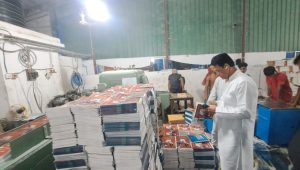
Inside Dhaka’s Export Processing Zone, garment factories enjoy guaranteed electricity, reflecting the priority given to the industry.
Rubel’s factories there are shielded from blackouts, but he acknowledged that businesses outside the zone remain exposed. Many rely heavily on diesel generators to keep operations running.
The present situation highlights the risks of an economy tied so closely to a single export sector and dependent on imported fuel.
The government’s immediate challenge is to balance conservation with industrial needs, while longer-term solutions may require diversifying both the economy and energy sources. For now, the resilience of Bangladesh’s garment industry and the livelihoods it supports faces yet another test.