We are all familiar with the famous TV series Game of Thrones. George R. R. Martin’s iconic story revolves around the pursuit of a throne–one for which many were willing to spill rivers of blood. In many ways, the presidency of the Bangladesh Cricket Board (BCB) has come to resemble something similar.
Barring the bloodshed, the BCB helm has long been a game of thrones driven by power, politics, and control.
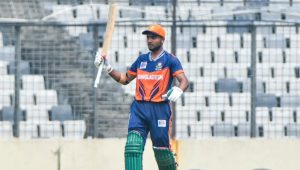
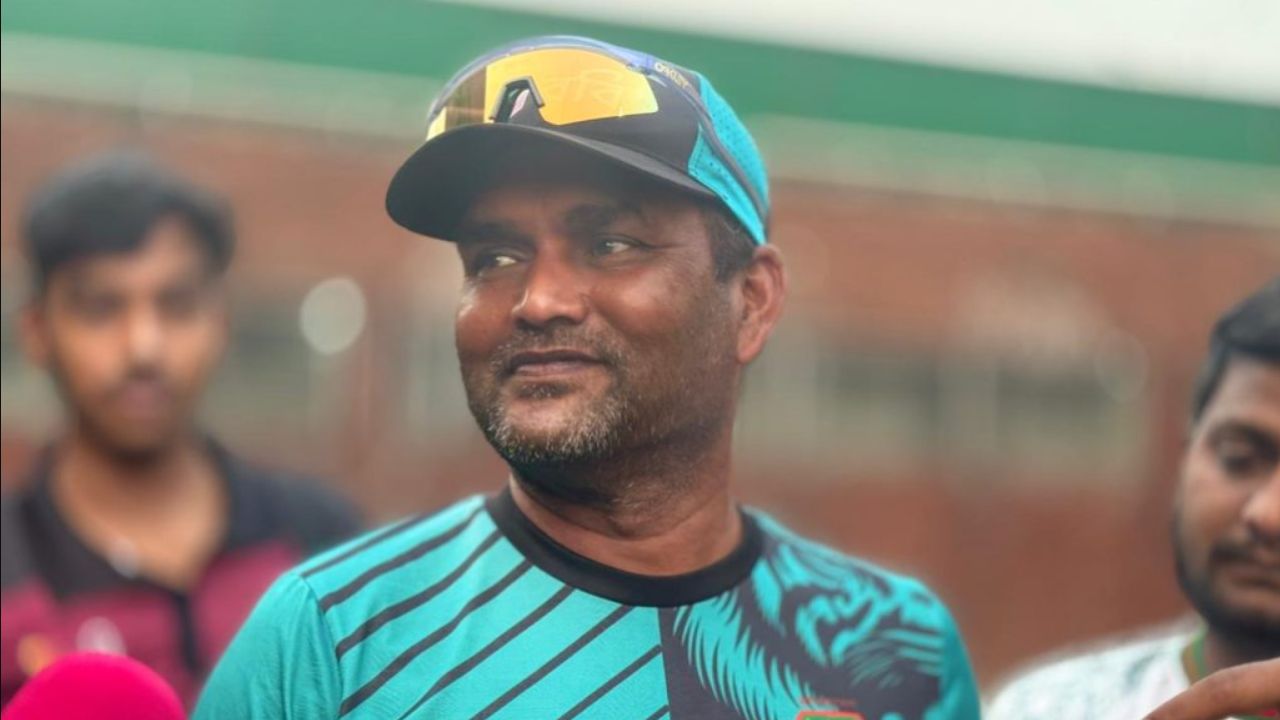
On Tuesday, the National Sports Council (NSC) dissolved the previous BCB board led by Aminul Islam Bulbul, citing irregularities in the last election. In its place, an 11-member ad hoc committee was formed, headed by former captain Tamim Iqbal.
However, several names in the committee immediately drew attention due to their strong links with the Bangladesh Nationalist Party (BNP). Among them are Israfil Khasru, son of BNP leader Amir Khasru Mahmud Chowdhury and a member of the party’s international affairs sub-committee; Syed Ibrahim Ahmed, son of Home Minister Salahuddin Ahmed.
Mirza Yasir Abbas, son of BNP Standing Committee member Mirza Abbas; Barrister Rashna Imam, wife of Bobby Hajjaj; and Fahim Sinha, nephew of BNP leader and former minister Mizanur Rahman Sinha. Fahim Sinha had also served as a director under both the Nazmul Hasan Papon-led board and the interim administration.
Other members include former national captain and chief selector Minhajul Abedin Nannu, former all-rounder and commentator Athar Ali Khan, Tanzim Chowdhury, Salman Ispahani, and Rafiqul Islam Babu.
What makes the development striking is that just days earlier, State Minister for Youth and Sports Aminul Haque had publicly said, “We do not want politicisation in sports in any way. We want a politics-free sporting environment, and I seek everyone’s cooperation to achieve that.”

The composition of the current ad hoc committee has inevitably fueled perceptions of strong BNP influence within the BCB’s power structure. A significant number of members have either direct political affiliations or familial ties to senior BNP figures, creating the impression that the board’s reconstitution aligns closely with the party’s broader network of influence.
While such connections do not automatically determine decision-making, their concentration in a single committee raises questions about neutrality and independence. In a context where the BCB has long been shaped by shifting political power, the present lineup suggests that the balance may once again be tilting toward a politically aligned structure rather than a purely merit-based or cricket-focused administration.
Yet the composition of this ad hoc committee appears to tell a different story. Six of the eleven members, including president Tamim Iqbal, are perceived to be aligned with the BNP. The issue even triggered heated exchanges in Parliament, where opposition MP Hasnat Abdullah alleged, “The way BCB has been captured, it is no longer the Bangladesh Cricket Board–it has become ‘Baper Doa Cricket Board.’”
In response, the Home Minister said, “We have not made any ‘Baper Doa’ or ‘Mayer Doa’ committee. We used to hear of ‘Mayer Doa Paribahan’; today, thanks to the honourable member, we hear of a ‘Baper Doa committee’ as well.” He added that the investigation committee under the sports ministry had found “serious irregularities,” and that bringing in a globally respected cricketer like Tamim Iqbal was part of efforts to correct the system.
Even so, his remarks indirectly underscore the deep political undertones behind the board’s dissolution and reconstitution. Tamim himself is widely perceived to have leaned toward the BNP following his fallout with former sports adviser Asif Mahmud Sajeeb Bhuiyan. Sources suggest he maintains strong ties with BNP leadership, including Tarique Rahman, and has attended several BNP-linked programmes in recent months.




A former BCB director, speaking on condition of anonymity, told Times of Bangladesh, “Tamim is backed by the BNP, it’s an open secret.”
Dr. Sabbir Ahmed, a Political Science professor at the University of Dhaka said to the Times of Bangladesh speaking on the matter, “Ideally, sports and politics should remain separate. While the head of the BCB may have political affiliations, it is essential that they approach the role with professional integrity and view the sport independently of political considerations. The challenge, however, lies in finding individuals who can maintain that distinction, as most people now have some degree of political connection and influence.”
The turbulence within the BCB has intensified amid broader political shifts. Faruque Ahmed was earlier appointed president through NSC nomination, but tensions with the sports adviser quickly surfaced. Within a matter of days, he was removed. His tenure lasted less than nine months, ending with a no-confidence vote from fellow directors.
During that time, the Anti-Corruption Commission launched investigations into alleged financial misconduct by the previous board, leaving the interim administration to deal with the fallout. Faruque, a former captain and World Cup cricketer, was removed in a manner widely seen as humiliating. He threatened legal action and even approached the ICC, but ultimately could not prevail, a reflection of the difficulty of challenging those in power.
Bulbul’s rise followed a similar pattern. Installed directly by the then sports adviser, he initially spoke of ambitious reforms, quick results, long-term planning, decentralisation. He also made it clear his tenure would be short, saying, “I have no ulterior motive to become president again.”
But events that followed painted a different picture. His tenure, in coordination with the adviser, was marked by what critics describe as arbitrariness and abuse of power. The subsequent election that brought his faction to power was later found by an NSC probe committee to be riddled with irregularities.
The investigation uncovered indications of coordinated manipulation of the e-voting process involving the BCB president, the former sports adviser, and close associates. Testimonies from councillors suggested the system had been pre-arranged. The election was deemed neither fair nor transparent, with allegations ranging from voter intimidation to violations of the BCB constitution — including breaches of ballot secrecy and lack of equal opportunity.
The presidency of the BCB has long been deeply political. Though technically an unpaid position, it offers immense influence, visibility, and control — factors that have consistently shaped who occupies the role.
Nazmul Hasan Papon, for instance, held the position for nearly 12 years. Despite a steady decline in domestic cricket standards during his tenure, his authority remained largely unchallenged. Control over Dhaka’s club cricket structure was crucial because club councillors vote in board elections played a central role in consolidating power.
Figures like former director Ismail Haider Mallick reportedly controlled dozens of clubs across divisions, strengthening the ruling bloc’s grip. Corporate entities such as Beximco Group and Gazi Group also wielded significant influence through club ownership.
Allegations of vote manipulation, match-fixing, and pressure on umpires were frequent, while grassroots cricket in districts and divisions remained neglected — weakening the pipeline for future talent.
Former BCB director Sirajuddin Alamgir summed up the situation, saying, “Bangladesh cricket reached this level through immense sacrifice, time, and intellectual effort. It is painful to witness the current state.”
Another former director, who withdrew from the last election, added anonymously, “Apart from a few former cricketers, many board members could hardly be identified as true sports organisers. Since 2012, BCB has effectively become a platform for power practice. That same cycle of political control is repeating and the players are paying the price.”
Despite limited success on the field, Bangladesh cricket has long served as a rare unifying force bringing people together beyond divisions of identity.
Yet its governing body has now been reshaped four times in less than two years, each instance clouded by allegations of political interference.
Former national cricketer Aftab Ahmed perhaps captured the sentiment best with a sarcastic remark in a recent Facebook video: “There is so much circus going on in the BCB that even if you buy a ticket for 2,000 taka, it won’t go to waste. Right now, the biggest circus in Bangladesh is the cricket board.”
Ultimately, whether one calls it a circus or a game of thrones, the BCB continues to function less as a purely sporting institution and more as a battleground where power, politics, and influence intersect. Beneath the changing faces at the top, the underlying struggle for control remains largely unchanged, repeatedly reshaping the board without addressing the deeper structural issues within.
Until that cycle is broken, the narrative around the BCB is likely to remain defined not by cricketing progress alone, but by the enduring contest for authority behind the scenes.