The Maldives stands as one of Bangladesh’s most vital strategic, geopolitical, and economic partners in South Asia. Currently, Bangladeshi expatriates constitute nearly one-fifth of the Maldives’ total population, driving the economies of both nations through their hard work. However, amid a rapidly changing global political landscape, the Bangladesh Mission in Malé is drafting a new roadmap to elevate bilateral ties – shifting focus from sole reliance on the labour market to a strategic blend of education, healthcare, banking, and the ‘Blue Economy’.
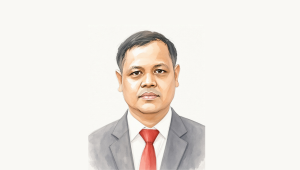
Recently, the High Commissioner of Bangladesh to the Maldives, Dr. Md. Nazmul Islam, granted an exclusive interview to Daily Times of Bangladesh. The interview was conducted by Elias Khan, Advisory Editor of Daily Times of Bangladesh.
In the interview, he discussed the immense potential of Bangladesh’s soft power on the global stage, the historic success in regularising undocumented expatriates, and new strategies for exporting a skilled workforce. He also shed light on the current state of Bangladeshi workers in the Maldivian labour market, new employment generation, leveraging the Maldives’ world-renowned tuna industry to develop Bangladesh’s blue economy, and Bangladesh’s recent historic achievements at the United Nations alongside its public diplomacy initiatives.
Highlighting the extraordinary contribution of Bangladeshi workers to the overall development of the Maldives, High Commissioner Dr. Md. Nazmul Islam said, “Although small in size, the Maldives is immensely important to us due to geopolitical and economic factors. There are approximately one lakh Bangladeshi expatriates here. Remarkably, across the capital city, Malé, and its surrounding islands, one out of every three individuals is a Bangladeshi. They are working with high integrity and reputation in almost every sector, including tourism, services, business, entrepreneurship, and construction. Our nationals are even deployed with great trust at the residences and offices of Maldivian ministers and the President.”
Reflecting on the mission’s diplomatic successes during the first 100 days of the current government, he stated, “The past 100 days have been a period of active diplomacy and tangible delivery. Guided by the visionary directives of Prime Minister Tarique Rahman and the leadership of the Ministry of Foreign Affairs, our Mission adopted a ‘Bangladesh First’ approach. Within this short span, we conducted over 25 high-level bilateral engagements and more than 15 ministerial meetings. Furthermore, over 24,600 consular services were delivered directly to the doorsteps of our expatriates, and over 550 complex welfare cases were swiftly resolved. We have ensured that during any crisis, the High Commission remains the safest haven for our citizens.”

Regarding labour diplomacy, he noted, “Bangladeshi workers are the true backbone of our bilateral relations with the Maldives. One of our greatest historic milestones has been facilitating and supporting the regularisation process for approximately 30,000 to 50,000 undocumented Bangladeshi expatriates. This stands as one of the largest migrant welfare initiatives in the history of the Maldives. Additionally, to safeguard the rights and welfare of our expatriates, we conducted more than 100 workplace, detention center, and hospital inspections over the past three months.”
Nearly 90 percent of the Bangladeshi workers employed in the Maldives fall under the ‘unskilled’ or general labour category. Consequently, despite working round-the-clock, they do not receive their desired wages. To alter this scenario, the High Commissioner added that the mission is now steering toward structural and qualitative transformations.
Dr. Nazmul Islam shared, “In 2024, around 112 million USD in remittances were sent from the Maldives to Bangladesh. To make this remittance flow entirely legal and seamless, work is underway to open a branch of a Bangladeshi bank in the Maldives, an initiative for which the Bangladesh Bank has been highly positive. Once finalised, hundi and other illegal channels will be completely dismantled.”




Emphasising the deployment of a skilled and professional workforce, he added, “We are now shifting our primary focus from general labourers to recruiting doctors, therapists, nurses, engineers (including diploma engineers), and teachers. The formal recruitment process for consultant doctors and therapists from Bangladesh has already commenced successfully. The income of a single skilled therapist is equivalent to that of 20 to 50 unskilled workers, creating a ‘win-win’ situation for both nations. Furthermore, we expect to finalise the recruitment process for a large number of Bangladeshi teachers for government schools in the Maldives by the end of this year.”
Discussing the mission’s focus on education diplomacy, the High Commissioner stated, “Education diplomacy is one of the premier instruments for building sustainable, long-term relationships. Over the past nine months, we facilitated the admission of more than 100 Maldivian students to top educational institutions in Bangladesh. Additionally, the High Commission mediated the establishment of institutional partnerships between the Maldives National University and Dhaka University, BUP, and Bangladesh Maritime University. The process of providing advanced training to Maldivian police officers in Bangladesh is also ongoing.”
He further added, “Organising the first and largest ‘Bangladesh Medical Expo’ in the history of our bilateral relations served as a unique milestone in our health diplomacy, showcasing Bangladesh as an emerging regional healthcare destination.”
On expanding commercial cooperation, Dr. Nazmul informed, “The launch of direct Dhaka–Malé flights by Maldivian Airlines has significantly eased connectivity and boosted tourism. Bilateral negotiations regarding direct shipping lanes, customs cooperation, and prisoner transfer agreements have reached their advanced or final stages. The Maldivian economy relies primarily on tourism and fisheries. We have a lot to learn, particularly from their world-class tuna fishing industry. We have not yet fully utilised the massive potential of harvesting Blue Tuna and Yellow Tuna within Bangladesh’s vast marine boundaries. The Ministry of Fisheries and Livestock and the Ministry of Foreign Affairs are working jointly to bring Maldivian advanced technology and skilled personnel to train our domestic fishermen, which will open a new horizon for our Blue Economy.”
He strongly recommended establishing an international cultural institution for Bangladesh abroad (such as an international wing of the Bangla Academy), akin to the UK’s ‘British Council’ or China’s ‘Confucius Institute’. In his view, this would build a permanent cultural bridge between the global diaspora and foreign nationals, translating into increased foreign investment and trade in the long run.
Similarly, he emphasised the need to formally document and present Bangladesh’s international humanitarian contributions on the global stage – such as the outstanding role of the Bangladesh Armed Forces in UN Peacekeeping missions, providing swift assistance during the water crisis in the Maldives, or deploying medical and rescue teams during the devastating earthquake in Turkey. He conceptualises this as his indigenous academic theory, “The Power of Bonding”. According to him, Bangladesh can formulate a ‘National Soft Power Strategy’ centred around five core pillars: Language & Culture, Education, Humanitarianism, Development, and Digital Diplomacy.
Although SAARC is currently inactive, the High Commissioner stated that the positions of Bangladesh and the Maldives on revitalising it are completely aligned. He noted, “The Maldives is one of our most trusted and principal partners in the United Nations, OIC, Commonwealth, and IORA. The Maldives even demonstrated its deep friendship by extending formal, written support to Bangladesh’s candidate in the UN General Assembly (UNGA) presidential election.”
Evaluating Bangladesh’s recent historic achievement of electing its Foreign Minister as the President of the United Nations General Assembly (UNGA) under the current democratic government, Dr. Nazmul Islam declared, “This is one of the grandest diplomatic milestones in our recent history. The global community recognises that a highly stable and people-oriented democratic environment currently prevails in Bangladesh. While our competitor nations had been campaigning globally since 2016, our Prime Minister’s Office, the Ministry of Foreign Affairs, and all diplomatic missions clinched this unforgettable success in just three months of systematic and rigorous diplomatic efforts. This victory demonstrates how powerful and positive the current government’s democratic mandate, acceptability, and ‘face value’ are on the global stage.”
He expressed strong optimism that the fraternal ties between Bangladesh and the Maldives will grow even more resilient and multifaceted in the coming days through diversified trade, skilled labour integration, and technological exchange.
The writer is the Advisory Editor, Daily Times of Bangladesh