TIMES International
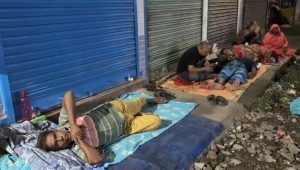
Hundreds of students, young professionals and activists have camped for more than 10 days at Delhi’s Jantar Mantar protest site despite temperatures exceeding 40C, demanding the resignation of Education Minister Dharmendra Pradhan after the cancellation of a key medical entrance examination over a paper leak.
The demonstrators, who call themselves “cockroaches“, belong to the online satirical Cockroach Janta Party (CJP) and say the minister must accept moral responsibility for the scandal surrounding the National Eligibility cum Entrance Test (Undergraduate), or NEET-UG, reports BBC.
The campaign gathered fresh momentum on Sunday when prominent climate activist Sonam Wangchuk joined the protesters and began an indefinite hunger strike. Although the government held a re-test of NEET-UG on 21 June, demonstrators have vowed to remain at the capital’s main protest venue until Pradhan steps down.
The movement traces its origins to remarks made by Chief Justice of India Surya Kant in mid-May, when comments comparing some unemployed young people entering journalism and activism to “cockroaches” and “parasites” sparked widespread criticism.
The judge later clarified that he had been referring to people with “fake and bogus degrees”, rather than young people generally, but the backlash had already spread online.

Among those who reacted was Abhijeet Dipke, a 30-year-old postgraduate student of public policy at Boston University in the United States.
“I had just come back from the gym and was playing FIFA on my PS5 when I saw the chief justice’s comment,” Dipke told the BBC at the protest site.
Describing himself as “a bit disappointed and baffled”, he posted a single sentence on X asking: “What if all cockroaches come together?”
The post attracted hundreds of thousands of responses, particularly from Generation Z users. Dipke said supporters encouraged him to create a platform of their own.
“There were lots of memes and jokes and comments and many of them wrote saying we should start our own platform, maybe our own party. And I thought, why not, let’s do something crazy.”


Using an artificial intelligence prompt to generate a logo and a suit-wearing cockroach mascot, he launched the Cockroach Janta Party, a name parodying Prime Minister Narendra Modi’s Bharatiya Janata Party (BJP).
Dipke said the initiative had originally been intended as satire but quickly evolved into a forum where young people expressed frustration over limited employment opportunities and repeated examination paper leaks.
“None of this was intended or planned. It was just meant to be satire, but as millions began signing up, people started saying we also want to turn this into a serious movement because no other political party is talking about our needs or hopes and aspirations.”
He added: “As we are a youth movement, we decided to first take up the issue that concerns the youth. Over the years, we’ve seen so many exams getting cancelled and no-one doing anything to fix the system or taking accountability.”
Although CJP insists it is not a political party and has no plans to become one, it claims an online following of 22 million on Instagram. Whether that support can be converted into sustained street mobilisation remains unclear.
Its first demonstration demanding Pradhan’s resignation was held at Jantar Mantar on 6 June, shortly after Dipke returned from Boston. He said he expected to be detained on arrival.
“Even I didn’t think I’d be allowed to leave the airport. I was expecting to be arrested,” he said, adding that police met him inside the aircraft before ultimately allowing him to proceed to the protest.
Since then, CJP has organised demonstrations in six cities before returning to Delhi last week. Pradhan has refused to resign, dismissing CJP as “the B-team of disruptive elements” that “do not have faith in the country’s progress”.
BJP president Nitin Nabin also criticised the group, warning of “new virus and cockroach-like parties” seeking “to destroy” and “break the country into pieces”.
At Jantar Mantar, protesters have erected a memorial wall displaying the names and photographs of students whose families say they took their own lives after the original NEET-UG examination was cancelled. CJP spokesperson Saurav Das said the number had risen from 14 to nearly 20.
Schoolteacher Sheetal Choudhary said many of those students came from poor families that had borrowed money to support their education.
“They are not from well-to-do families. They are from very poor, very marginalised families.”
Tamannah Kumari, an undergraduate preparing for a police recruitment examination, said she attended the protest daily because “for the first time, someone is speaking for us”, adding she feared future examination paper leaks could destroy her own prospects.
Wangchuk said he joined the protest because “the education system has immense problems, but even the examinations are failing”. Accusing the government of being “not responsive” and “not sensitive”, he said of his hunger strike: “It’s either death or this series of indefinite hunger strikes, whichever comes first.”
Despite the intense summer heat, organisers insist they will continue their campaign. As Das put it, Pradhan’s resignation is “just one battle”, while achieving “a transparent, accountable, answerable system” is “a fight for the long run”.