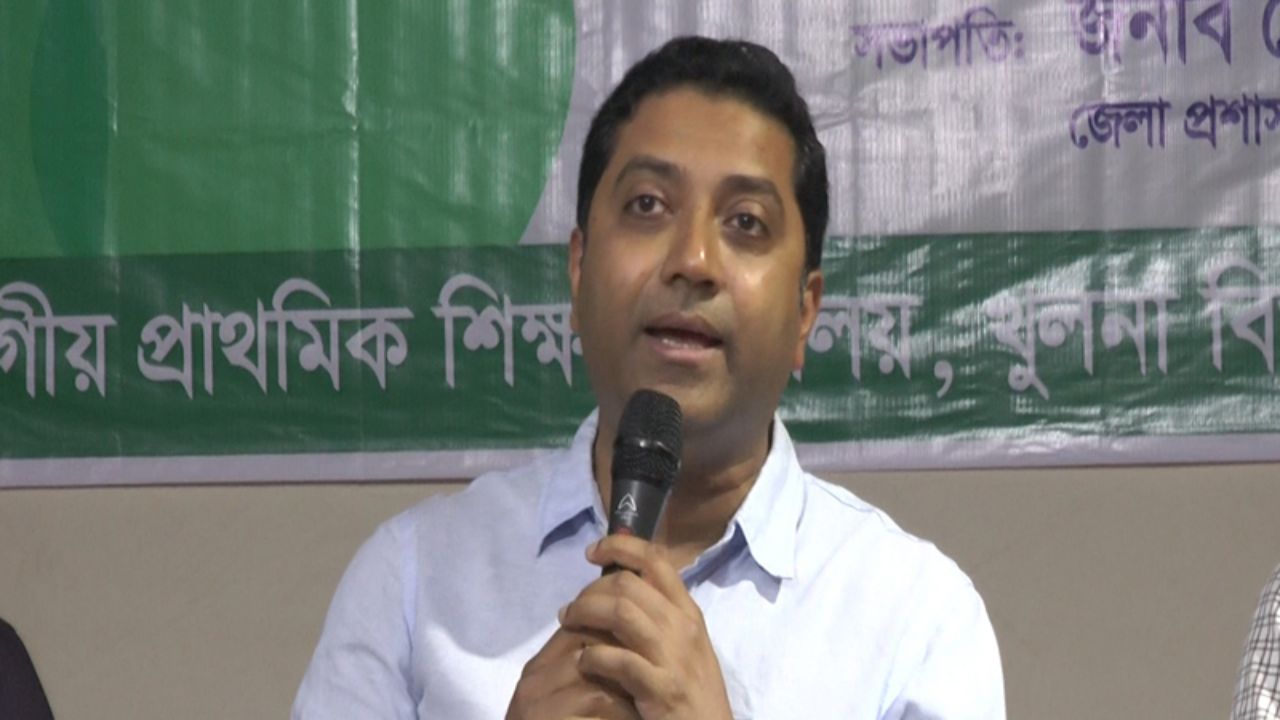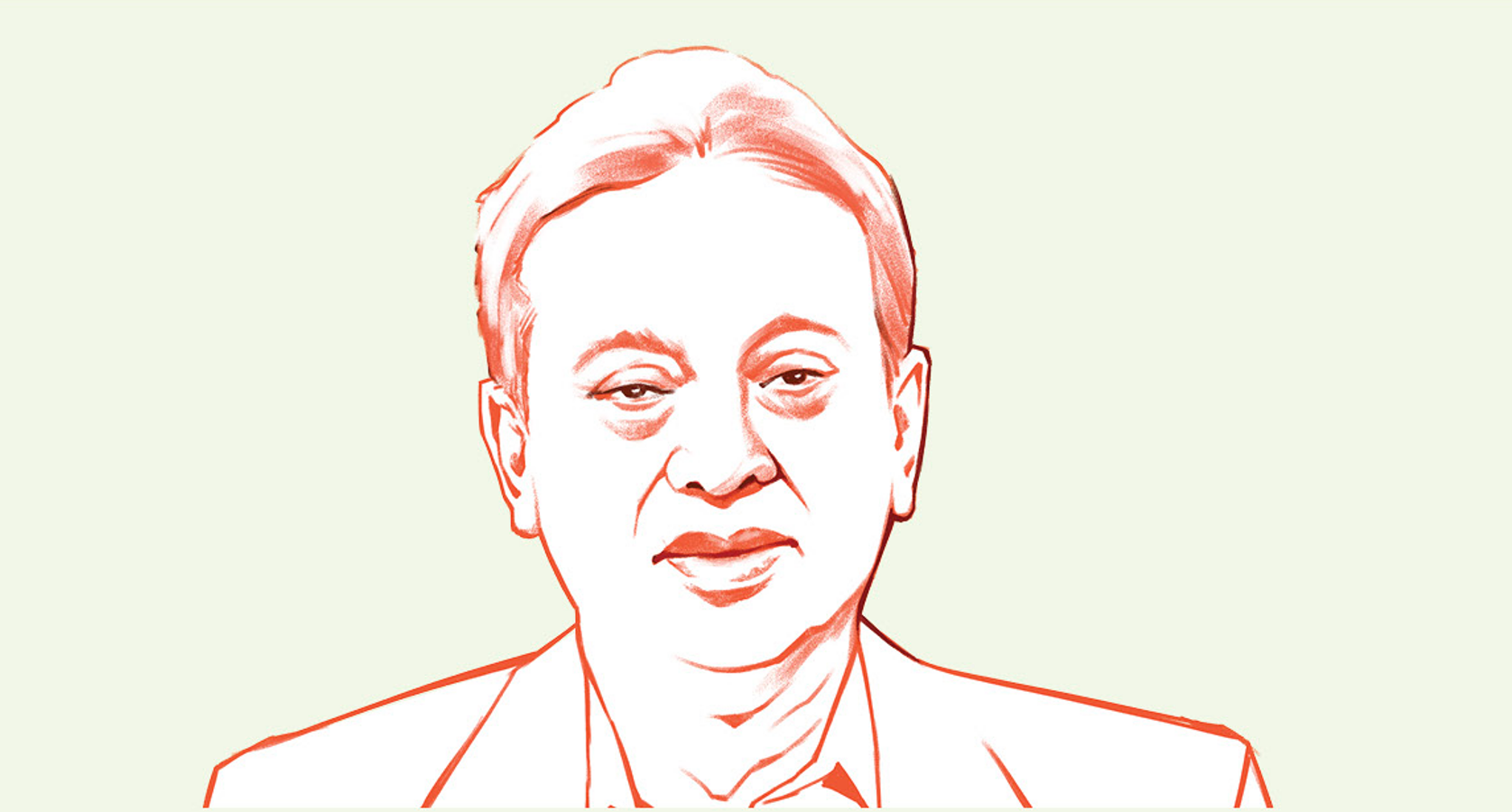

Amir Khosru Mahmud Chowdhury, a Standing Committee member of the Bangladesh Nationalist Party and former commerce minister, sat down with TIMES of Bangladesh to discuss the country’s pressing political and economic challenges. He raised concerns over conspiracies aimed at delaying the February elections, addressed growing tensions with neighbouring India, and offered insights into the potential role of BNP Chairperson Khaleda Zia should the party return to power. TIMES Managing Editor Amlan Dewan and Special Correspondent Mosharraf Bablu interviewed Khosru at his Banani office.
Click here to watch the interview.
There are concerns about whether elections will be held next February. What do you think?
If we look back at history, we see that countries which quickly returned to democratic processes after mass uprisings have made significant progress. On the other hand, countries that experienced prolonged political instability often witnessed civil wars.
We have delayed this process for far too long. Elections in Bangladesh should have been held long ago.
The longer the delay, the further Bangladesh will fall behind. The people of Bangladesh have struggled for 16 years to restore their political, constitutional, and democratic rights. I hope the interim government will move quickly to reinstate the democratic process.
What is your evaluation of the government led by Muhammad Yunus?
The country’s economy has collapsed. The rule of law is non-existent. In business, trade, and investment, people have suspended their activities, hoping that everything will be resolved after the election.
In such a situation, our sole demand is that free and fair elections are held on schedule.
Bangladesh is witnessing political instability, and doubts persist about the elections. Do you think there is a possibility that the deposed Awami regime will return to power?
There are many conspiracies surrounding the elections. People are saying various things. However, the people of Bangladesh still want elections on time. If elections are delayed, those who have caused so much damage to the country and fled will find space to return.

Why did it take 15 years for Sheikh Hasina’s regime to fall? Can BNP avoid responsibility for this failure?
The deposed Awami regime filed cases against six million BNP leaders and activists. This would not have happened if the BNP had shirked its responsibilities.
Thousands of our leaders and activists were abducted.
When a political government does terrible things and state apparatuses become instruments of terror, we had no weapons to fight back.
Whenever we took to the streets, they shot at us, abducted us, and killed us. They had weapons. To confront such oppression, if we had taken up arms, it would have led to a civil war in the country.
Then how did unarmed students bring down Hasina’s regime?
Students played a key role, of course. Behind the students, the biggest force was BNP and its affiliated organisations. I was still in jail the day Sheikh Hasina fled. That day, thousands of people were detained and imprisoned.
BNP activists sacrificed the most in the movement against Hasina.


Some say BNP did not have much of a role in Hasina’s downfall. How do you respond to this?
I do not need to respond to such propaganda.
What role BNP played in the anti-Hasina movement—how many of our leaders and activists were charged, how many were imprisoned, how many were killed by police and Chhatra League bullets—this is all a matter of record.
If we talk about students, then students from our side, from the leftist parties, and from Chhatra Shibir were all involved.
BNP must get due credit, but the success of the movement was due to the unity and efforts of the people. Hasina was forced to flee because of the united movement of 180 million people.
When every political force in Bangladesh failed to topple the Awami League government, was the US working through its agencies and Deep State to bring down Hasina’s government?
People can speculate about foreign involvement, but there is no proof of this, so there is no point in commenting on it. What I saw was that students, political parties, and civil society all took to the streets.
If the US is credited with the success of this movement, then that would be unfortunate.
Trump has claimed that $30 million went into two accounts in Bangladesh to topple the government. What is your take on this?
As I said, there is no proof of such a claim. If there is no evidence before me, it would not be right to make such comments.
You mentioned democracy earlier. BNP Secretary General Mirza Fakhrul Islam Alamgir recently told TIMES of Bangladesh that, “We wanted democracy, but what we got is mobocracy.” How do you view this statement?
Mobocracy cannot lead to democracy. For democracy to work, you need tolerance. Even if you disagree with someone, you must respect their opinion. This is democracy.
If you claim to believe in democracy but practise mobocracy, then you do not believe in democracy.
As BNP’s head of international affairs, what changes have you observed in Bangladesh’s relations with its neighbouring countries over the past year? The current government seems to be ignoring them. Why is there a pushback in relations?
We all know that issues such as water-sharing and border killings remain unresolved. Despite allegations of abductions and killings of our people, India legitimised Hasina’s election.
The Awami League regime prevented the people of Bangladesh from exercising their right to vote, yet India supported that election. This has deteriorated Bangladesh-India relations.
There are three fundamental principles for Bangladesh-India relations: mutual respect, protection of each other’s interests, and non-interference in each other’s internal affairs. If Bangladesh-India relations are to improve, India must adhere to these principles.
If BNP comes to power, what kind of relationship will it build with India? How can we bring the relationship to a win-win situation?
As I said, India must follow the three principles. Bangladesh should always aim to maintain good relations with all its neighbours, including India. However, India only wants to take from Bangladesh, giving nothing in return.
Do you think good relations with China are necessary for boosting investment?
As I mentioned, these three principles apply to all neighbouring countries, including India and China.
BNP’s policy will always be multilateralism, maintaining good relations with all countries where the interests of Bangladesh and its people are safeguarded.
We do not believe in exclusive bilateral relationships with any particular country.
You are advocating good relations with all neighbours. However, it seems BNP has limited communication with the Indian High Commission, while relations with Pakistan are deepening. What is the reason?
I am not aware of any deepening of relations with any particular country. Our relationships are based on multilateralism. Our goal is to maintain good relations with all neighbours while protecting the interests of the people of Bangladesh.
BNP had asked for elections in December, then February. One political party says BNP wants to delay the elections again. What do you have to say about that?
Many people are saying many things about the elections. But we are not asking for a delay. We want elections in February, as scheduled.
BNP acting chairman Tarique Rahman has no ongoing cases against him, so why hasn’t he returned to Bangladesh yet?
He will return when he feels the time is right. He will make the decision based on what is best for the politics of Bangladesh, and when he decides, we will all know.
BNP Chairperson Khaleda Zia has been prime minister three times. She is currently ill and at home. If BNP forms the next government, what role do you see her playing?
She is ill and undergoing treatment. She survived a near-death experience. What role she will play depends on her health. It is difficult to predict at this point.
TIMES: Thank you for your time.
Amir Khosru: Thank you.