


What began as an ordinary attempt to sink a domestic water well in the coastal quiet of Ukhiya in Cox’s Bazar has unexpectedly transformed into an extraordinary geological spectacle, and potentially a crucial economic turning point for Bangladesh.
At approximately seven o’clock on the morning of 27 October, workers in Ward 6 of Jaliapalong union, near the Inani Chhoto Khal Bridge, were driving a pipe nearly a thousand feet beneath the earth.
Instead of striking a freshwater aquifer, they breached a subterranean chamber.
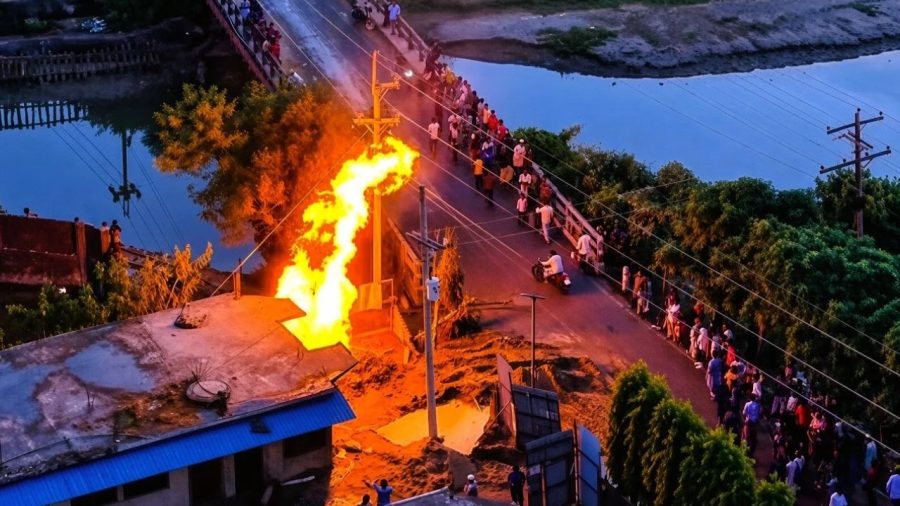
Gas surged to the surface with immense pressure and swiftly ignited, giving birth to a persistent, roaring pillar of fire that has now been burning relentlessly for five days.
Should the site yield commercially viable quantities of natural gas and fuel oil, it will mark the discovery of the nation’s 31st mineral field.
Yet, as energy experts weigh the prospect of a subterranean jackpot, local authorities find themselves grappling with an immediate, volatile predicament: managing hundreds of spellbound spectators who are flouting safety warnings to catch a glimpse of the blaze.

In response to the growing peril, the Ukhiya upazila administration convened an emergency meeting alongside the Ministry of Power, Energy and Mineral Resources.
Ukhiya Upazila Nirbahi Officer Panna Akter subsequently issued an order enforcing Section 144 of the Code of Criminal Procedure, establishing an immediate 200-metre exclusion zone around the fiery chasm.
Barbed-wire barricades have been erected, red flags hoisted, and stern warnings broadcast over loudspeakers forbidding smoking, open flames, or any activity capable of throwing a spark.
Nevertheless, the site has swiftly acquired the atmosphere of an impromptu carnival.




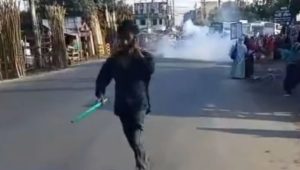
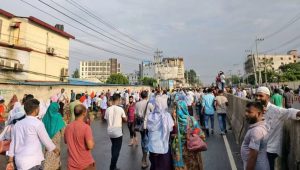
Every afternoon around four o’clock, throngs of curious onlookers descend upon the perimeter, snapping photographs and recording videos for social media.
“People are simply ignoring the barbed wire,” remarked resident Shahidul Alam, warning that the crowds pose a severe safety hazard. Law enforcement personnel remain severely stretched as they attempt to hold back the tide of onlookers.
For local residents, the fascination is increasingly overshadowed by anxiety and practical disruption.
“The intensity of the fire is increasing day by day,” noted local inhabitant Syed Alam, adding that the initial hope of the blaze dying down within 72 hours has evaporated.
Fellow resident Belal Uddin highlighted the daily toll on the community, noting that school children and commuters are suffering as traffic along the primary road is severely disrupted, with longer alternative routes proving unaffordable for many.
On Friday evening, a high-level delegation from the Bangladesh Petroleum Exploration and Production Company Limited (Bapex) and Petrobangla arrived to assess the situation. Bapex General Manager of Geology, Shamsia Muktadir, assured that the state enterprise possesses the technical expertise to manage the incident using domestic resources, though she stressed that safety must remain paramount given the unpredictable nature of subterranean gas shifts.
Petrobangla’s Director of Operations and Mines, Engineer Md Shoaib, revealed that preliminary observations suggest a shallow reservoir. While natural gas deposits in Bangladesh typically lie between 1.5 and 5 kilometres deep, the gas at Inani appears to be escaping from shallower geological strata, likely driven upwards by recent structural movements in the rock layers.

Intriguingly, the colour and behaviour of the flames hint at the presence of thermogenic and biogenic gas alongside liquid hydrocarbons or petroleum condensate, he said.
Authorities have resolved to keep the phenomenon under close surveillance for the next fortnight.
“We shall monitor the flame height and gas flow closely over a 15-day observation period,” Engineer Shoaib explained.
Should the pressure remain undiminished, Bapex plans to deploy specialised sidetracking technology to drill a secondary ‘relief well’, intercepting the flow deep underground to extinguish the inferno safely.
If the flow naturally subsides, Bapex will initiate a comprehensive three-dimensional (3D) seismic survey across the terrain to map the hidden structures.
If those readings confirm economically viable reserves, formal drilling for the country’s newest energy frontier will commence in earnest.
For now, Inani remains suspended between the thrilling prospect of national prosperity and the immediate threat of an industrial disaster, as officials work tirelessly to tame both the subterranean fire and the crowds drawn to its glare.