The International Crimes Tribunal (ICT) will deliver its first verdict on 17 November in the proceedings against ousted prime minister Sheikh Hasina, who faces multiple charges of crimes against humanity linked to the July–August uprising.
Former home minister Asaduzzaman Khan Kamal and former police chief Chowdhury Abdullah Al-Mamun are the other accused in the case. Of the three, only Mamun is in custody and has become an approver by confessing to his crimes, while Hasina and Kamal are being tried in absentia as fugitives.
When the three-member Tribunal-1, headed by Justice Md Golam Mortuza Mozumder, on Thursday set the date for the verdict, only Mamun was present in the dock, while Hasina has been in India since fleeing the country during the uprising, and Kamal is also believed to be in hiding there.
Earlier, the prosecution brought five charges of crimes against humanity against the three accused, based on a probe report filed by the ICT investigation agency on 12 May. The tribunal framed the charges against the trio on 10 July.
The formal charge sheet spans 8,747 pages, including 2,018 pages of reference materials, 4,005 pages of seizure lists and documentary evidence, and 2,724 pages detailing the list of martyrs.
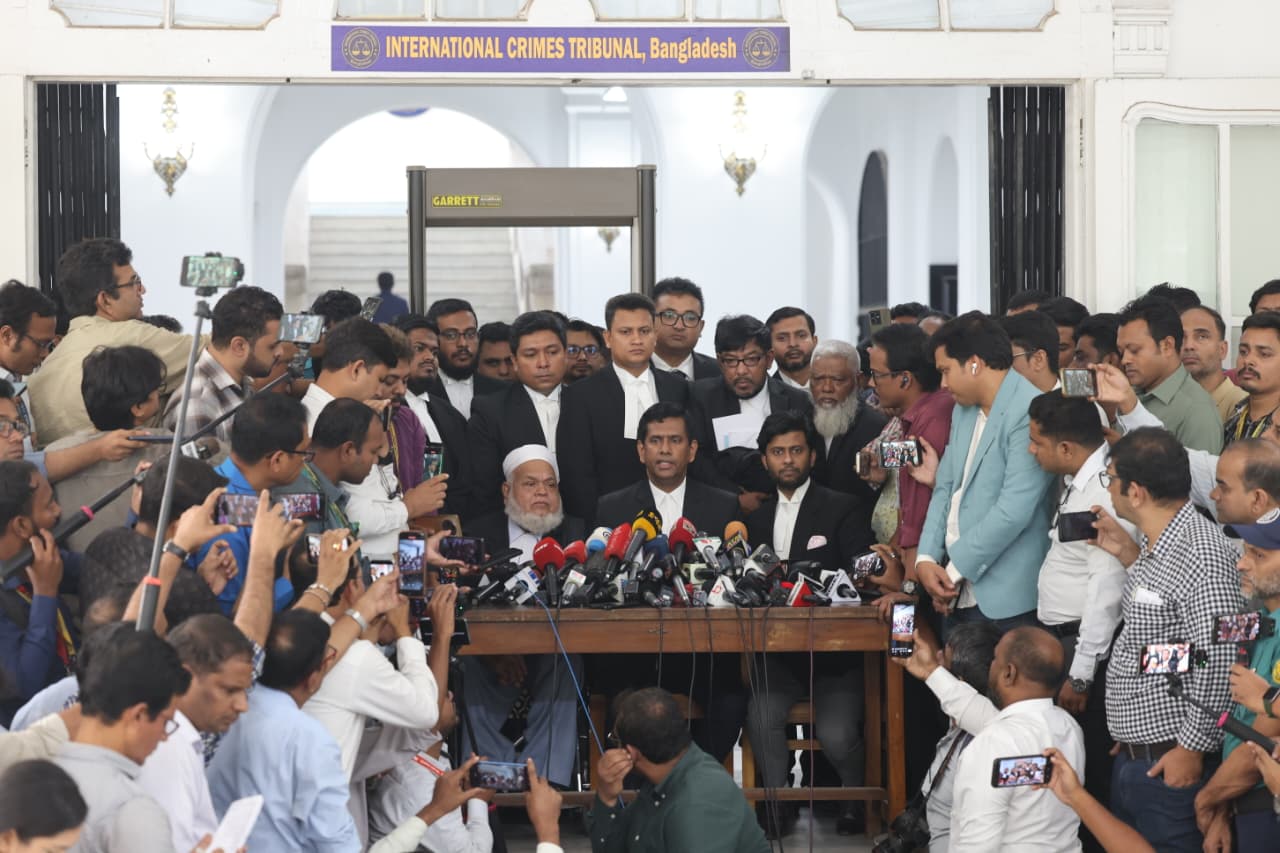
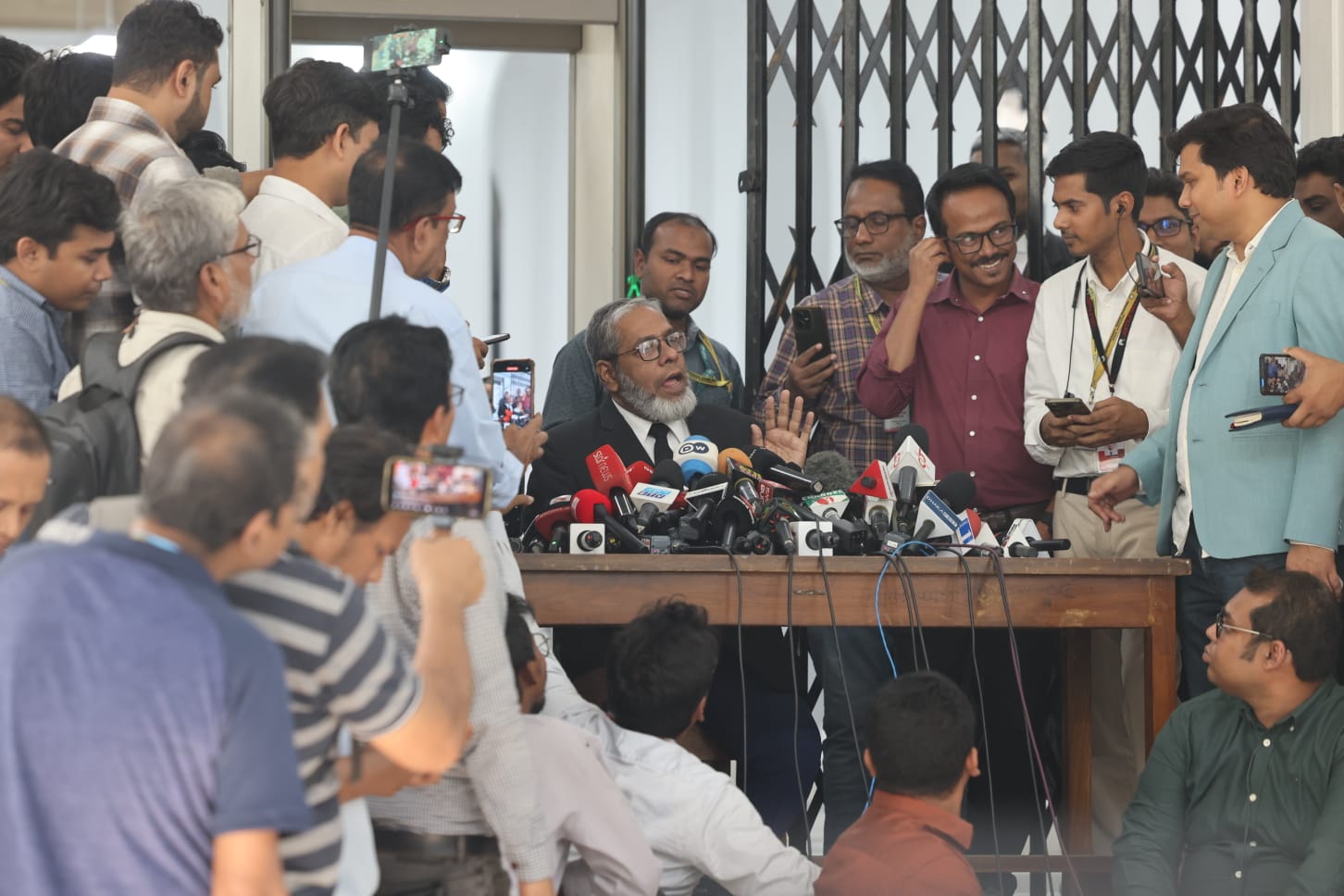
In an immediate reaction, ICT Chief Prosecutor Muhammad Tajul Islam said he expects exemplary punishment for the accused.

“We have appealed to the court for the maximum punishment. The court will exercise its discretion and wisdom on 17 November. We have requested that the accused be given the highest sentence for their crimes,” he told reporters on the ICT premises.
He added that they are expecting a judgement that will serve as a precedent for the country.
In his reaction, state-appointed defence counsel Amir Hossain sought the acquittal of his clients.




“My expectation is that my clients will be acquitted. During the testimonies and cross-examinations of the witnesses, I have been able, as a lawyer, to extract important information from them. I have also raised questions regarding the documentary evidence. Considering everything, I believe my clients will be acquitted,” he told reporters.
While placing arguments, Tajul Islam sought the death penalty for Hasina and Kamal, while leaving the fate of former IGP Mamun to the tribunal’s decision, as the latter testified as a state witness.
Denying the allegations, Amir again sought the acquittal of his clients, claiming they were innocent.
A total of 54 prosecution witnesses — including the father of July martyr Abu Sayed and NCP Convener Nahid Islam — testified in the case and were cross-examined by the defence counsel.
Earlier, on 10 July, during hearings related to the student-led mass uprising, Mamun admitted his involvement in crimes against humanity.
“The allegations of murder and mass killings during the July–August movement are true. I accept responsibility and plead guilty. As a prosecution witness, I wish to present the full details of the crimes committed during that time and assist the court in uncovering the truth,” he told the ICT that day.
Hasina in 2010 set up the tribunal to prosecute local collaborators of Pakistani forces, after an earlier attempt was halted following the assassination of Bangladesh’s founding president Bangabandhu Sheikh Mujibur Rahman.
The then top leadership of Jamaat-e-Islami, which opposed the creation of Bangladesh, and a few BNP leaders were either executed or jailed under the tribunal’s verdicts. The parties termed those cases politically motivated.
Now, Hasina along with the Awami League stands accused of genocide, murder, and widespread human rights abuses during the July–August 2024 uprising, which reportedly left at least 1,400 people dead and several hundred more injured.
A separate fact-finding mission by the UN Office of the High Commissioner for Human Rights corroborated the casualty figures from the crackdown on violent protests that ultimately led to Hasina’s ouster.
On 17 June, ICT-1 published notices in two national dailies asking Sheikh Hasina and Asaduzzaman Khan Kamal to surrender before the court by 24 June.
“As per Rule 31 of the International Crimes (Tribunal-1) Rules of Procedure, 2010 (Amendment 2025), they are ordered to surrender before this tribunal on 24 June 2025. Otherwise, the trial will proceed in absentia under Section 10A of the International Crimes (Tribunals) Act, 1973,” the notice said.
The tribunal issued the notices on 16 June after taking cognisance of the formal charge submitted on 1 June.
Chief Prosecutor Tajul informed the court that Hasina and Kamal were absconding, citing intelligence reports suggesting they were in India.