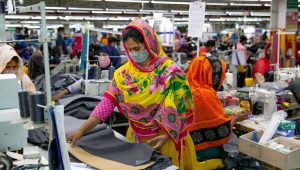
With slowly easing inflation, a stabilising macroeconomy and signs of recovery in exports and imports, Bangladesh enters 2026 with stalled investment and job creation.
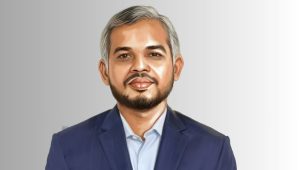
Centre for Policy Dialogue Executive Director Fahmida Khatun said the economy now faces a set of closely linked challenges that must be addressed together, particularly as the country prepares for graduation from least developed country (LDC) status.
“Bangladesh faces a set of humongous, homogeneous tasks that are deeply interconnected,” she told TIMES of Bangladesh in an interview, referring to structural weaknesses that have become more critical ahead of LDC graduation.
To become competitive and resilient, she said the country must simplify and strengthen the tax system, increase domestic resource mobilisation, enhance efficiency, competitiveness and institutional capacity, and continue reforms in a coherent and sustained manner.
Reflecting on 2025, Fahmida Khatun said inflation eased from double-digit levels to 8.29 per cent in November, while GDP growth remained below 4 per cent. Exports recorded slow growth, while imports increased, largely driven by intermediate industrial goods.
However, investment and employment generation did not take place, which she described as a major vulnerability.
“Sustainable growth is not possible without investment and job creation,” she said.

With wage growth lagging behind inflation for a prolonged period, the burden of inflation has fallen more heavily on ordinary people. The pressure has been compounded by a contractionary monetary policy stance, under which high interest rates have increased the cost of doing business and kept private sector credit growth subdued.
Overall, the economic outlook appears somewhat better, but it will not return to the high growth levels seen in the past.
Fahmida Khatun said conditions may improve, but not significantly, and will depend on political stability, law and order and the post-election situation, noting that investment activity typically slows ahead of elections.
Looking ahead, she identified inflation control as the most important priority for the coming year. At the same time, private and foreign investment must be increased, as there is a clear shortfall in both areas.
She said the impact of current conditions is already visible among low-income groups, as the real value of income for extremely low-income households has eroded. She stressed the need to expand social protection, including the Open Market Sales programme and the overall social safety net.




“Poverty is rising again,” the economist said, citing surveys by the World Bank and the Power and Participation Research Centre, which show that poverty, having declined earlier, is now increasing, requiring all-out efforts to prevent further reversals.
According to her, structural constraints continue to undermine investment prospects. Infrastructure gaps, weak governance and corruption remain major deterrents.
Banking sector reforms that have already begun must be continued, and remaining reforms implemented swiftly, as investment will not take place without discipline in the financial sector.
“Genuine business operators are also facing difficulties in accessing credit,” she said, adding, “When banks are financially weak, they are unable to lend at competitive rates, further underscoring the need for sustained financial sector reform.”
On the fiscal front, public investment largely depends on public expenditure. To increase development spending, the government must strengthen its own revenue base rather than rely on bank borrowing.
The tax-to-GDP ratio fell to 6.8 per cent in fiscal year 2025, placing Bangladesh among the lowest globally.
Separating tax administration from tax collection is a positive step, she said, but it is not sufficient.
“While digital and online systems have expanded, safeguards are needed to prevent corruption.”
Those outside the tax net must be brought under it, taxes must be properly collected from existing taxpayers and transparency within the tax administration must improve.
Domestic resource mobilisation therefore needs to be strengthened through better governance, institutional capacity, human resource development and automation, which she said is essential for sustainable public financing.
Bangladesh’s graduation from LDC status in 2026 is a highly important and sensitive milestone.
“Preparation must begin now, with a strong focus on domestic resource mobilisation and competitiveness,” she said, adding that duty-free and quota-free market access will gradually be withdrawn, even though the European market offers a three-year grace period, China has extended some benefits until 2028 and the United Kingdom has a programme in place.
“Once these benefits end, Bangladesh will have to compete directly with China, Vietnam, Cambodia and other South Asian economies.”
Fahmida Khatun said the government has not proposed or justified delaying LDC graduation and that, given Bangladesh’s economic and social progress, postponement would be difficult to justify.
The focus, she said, “must now be on preparation.”
Subsidies across various sectors will not be sustainable in the future.
After LDC graduation, non-reciprocity will no longer apply, reciprocal tariff structures will come into force and the current reliance on indirect taxes over direct taxes will need to change.
She concluded that the capacity of the tax administration must be strengthened, alongside improvements in the capabilities of exporters and producers, as long-term reliance on subsidies is not viable.