


There are few players of whom it can be said that they changed the way a nation addresses itself. Cristiano Ronaldo is one of them. On Thursday, at the age of 41, the legendary footballer announced his retirement from international football, ending a journey that began in August 2003 and reshaped Portuguese football.
He chose to say goodbye in his own way, with a video on Instagram, set to images from a career spanning more than two decades. “To the Portuguese people, the day has come for me to hand back the number seven shirt of our national team,” he said. He added that he had never felt the shirt belonged to him alone, and that for 23 years it had been both a privilege and a responsibility.
It was not the farewell he would have wanted. There was broad acceptance that this summer’s World Cup in the United States, Canada and Mexico would be his last, yet he had spoken of the possibility of one more UEFA Nations League title. Instead, a spat with new coach Jorge Jesus last month, after the manager declined to play him in a UNL match, saw Ronaldo leave camp and receive a 30-day suspension. Rumours that he would return proved wide of the mark.

“It was not an easy decision,” he said, “because some decisions are not made with the mind alone; they are also made with the heart.”
The debates over timing and temperament will come. For now, it is worth stepping back to admire the whole.
Ronaldo first pulled on the shirt of Portugal’s senior side in 2003, a teenager from Funchal, four years before new age superstar Lamine Yamal was even born. Over the next 23 years he missed only a handful of matches, appearing 234 times and representing his country at 12 major tournaments. His debut was so long ago that a player winning a first cap in this month’s international break would have to still be playing in late 2049 to match the length of his career.




His longevity was extraordinary. Of his 146 international goals, 94 came after his 30th birthday. In recent seasons there was a growing feeling that his elevated status in the side was no longer fully justified, but that should take nothing away from what he achieved.
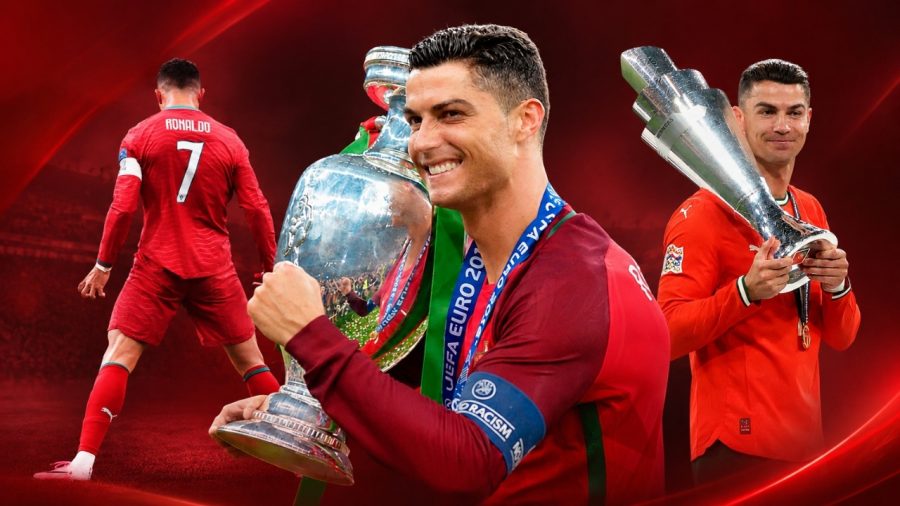
Portugal had long produced gifted players, and had reached the final of Euro 2004 on home soil, only to lose to Greece. Silverware had always eluded them. That changed at Euro 2016, when Ronaldo captained the side to the country’s first major title, beating the hosts, France, in the final.
The image that endures is not of a goal. Forced off injured early in the final, Ronaldo spent the evening on the touchline, barking instructions at his team-mates. He then led Portugal to Nations League glory in 2019 and 2025, two more moments of immense national pride.
This year’s World Cup brought three more goals, though Portugal were beaten in the Round of 16 by eventual winners Spain.

The statistics are staggering, but they do not tell the whole story. Ronaldo raised expectations of what Portuguese football could achieve. A country of ten million people learned to expect to compete with the giants, and its young players grew up with a model of what relentless dedication could deliver.
Twenty-three years after that first appearance, his legacy cannot be understated. The shirt is handed on, but the standard stays with it.