
It starts the same way for almost everyone.
You’re scrolling through Instagram, Facebook or YouTube after a long day. One Reel after another flashes by until a familiar feeling stops your thumb. A song begins to play.
Just 15 seconds. You have no idea who the singer is, what the lyrics mean or even where it comes from. Yet the melody refuses to leave your head.
Hours later, you’re searching fragments of the lyrics on Google, humming the tune to friends or using the music recognition app Shazam to solve the mystery.
Days later, you finally discover the full track—only to realise the viral clip isn’t even the song’s opening. Sometimes, it turns out to be a years-old Pakistani ballad, an independent Indian release on YouTube or a Bangla classic you hadn’t heard in years.

Welcome to music discovery in 2026, where social media has quietly become the world’s biggest DJ.
Not long ago, audiences discovered songs through television, films, YouTube recommendations or suggestions from friends. Today, Instagram Reels, Facebook Reels, TikTok and YouTube Shorts have become the first stop. Algorithms no longer care where a song comes from. They care whether people stop scrolling.
That simple shift has turned unknown musicians into global stars and given forgotten songs an unexpected second life.
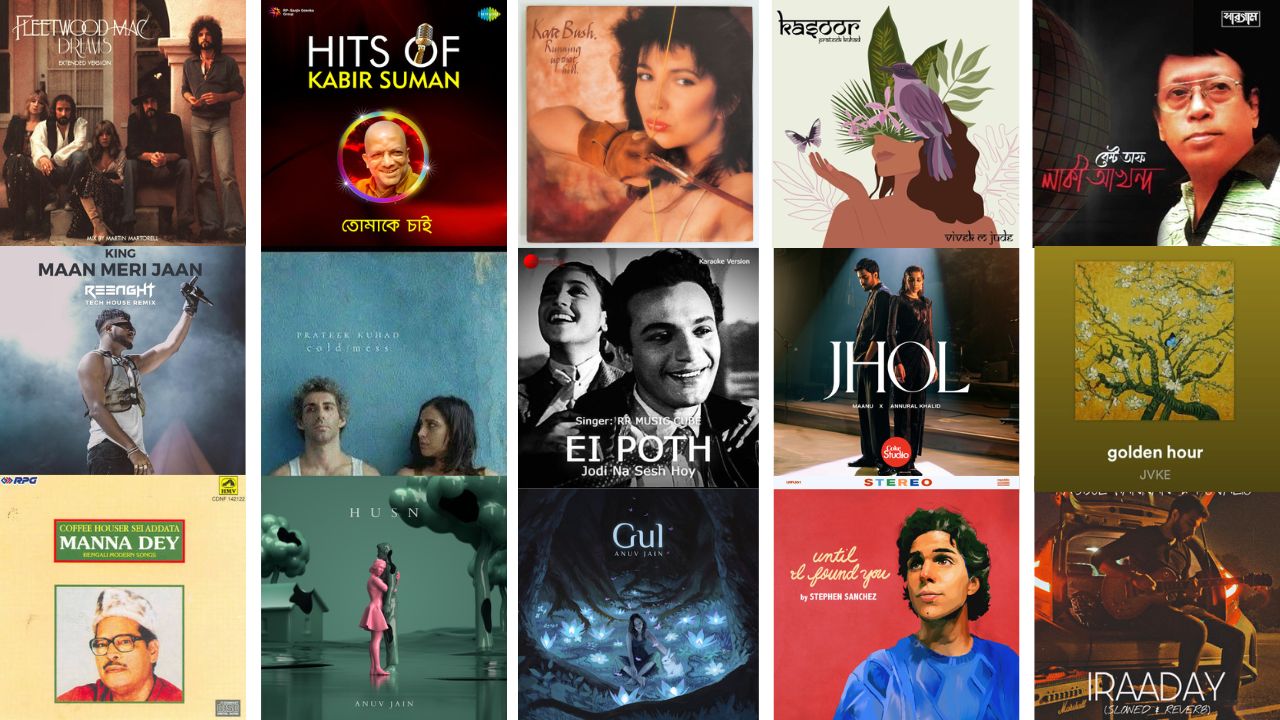
The phenomenon is hardly limited to South Asia. Around the world, social media has revived songs that many thought had already lived their moment. Perhaps the most famous example is Kate Bush’s “Running Up That Hill.” Released in 1985, the song found a new generation of listeners 37 years later after featuring in Stranger Things. Its revival was then fuelled by millions of videos on TikTok, Instagram Reels and YouTube Shorts, helping it reach No. 1 on the UK Singles Chart for the first time and climb to No. 3 on the Billboard Hot 100—surpassing its original chart peak. It also became one of Spotify’s most-streamed songs during its resurgence.




Fleetwood Mac’s “Dreams” enjoyed a similar revival. More than four decades after its 1977 release, a simple viral skateboarding video featuring cranberry juice introduced the song to millions of younger listeners, sending it back onto the Billboard Hot 100 and streaming charts around the world.
Not every Reel sensation is an old classic, however. Some songs become global hits months—or even years—after they are released. Djo’s “End of Beginning,” released in 2022, exploded nearly two years later through short-form videos before entering the Billboard Hot 100 and Spotify’s Global Top 10 in several markets. Stephen Sanchez’s “Until I Found You” became one of the world’s favourite love songs after millions of romantic edits, while JVKE’s “golden hour” found worldwide success through aesthetic and piano-themed Reels.
If those stories prove anything, it is that a song no longer needs to be new to become popular again. Sometimes, all it takes is the right moment, the right creator and 15 unforgettable seconds.
Pakistan’s independent music scene has perhaps benefited the most from this new era of discovery.
Pakistan’s independent music scene has perhaps benefited the most from this new era of discovery. Songs such as “Jhol” by Maanu and Annural Khalid, “Faasle” by Abdul Hannan, “Iraaday” by Abdul Hannan and Rovalio, and “Kana Yaari” by Kaifi Khalil, Eva B and Abdul Wahab Bugti have travelled far beyond Pakistan through millions of short videos.
Even “Pasoori”, which was already a massive hit through Coke Studio Pakistan, found an even bigger global audience after spreading across TikTok, Instagram Reels and YouTube Shorts. The song became the first Pakistani track to enter YouTube’s Global Top Music Videos chart before later surpassing one billion views, cementing its place as one of South Asia’s biggest international music successes.
The same pattern has fuelled India’s independent music scene. Long before becoming household names, artists such as Anuv Jain, Prateek Kuhad, King and Zaeden built devoted audiences online. Emotional songs like “Husn”, “Kasoor”, “Cold/Mess”, “Gul”, “Maan Meri Jaan” and “Tere Bina” became favourites not because they dominated traditional charts, but because people kept using them in travel videos, wedding montages, relationship edits and everyday moments on social media. For many listeners, the Reel came first—the artist’s name much later.
Bangla music has experienced its own revival as well. Young users are rediscovering classics from both Bangladesh and West Bengal through nostalgic edits, rainy-day montages and family videos. Songs that once lived on cassette tapes, CDs and old YouTube uploads are now finding new audiences who were not even born when they were first released.
Classics such as “Ei Poth Jodi Na Shesh Hoy”, “Coffee Houser Sei Adda Ta”, “Amay Dekona”, “Shono Go Dokhino Hawa” and Kabir Suman’s “Tomake Chai”, along with timeless songs by James, Ayub Bachchu, Miles and Anjan Dutt, have quietly found a second life online. In many cases, listeners fall in love with the emotion before they even know the singer’s name.
Perhaps that is the most remarkable part of the Reel era. Music can now emerge from almost anywhere. Indonesian indie pop, Romanian dance tracks, French chansons, Egyptian love songs, Armenian folk melodies and Ukrainian electronic music have all found global audiences after their hooks appeared in viral videos. For many listeners, the language is almost irrelevant. If the melody connects, curiosity takes over, the search begins and another unexpected song finds its way into a playlist.
But Reels are changing more than music discovery. They are changing how we listen. Streaming platforms have adapted to this shift, too. Spotify and YouTube Music now prominently surface playlists built around viral Reel and short-video hits, making it even easier for listeners to discover the full versions of songs they first heard while scrolling. Today, our playlists are shaped not only by streaming platforms but also by the endless scroll of short videos.
Perhaps that is the greatest achievement of the Reel generation. It has erased musical borders, proving that language is no longer a barrier when a melody connects. A song no longer needs a blockbuster film or a major record label to reach the world. Sometimes, all it takes is one creator, one perfectly timed Reel and one unforgettable 15-second hook to turn an unknown track into the soundtrack of millions of lives—one scroll, one search and one stream at a time.