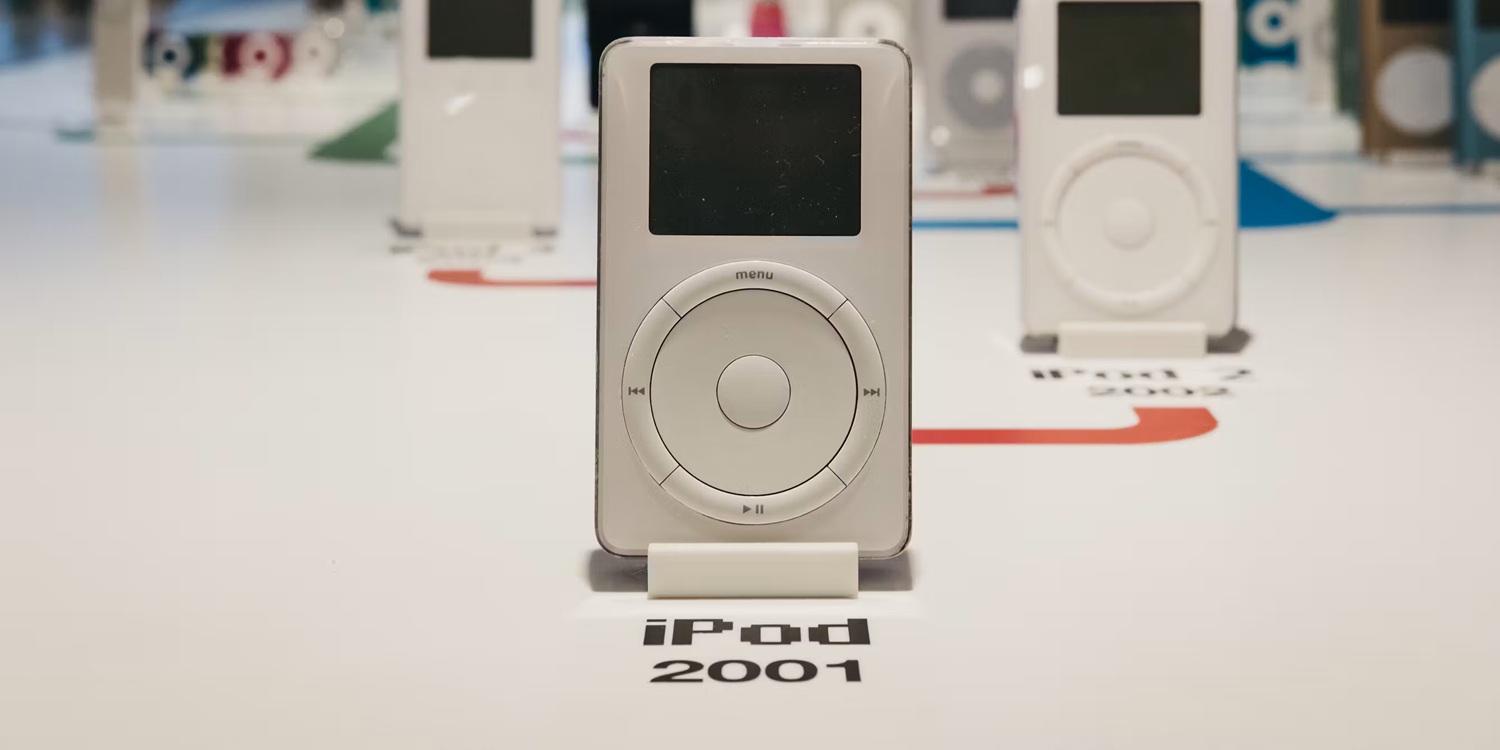
Twenty-five years ago today, Apple Chief Executive Steve Jobs took to the stage to tease what he billed as “a breakthrough digital device that’s not a Mac.”
That device was the original Apple iPod, a pocket-sized digital music player priced at $399 that promised to put an entire music library into a casing no larger than a deck of playing cards.
Long before smartphones evolved to render standalone players redundant, the device transformed into an always-carry cultural phenomenon and an essential gadget for music enthusiasts.
When the iPod arrived in October 2001, Jobs had already guided the Cupertino-based company past its era of beige computers into the Mac OS X period, establishing the iMac and iBook product lines.
Apple’s commercial resurgence was gathering pace amidst difficult economic conditions following the collapse of the dot-com bubble.
Jobs envisioned the Mac as the central hub of a modern digital lifestyle, connecting digital camcorders, cameras, DVD players, and portable music hardware.

Recognising music as a massive global market lacking a clear front-runner, Apple elected to venture into personal audio.
A digital hub and the right recipe
Portable digital music was not entirely novel at the time. Established consumer electronics giant Sony, alongside smaller manufacturers such as Creative and Sonic Blue, had already introduced portable digital players.
However, Jobs observed that none of those competitors had managed to find the winning recipe for digital audio.
Market offerings were split across four categories: standard CD players, MP3 CD players, flash memory devices, and hard drive jukeboxes. Jobs identified hard disk technology as the superior foundation for Apple’s entry.




Introduced as an MP3 player offering CD-quality audio across popular formats such as MP3, WAV, and AIFF, the debut iPod carried a 5GB storage capacity.
This allowed it to accommodate roughly 1,000 standard-length pop tracks encoded at 160Kbps, representing what Jobs described as a complete music collection for most listeners.
Engineering a pocket-sized revolution
Jobs underpinned the device’s market appeal with three central breakthroughs. The first was an ultra-portable physical profile, made possible by Toshiba’s 1.8-inch hard disk drive measuring just 0.2 inches in thickness.
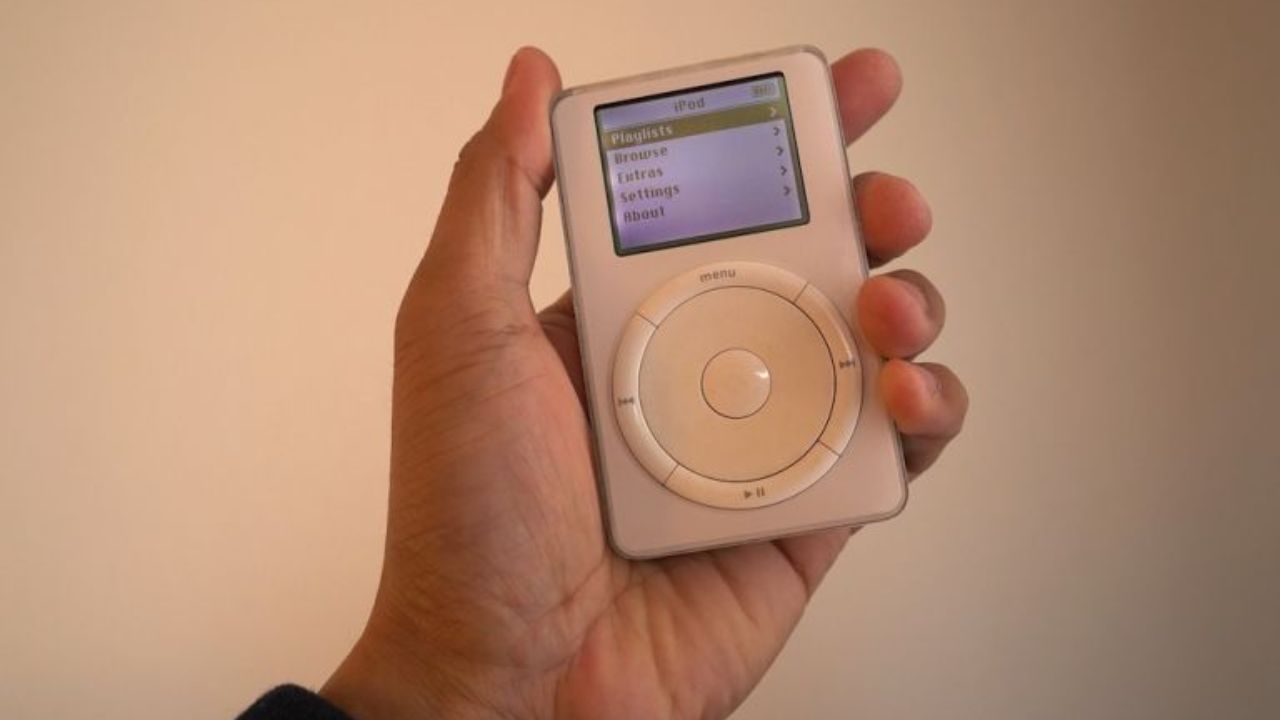
Measuring 2.4 by 4 by 0.78 inches and weighing 6.5 ounces, the unit was lighter than most contemporary mobile phones.
To overcome the technical shortcomings of competing players, the iPod incorporated 20-minute skip protection alongside a dedicated FireWire 400 interface that delivered power and high-speed data transfer through a single cable.
While prevailing USB connections took roughly five minutes to transfer an entire CD – or five hours to fill 1,000 songs – FireWire completed a CD transfer in five to ten seconds and filled the entire device in ten minutes.
A built-in lithium-polymer battery supported 10 hours of continuous playback, recovering an 80 per cent charge inside an hour.
The second pillar was Apple’s distinct design philosophy and focus on usability.
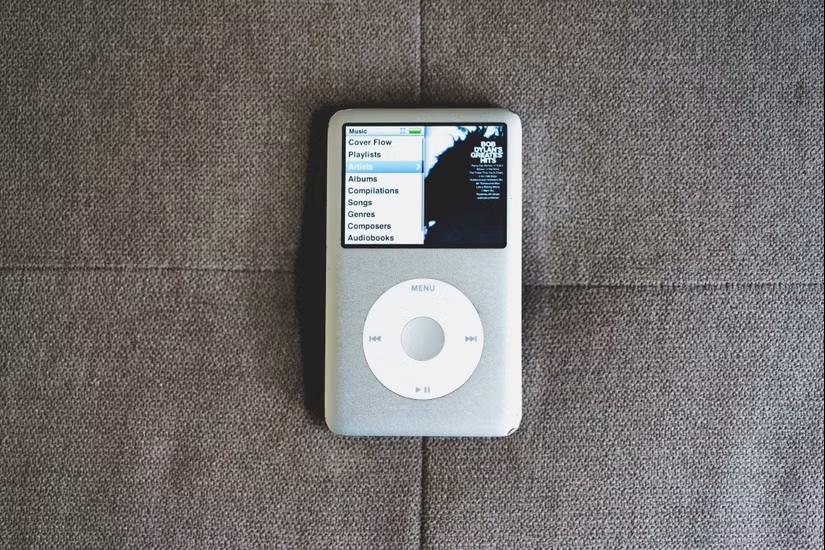
Built with minimal, durable sides and rear casing, the player featured an accelerated mechanical scroll wheel paired with a piezoelectric clicker for tactile response, permitting smooth one-handed navigation through playlists, artists, and songs.
The first track demonstrated during the unveiling presentation was Sarah MacLachlan’s Building a Mystery.
Finally, the player debuted seamless Auto-Sync integration with iTunes 2, which launched on the same day with MP3 CD burning capabilities.
Any curated music library on a user’s Mac automatically synchronized whenever the player was connected, while the device could also operate as an external FireWire storage drive.
Apple’s music player coexisted with the iPhone for more than a decade following the smartphone’s early 2007 debut.
Although the iPod line gradually receded before being formally discontinued in May 2022 – three years after the release of the seventh-generation iPod Touch in May 2019 – its 2001 debut remains a decisive milestone in personal technology.