As Eid-ul-Adha approaches, Chattogram’s traditional blacksmith shops are alive with hammering, sharpening, and roaring furnaces. Craftsmen work tirelessly to prepare knives, cleavers, and butcher tools for the sacrificial season.
Yet behind the seasonal rush, blacksmiths report shrinking profits and growing uncertainty about the survival of their centuries-old trade.
In Firingibazar, young craftsman Uttam Kumar Das carries on a family business spanning over 50 years. He inherited the shop after his father passed away. Standing beside a furnace sharpening knives, Uttam said work has fallen sharply.
“Earlier, we were overwhelmed with orders at least two weeks before Eid. This year, there is still work, but income has dropped sharply. Shops that once earned over Tk50,000 during Qurbani are unlikely to reach that figure,” he said.

He estimated a nearly 20 per cent decline in orders compared to last year. Many customers now prefer to sharpen old tools rather than buy new knives amid rising living costs.
Similar trends are visible in Riazuddin Bazar, Bakshir Hat, and Chawkbazar. Veteran artisan Khokon Mallick said customers prioritise repairs over purchases. “People are spending carefully. Most are bringing old tools for sharpening, and daily income has dropped a lot,” he said.




He added that crowds are smaller than in previous years, and many craftsmen struggle to support families despite long hours.
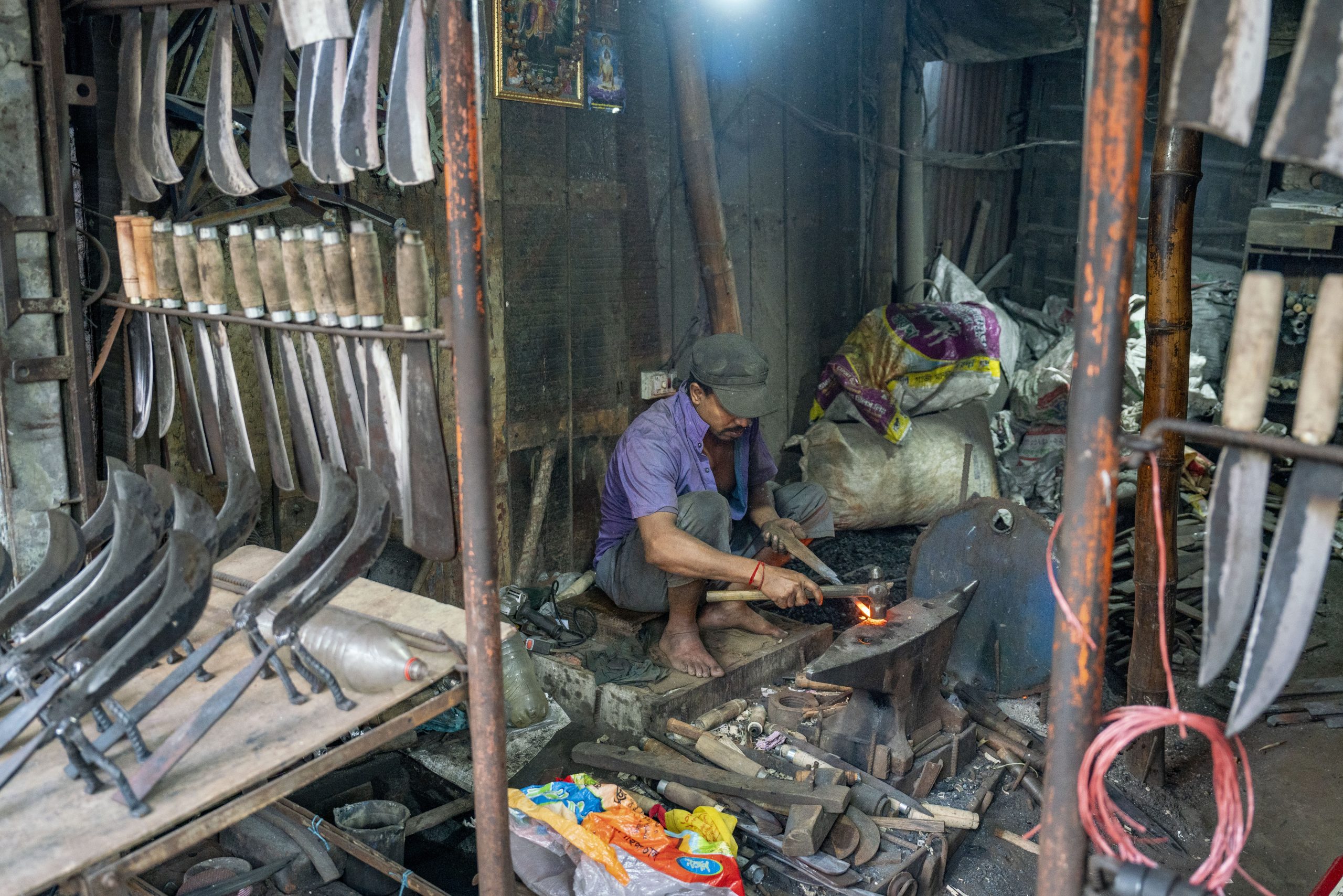
Rising raw material costs compound the problem. Iron, coal, and other inputs have surged in price, but product prices have not risen proportionately. Craftsmen manually produce each item, yet earnings remain limited. Wholesalers and machine-made products further squeeze profit margins.
Pradeep Das, a shop owner, said the trade’s scope has narrowed over time. “Years ago, we even made ship anchors. Now, we mostly make and sharpen knives and cleavers. The range is shrinking daily,” he said.
Linkon Das, whose family has worked as blacksmiths for over 35 years, shared market prices for Qurbani tools. Small cleavers and knives sell for Tk550–Tk600 depending on size, ordinary knives for Tk250–Tk500, and large slaughter knives for Tk1,200–Tk1,500. Demand for sharpening old tools has outpaced purchases of new items.
Despite financial pressures, local demand persists for handmade tools. Monirul Islam, a customer at Firingibazar, said: “A sharp knife is essential for skinning sacrificial animals. Handmade blades are more reliable than factory-made ones. That’s why I bought three knives.”
Uttam highlighted the cultural and practical value of the craft. “Even if profits fall, we continue this work to preserve heritage. People still trust locally made knives for quality and durability,” he said.
The challenges faced by Chattogram’s blacksmiths reflect broader pressures on traditional trades. Rising input costs, competition from industrial production, and cautious consumer spending are forcing artisans to adapt or risk losing livelihoods.
Yet the human skill and local trust in handcrafted products continue to sustain the profession, even amid uncertain economic times.