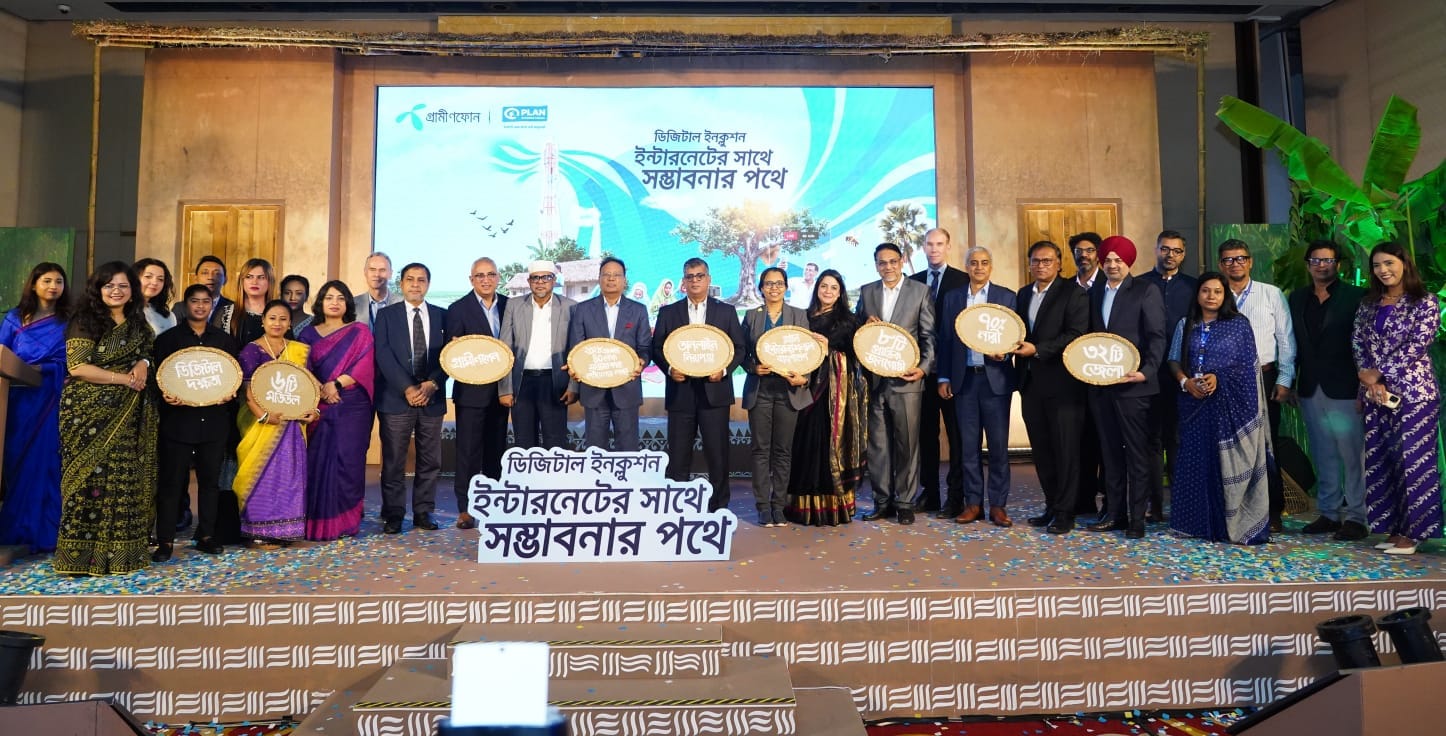



Grameenphone has launched the second phase of its digital inclusion programme, targeting 4 million people from eight underserved communities by 2028.
Implemented with Plan International Bangladesh and Telenor, the initiative will provide digital skills and improve access to education, government and financial services, and livelihood opportunities.
The first phase reached more than 3.3 million people across 32 districts, with women and girls accounting for about 68 per cent of beneficiaries. Participants reported greater use of the internet for education, government services, mobile financial services, digital birth registration and income-generating activities.

Speaking at the launch in Dhaka on Thursday, Minister for Post and Telecommunication and the ICT Division Faqir Mahbub Anam said Bangladesh’s ambition to become a $1 trillion economy by 2034 would require investment in infrastructure and technology alongside the skills and confidence needed to participate in the digital economy.
He described digital inclusion as “an economic necessity rather than merely a social responsibility” and called for greater public-private collaboration to reach women, young people, persons with disabilities, transgender people, ethnic minorities and climate-vulnerable communities.




Bangladesh Telecommunication Regulatory Commission Chairman Maj Gen Md Emdad Ul Bari said meaningful connectivity now extended beyond network coverage to digital literacy and safe technology use.
Grameenphone CEO Yasir Azman said the first phase showed how digital skills could help people learn, earn and improve their livelihoods.
The second phase will add modules on climate resilience and sustainable livelihoods, focus more on youth economic empowerment and raise women’s share among beneficiaries to 70 per cent by 2028.