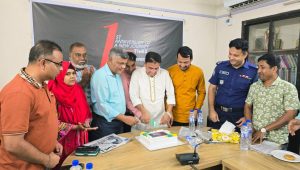
Kayser Kamal, the deputy speaker of Parliament and lawmaker for Netrokona-1 (Durgapur-Kalmakanda), has said the current government is working sincerely to improve the living standards of ethnic minorities and preserve their mother tongues.
Speaking as the chief guest at an assistance distribution ceremony held at Kalmakanda Upazila Parishad hall on Tuesday afternoon, he announced that books in the Hajong language will be published and temple-based Hajong language education activities will be launched.
These initiatives are intended to ensure that the new generation does not forget the Hajong language, as he emphasised that there is no scope for leaving anyone behind due to differences in identity.

The event was organised under the “Development Assistance for Special Areas” programme, implemented by the Prime Minister’s Office, with the objective of improving living standards, expanding education, and creating self-employment for ethnic minority communities.




During his speech, Kamal urged the public not to label ethnic minorities as “backward” and instead called upon everyone, including the Garo and Hajong communities, to move forward together as citizens with equal rights. He further stressed the importance of religious values and social awareness in maintaining a drug-free society and urged beneficiaries to become self-reliant by making proper use of the assistance provided.
Following the discussion, the deputy speaker distributed 42 bicycles to meritorious students and 28 sewing machines to trained women.
Financial stipends were also handed out to students – 141 pupils from classes one to five received Tk3,000 each; 85 students from classes six to ten received Tk5,000 each; and 57 students from classes eleven and twelve received Tk7,000 each. Additionally, newly constructed houses were handed over to nine ethnic minority families.
The ceremony was presided over by the Acting Upazila Nirbahi Officer (UNO) Md Shamsuzzaman Asif. Other notable attendees included Sukhamay Sarkar, additional deputy commissioner (revenue), as well as various upazila officials, public representatives, ethnic minority leaders, and local dignitaries.