The government has decided to issue Shariah-compliant Islamic bonds, or Sukuk, against all major bridges and infrastructure projects, including Padma and Jamuna, to reduce the budget deficit, the Ministry of Finance said.
The decision was made at a meeting of the Treasury and Debt Management Subdivision earlier this month, according to a working paper obtained from the ministry.
Budget deficits occur every year, forcing the government to borrow from domestic banks and donor agencies. The next fiscal year is projected to see a revenue and expenditure gap of Tk2,43,000 crore.
To create an alternative financing source, the government will issue bonds under the banner of infrastructure projects, covering both completed and ongoing bridges, and targeting domestic, Middle Eastern, and foreign investors.
The ministry minutes noted that recent initiatives aim to diversify financing sources, reduce borrowing costs and risks, and develop the domestic financial market. “The government is considering budget deficit financing through Sukuk from the Shariah-compliant financial sector as an effective alternative.

Through Sukuk issuance, the government and relevant authorities can ensure long-term financing for infrastructure projects, while reducing pressure on the conventional banking sector and maintaining adequate financing opportunities for the private sector,” the minutes said.
Sukuk allows investors to share in asset-backed income, providing a relatively safe investment. There is currently a shortage of risk-free instruments in the market that Shariah-compliant banks can use to fulfil their statutory liquidity ratio (SLR).




Issuing Sukuk offers substantial opportunity without affecting private sector investment and could rapidly expand the market, attracting domestic and international investors while diversifying financing sources.
The government began limited long-term Sukuk issuance in 2020, and approximately Tk34,000 crore has been issued, mainly funding infrastructure, water supply, education, and rural development projects.
Most issued Sukuk remain non-tradable, though a Tk10,000 crore tradable Sukuk was recently issued to Islami Bank Bangladesh. Both short-term and long-term tradable Sukuk are now being pursued.
Sukuk can be structured either as asset-backed, transferring ownership, or asset-based, transferring only usufruct or utilisation. Bangladesh issues only usufruct-based Sukuk, always against specific assets or projects, ensuring credibility for investors.
“Currently, Sukuk is being issued against ongoing projects, where returns are provided based on the economic value and social utility of the infrastructure. If revenue forecasts for certain projects are inaccurate, investor confidence may be affected.
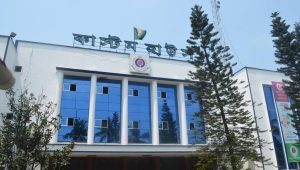
The Bangladesh Bridge Authority can play a crucial role, as its bridges represent significant existing government assets,” the minutes noted.
Ijara-Wakala Sukuk is considered suitable for the Bridge Authority. It is a Shariah-compliant structure where income is generated from asset rent (Ijara), and an appointed agent manages operations for investors.
The government has decided to issue Sukuk against the usufruct, or economic utility, of the Bangladesh Bridge Authority’s completed and under-construction bridges.
The issuance ensures projects receive long-term financing while reducing pressure on conventional banks and allowing private investment to continue. Accurate revenue forecasting and assessment of economic and social utility are critical to maintaining investor confidence.
Sukuk offers domestic and international investors a Shariah-compliant, low-risk avenue, and the government plans to expand both short-term and long-term tradable Sukuk to diversify financing sources further.