





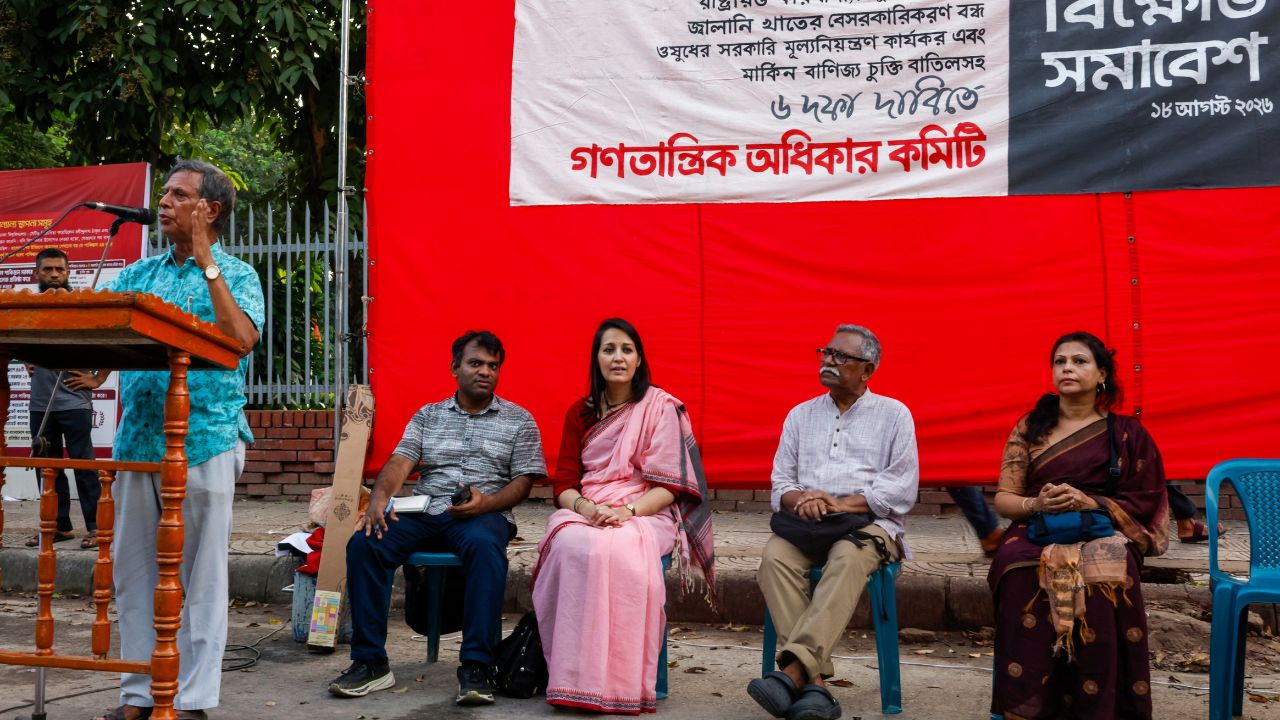
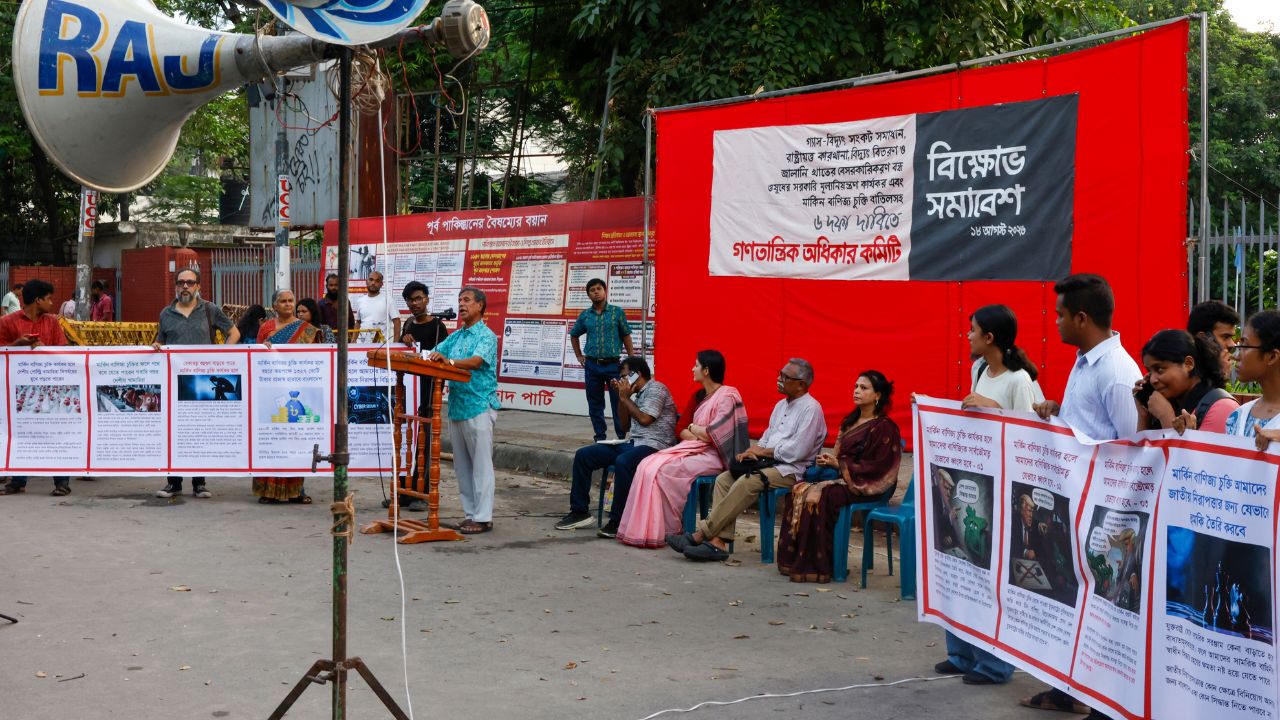
Gonotantrik Odhikar Committee held a protest rally on Tuesday to press its six-point demands, including an end to the gas and power crisis, a halt to privatisation in the energy sector, tighter control over medicine prices, and cancellation of the proposed US trade deal.
The rally began at around 4:30pm at Shahbagh in Dhaka where organisers also holding an exhibition on the possible impact of the proposed US trade deal.
Professor Anu Muhammad, physician Harun ur Rashid, Dhaka University teacher Moshahida Sultana Ritu, development economist and Jahangirnagar University teacher Maha Mirza, and representatives of various organisations addressed the rally. DU Sociology Professor Samina Lutfa was also present.
Speaking at the rally, Maha Mirza said Bangladesh Petroleum Exploration and Production Company Limited (BAPEX) has the capacity to explore and extract gas from onshore fields.
She said BAPEX had prepared a master plan in 2015-16 to drill 108 gas wells by 2021, which could have helped ease the gas crisis had it been implemented.
Instead of strengthening the state-owned company, successive governments increased dependence on foreign firms, she alleged.
BAPEX can drill wells at comparatively lower costs, while foreign companies often charge significantly more, she said.
Maha Mirza also claimed that BAPEX’s exploration success rate compares favourably with international standards.
“With adequate funding and opportunities, BAPEX can still play an effective role in exploring new gas fields,” she said.
Anu Muhammad accused the government of failing to protect public interests.
He said the proposed trade agreement with the United States could adversely affect sectors such as agriculture, poultry and pharmaceuticals.
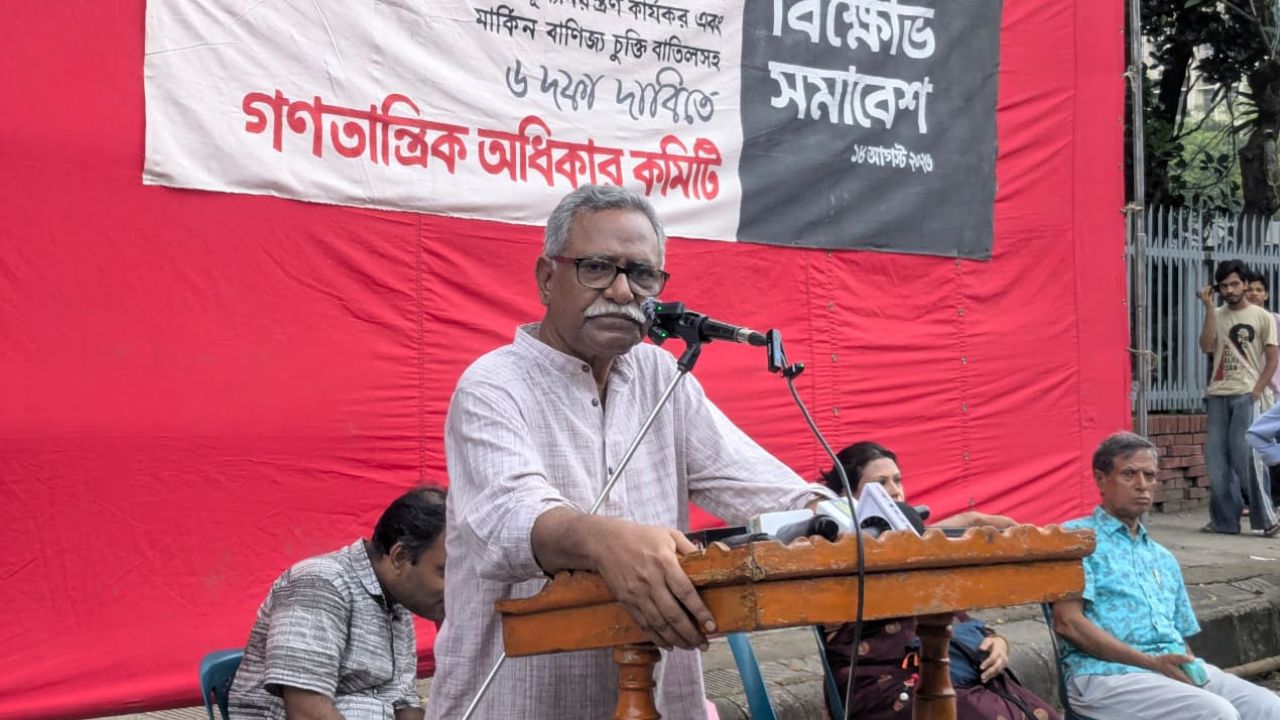
He also criticised the move to extract coal through open-pit mining in Phulbari.
Physician Harun ur Rashid said Bangladesh has around 1,300 to 1,400 generic medicines, but the government can regulate the prices of only 117 under a 1994 order.
Pharmaceutical companies are therefore free to set prices for the remaining medicines, increasing treatment costs for ordinary people, he said.
DU teacher Moshahida Sultana said the government was not taking effective measures to resolve the gas and electricity crisis.
She warned that giving private companies control over a large part of the energy market could reduce the government’s ability to regulate prices.
The organisers called for the implementation of all six demands, including resolving the gas and electricity crisis, strengthening state-owned enterprises, halting privatisation in the energy sector, ensuring effective medicine price controls and scrapping the proposed US trade agreement.


