
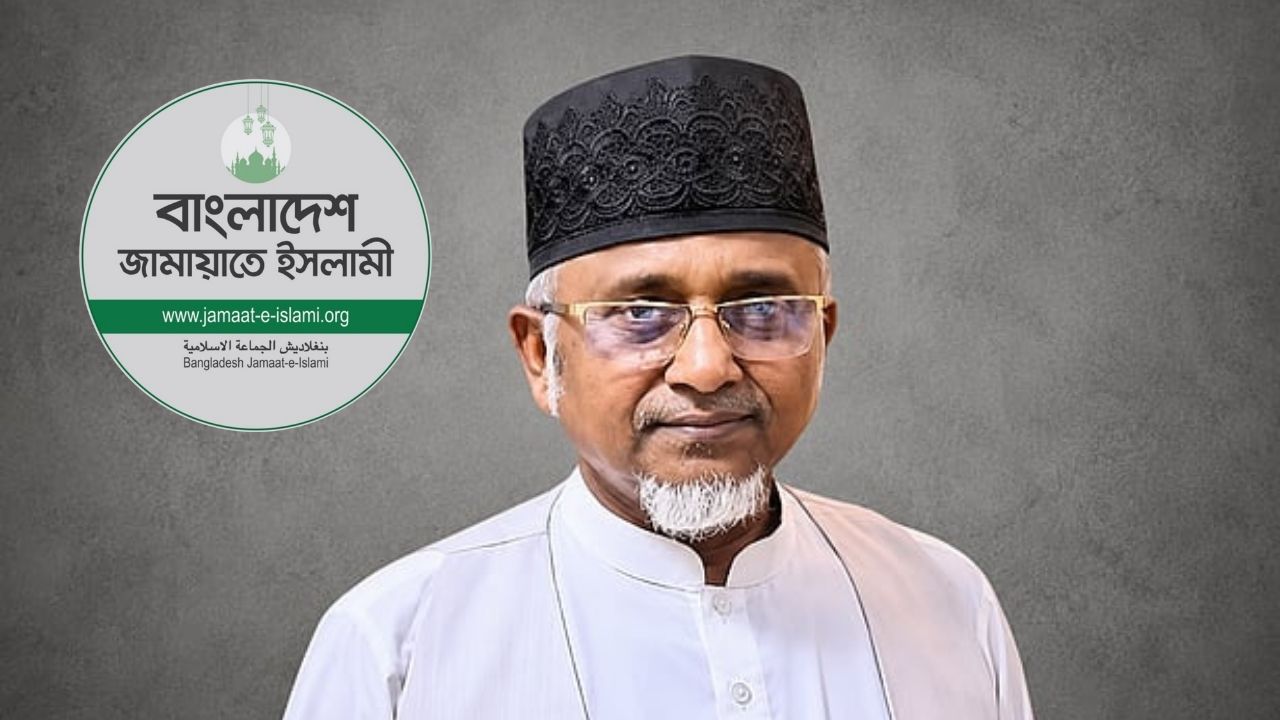

Although Jamaat-e-Islami has expelled Gazi Nazrul Islam from the party for moral turpitude, a TIMES of Bangladesh investigation reveals that the MP faces allegations of other offences carrying up to two years’ imprisonment, which could cost him his parliamentary membership.
In an official statement, Jamaat’s central executive committee on Wednesday announced, “As the organisational investigation proved Gazi Nazrul Islam’s moral lapse, it was decided to expel him from Bangladesh Jamaat-e-Islami in accordance with Article 62 of the constitution. At the same time, it was decided to immediately inform the Bangladesh Election Commission of his expulsion.”
Yet the high-profile purge will not automatically strip him of his office. Under the constitution, expulsion from a political party does not trigger the forfeiture of an MP’s parliamentary seat, leaving Islam stranded in legal and political limbo.
The turmoil erupted after a video showing the MP in an intimate moment with a young woman in a room went viral. Addressing the fallout, the Jamaat leader posted on Facebook on Tuesday, claiming the pair had married on 17 June.
However, the Kazi who logged the union said that official registration took place on Tuesday, 21 July, 34 days later.
That four-day lag could prove legally fatal. Under Bangladeshi law, any marriage solemnised by someone other than an official Nikah Registrar must be reported to the appropriate registrar by the groom within 30 days.
The official document bears the seal of the Kazi (marriage registrar), Badrul Alam Md Baki Billah, the registrar for Gabura Union No 12 in Shyamnagar, Satkhira.

Confirming he did not conduct the ceremony himself, the registrar told TIMES of Bangladesh that he was informed of the Dhaka wedding via a phone call on Monday night and completed the registration the following day.
Under Section 5 of the Muslim Marriage and Divorce (Registration) Act 1974, failing to meet the 30-day reporting window constitutes a criminal offence.
A breach carries a penalty of up to two years’ simple imprisonment, a fine of up to Tk3,000, or both.
Legal experts stress that the burden of compliance rests squarely on the lawmaker. Speaking to TIMES, Dhaka Judge Court lawyer Rezwanul Islam noted, “Under Bangladeshi law, all responsibilities related to a marriage rest on the husband, including registration. Therefore, if the law is breached, the husband faces the penalty.”
While the wife holds primary standing to bring charges, the state or police may also step in, a common precedent in child marriage cases where families refrain from acting.




Supreme Court lawyer Nahida Khanam added that the legal options do not end there, “If any citizen believes such conduct harms society, they can seek remedies through public interest litigation.”
For Gazi Nazrul, the political stakes could not be higher.
Article 66 of the Constitution stipulates that anyone convicted of a criminal offence involving moral turpitude and sentenced to at least two years’ imprisonment is disqualified from serving as an MP, unless five years have passed since their release.
It is not only the MP feeling the heat. The marriage registrar himself, Badrul Alam Md Baki Billah, now faces significant regulatory jeopardy.
Under Section 11 of the Muslim Marriage and Divorce (Registration) Act 1974, the government holds the power to suspend a Kazi’s licence for up to two years, or revoke it entirely, if he is found guilty of official misconduct.
Following the fallout, Baki Billah has turned off his mobile phone.
The controversy deepens further under the Muslim Family Laws Ordinance 1961.
Section 6 of the ordinance stipulates that any man wishing to contract a polygamous marriage while already married must first obtain written permission from an official Arbitration Council. Without that explicitly granted consent, any subsequent marriage cannot legally be registered.
Gazi Nazrul claimed the wedding was solemnised at the bride’s father’s home, though he omitted whether he meant the family’s village residence or a property at Rose Garden Tower in Kalshi, Mirpur.
When TIMES approached security personnel at the Mirpur apartment block, a guard admitted, “I have been instructed not to speak about this matter.”
Jurisdictionally, Kalshi falls under the Dhaka North City Corporation, while Gabura operates under a local union parishad in Satkhira. To lawfully marry a second time, the MP was required to seek approval from either the DNCC administrator or the Gabura Union Parishad chairman.
However, Gabura Union Parishad Chairman GM Masudul Alam confirmed to TIMES that no such application was ever submitted by the MP, nor was an Arbitration Council ever convened.
Lawyer Nahida Khanam noted that consent for a second marriage is typically granted only under specific statutory conditions – such as a current wife’s physical incapacity, involuntary childlessness, or severe marital breakdown.
Yet official filings undercut these potential defences. In affidavits submitted ahead of the 13th parliamentary election, Gazi Nazrul listed his existing children. While the state of his marriage remains undisclosed, his first wife has publicly backed him during the scandal, threatening legal action against anyone spreading what she described as false propaganda.
Crucially, the registration document signed by Baki Billah lacks any reference number indicating that written permission was granted by an Arbitration Council.
Failure to secure prior approval carries severe legal teeth: a violation is punishable by up to a year in prison, a fine of up to Tk10,000, or both.
Furthermore, the law mandates that the husband immediately settle the entire dower sum owed to his existing wife or wives, with any unpaid amount recoverable by the state as arrears of land revenue.