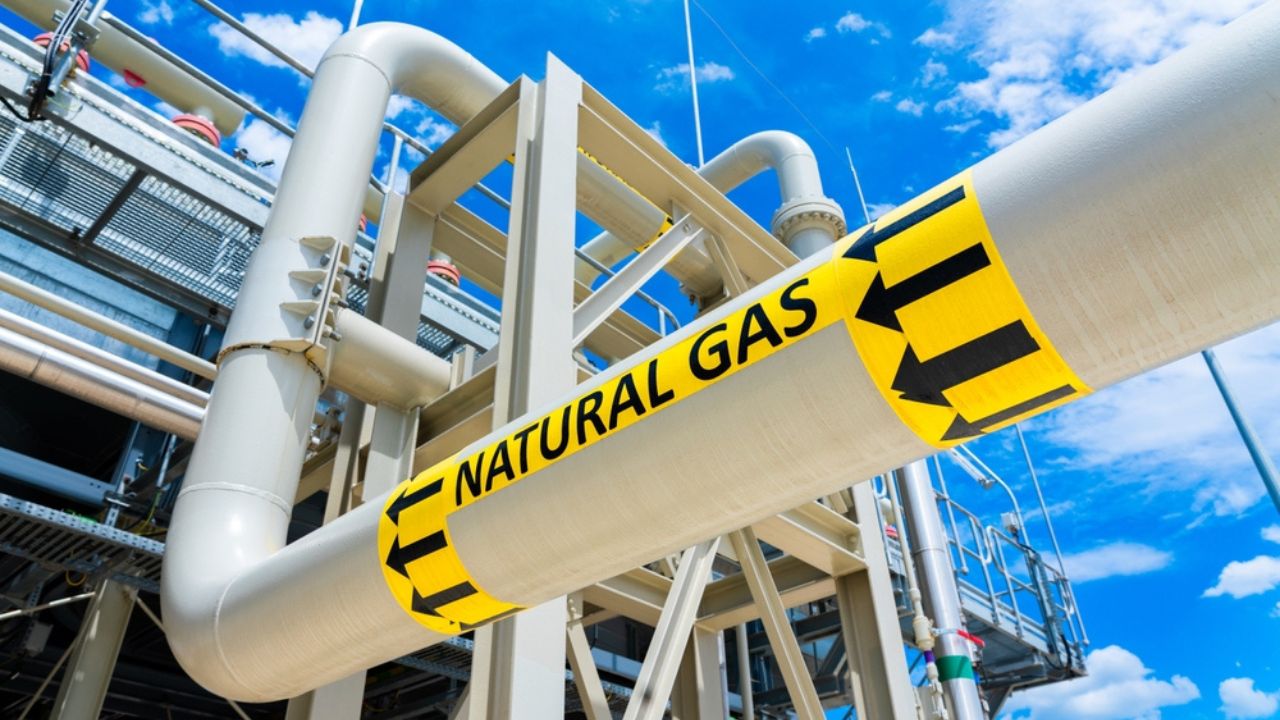

Bangladesh’s gas shortage has moved beyond an energy constraint and developed into an industrial crisis, forcing factories to cut or shut down production, delaying investment and increasing dependence on imported goods.
Manufacturers say the suspension of new industrial gas connections, declining domestic production and limited LNG import capacity are weakening production, employment and export competitiveness across sectors.
Industry leaders estimate that around 40 per cent of factories nationwide are operating partially or remain shut because of shortages of gas and electricity, compounded by weak working capital and limited access to bank financing.
“Already, 15 lakh jobs have been lost over the past few years,” Bangladesh Textile Mills Association (BTMA) President Shawkat Aziz Russell told TIMES of Bangladesh.
Many factories continue to pay workers despite operating below capacity, draining cash reserves and raising the risk of permanent closure. The uncertainty is also discouraging fresh industrial investment.
In a 14 July letter, the Energy and Mineral Resources Division said 1,857 previously approved gas connection applications remained pending. No new industrial gas connections or load increases are currently being considered, as domestic production remains inadequate and LNG imports are restricted to two floating storage and regasification units (FSRUs).
Bangladesh requires about 3.8 billion cubic feet of gas a day but currently supplies around 2.6 billion cubic feet, leaving a daily deficit of about 1.2 billion cubic feet.
The vulnerability of the system became evident last week when a technical fault at the Moheshkhali FSRU removed more than 500 million standard cubic feet of gas a day from the national grid, cutting available supply by nearly one-fifth and disrupting power generation and industrial consumption.
The acute gas shortage is spreading across the economy.

Several CNG filling stations in Dhaka remained closed for days, while others operated under low pressure, forcing motorists to wait for hours to refuel. Residential consumers faced prolonged gas outages, pushing many households towards electric cooking or prepared food. Restaurants, transport operators and small businesses reported higher operating costs.
The greatest damage is occurring inside factories.
Bangladesh Chamber of Industries President Anwar-ul Alam Chowdhury Parvez said an uninterrupted energy supply was the most critical industrial input and warned that investors would not commit new capital without reliable gas supplies and supporting infrastructure.
Investors in economic zones were assured of utility services, including gas, but many have yet to receive them, weakening confidence among local and foreign investors.
“If someone invests hundreds or thousands of crores of taka and does not receive the promised gas supply, who bears that risk?” Parvez said, calling for accountability and compensation mechanisms when committed utility services cannot be delivered.
The disruption has spread beyond textiles, according to Russell. Factories producing particle board, paper, wood pellets, plastics, steel, yarn and dyed fabrics have either suspended operations or are running below capacity.




Within BTMA, around 300 textile mills and more than 350 apparel factories have shut down over the past three years.
The paper industry reflects the broader decline in domestic manufacturing capacity. Of roughly 140 paper mills, only about 40 remain operational, forcing Bangladesh to rely increasingly on imports despite having local production capacity.
“Factories remain closed, yet wages must still be paid,” Russell said. “After paying salaries year after year without production, entrepreneurs have exhausted their working capital.”
He estimated that around 40 per cent of the primary textile sector’s $23 billion investment, equivalent to roughly $8 billion to $9 billion, had become stranded.
The erosion of domestic capacity is also increasing import dependence.
Bangladesh imported about Tk28,000 crore worth of yarn last year, more than double the previous year’s level, despite local mills having sufficient capacity to meet domestic demand for cotton yarn, Russell said.
“If the yarn were produced locally, we would retain dollars, create jobs and increase value addition. Instead, we are becoming an import-dependent economy,” he said.
Russell said Indian producers received average subsidies of about 15 per cent through lower electricity costs, financing support, machinery incentives, land benefits and other forms of assistance. This allowed Indian yarn to be sold at prices around 12 per cent lower than comparable Bangladeshi products, despite Bangladesh having modern mills.
The pressure could intensify after Bangladesh’s graduation from least developed country status, when exporters will face stricter local value-addition requirements.
“Who will run the factories and the economy if local companies collapse?” Russell asked.
He said policy support should also focus on import-substituting industries, not only export sectors.
Bangladesh continues to import products that domestic manufacturers can produce, he said, citing paper as an example.
“If paper mills cannot secure gas, how will they produce the paper needed for books and notebooks? Eventually, the country will have no option but to import.”
Energy experts say the crisis reflects deeper structural weaknesses in Bangladesh’s gas system.
Dhaka University Professor Badrul Imam said the country could not depend indefinitely on imported LNG because global prices and supplies remained volatile. He called for faster onshore and offshore exploration, the development of existing fields and greater investment in domestic gas production.
Energy expert M Tamim, blaming prolonged negligence in gas exploration, said dependence on only two FSRUs had left the system without sufficient backup capacity.
Routine maintenance alone can keep an FSRU offline for 15 to 20 days annually, making supply disruptions unavoidable without alternative infrastructure.
A third FSRU should be brought into operation quickly to improve short-term supply reliability, as exploration is not a short-term task, he said.
However, expanding domestic production remained the sustainable solution, he added.
Energypac Managing Director Humayun Rashid said floating LNG terminals had helped narrow the supply gap but could not replace permanent import infrastructure.
He urged the faster development of onshore LNG terminals and a long-term gas strategy, warning that prolonged shortages were already forcing factories to reduce production, suspend operations and lose competitiveness.
The industrial fallout is extending beyond the energy sector.
Every factory operating below capacity reduces domestic value addition, increases import dependence, weakens export competitiveness, limits foreign-exchange retention and discourages new investment, manufacturers say.
“The gas crisis must be resolved to revive the pace of the economy,” said DCCI President Taskeen Ahmed.