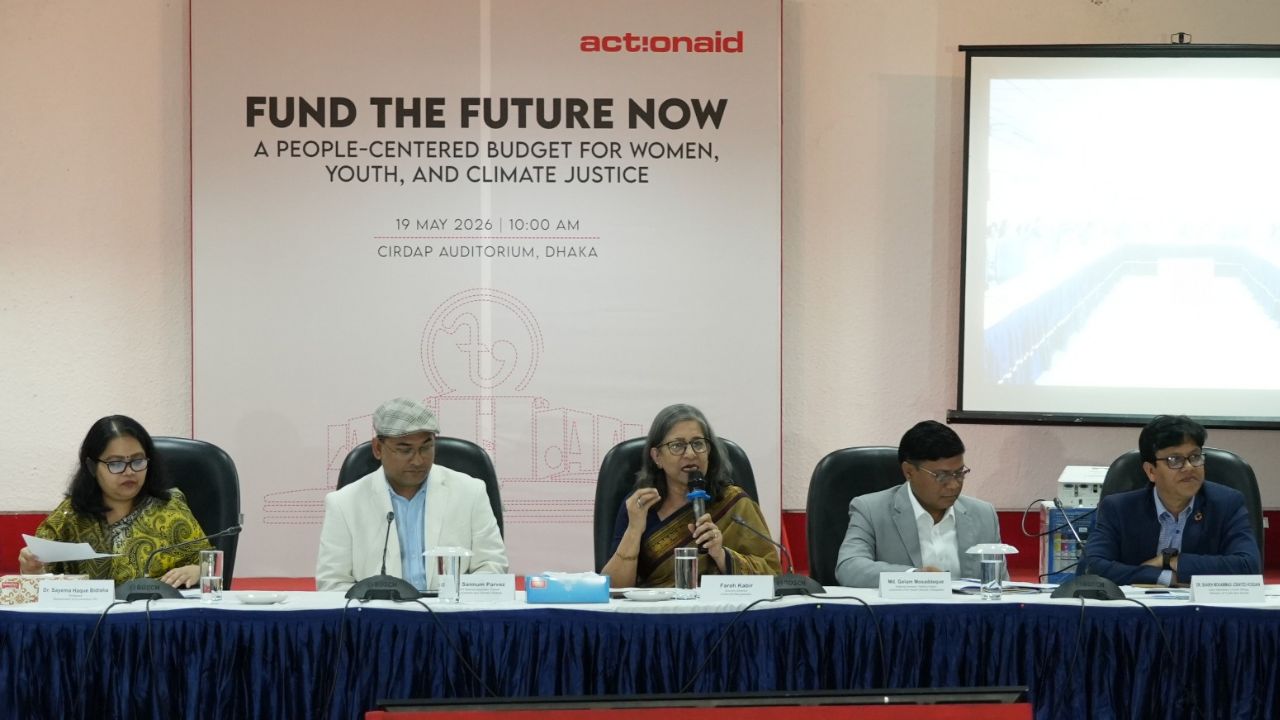

The upcoming national budget for the 2026–27 fiscal year presents a significant opportunity for the newly elected government to translate its electoral commitments into concrete action.
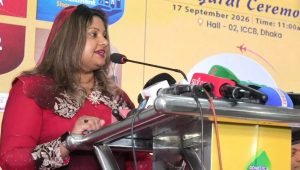
Speakers at a dialogue titled “Fund Our Future Now: A People-Centred Budget for Women, Youth and Climate Justice,” emphasised that this budget must serve as a major step toward implementing pledges on inclusive growth, employment generation, youth skills development, gender equality, and climate resilience.
The programme was organised by ActionAid Bangladesh at the CIRDAP auditorium on Tuesday.
Despite a steady increase in the overall budget size over the past five years, allocations for critical sectors like education, health, and gender-responsive initiatives have remained stagnant relative to actual needs.

Participants stressed that a balanced alignment between policy-level ambitions and grassroots realities is now essential to formulate a forward-looking macroeconomic framework.
Declining allocations and implementation gaps
According to a budget review presented by ActionAid Bangladesh, education sector allocations have declined from 2.08 per cent of GDP to 1.72 per cent over the last five fiscal years.
Similarly, the overall size of the gender budget has fallen from 5.7 per cent to 4.2 per cent of GDP, leading to weakened institutional capacities for violence prevention and legal support at the grassroots level.



In the climate sector, only 2.89 per cent of the Annual Development Programme (ADP) has been directed toward renewable energy, despite Bangladesh’s high vulnerability to climate change.
Climate finance expert Dr Ahsan Uddin Ahmed noted that while nearly 25 ministries have been engaged in climate-related activities over the last decade, the average implementation capacity remains just 7 per cent, undermined by weak accountability mechanisms.
Dr Saimum Parvez, Special Assistant to the Prime Minister on Environment, Forest and Climate Change, responded by stating that climate finance, debt management, and international funding are now receiving the highest priority, with the government actively exploring carbon trading opportunities estimated at nearly $1 billion.
Policy reforms for inclusive development
To address these disparities, experts and policymakers proposed several structural reforms for the FY2026–27 budget.
Economist Professor Sayema Haque Bidisha argued that gender budgeting must be viewed as an integrated framework cutting across all ministries rather than separate allocations, calling for the recognition of unpaid care work and the expansion of employment beyond the garment sector.
Key recommendations presented at the dialogue include gradually increasing education allocations to 3 per cent of GDP by 2028 and raising women’s participation in Technical and Vocational Education and Training (TVET) to 40 per cent by 2030.
For youth development, speakers urged the expansion of the Youth Entrepreneurship Fund to Tk 600 crore and the launch of a real-time public tracking dashboard to ensure transparency.
Additional proposals included establishing a dedicated Women Entrepreneurs Fund, expanding One-Stop Crisis Centres, and creating specific budget codes for climate loss, damage, and adaptation financing to ensure funds reach the local level.
The session also featured insights from representatives of climate-affected regions, the transgender community, and persons with disabilities, who shared their lived experiences and expectations with the government.