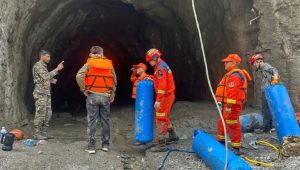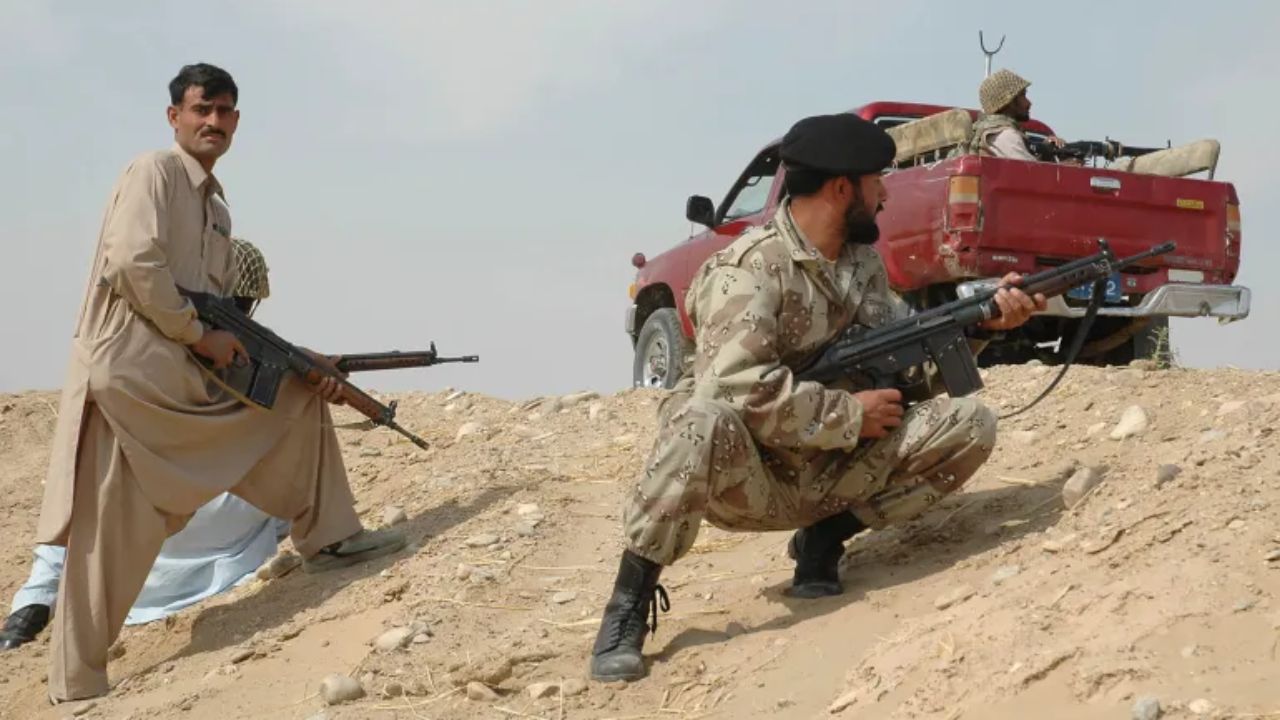

At least 45 Pakistani soldiers were killed on Thursday following an ambush on a security convoy in the Mastung region of Balochistan, according to the Balochistan Post.
The Balochistan Liberation Army (BLA) claimed responsibility for the strike, which is the third significant attack on security personnel in the province within two weeks.
The Pakistan Army confirmed the engagement but has not yet provided an official casualty figure. Jeeyand Baloch, a spokesperson for the BLA, stated that the group’s “Fateh Squad” conducted the coordinated operation, which targeted the convoy, its escort, and subsequent reinforcements.

He indicated that fighting continued after the initial assault, with the potential for further casualties.
Responding to the escalation, Pakistan Army spokesperson Lieutenant General Ahmed Sharif Chaudhry vowed to “hunt” those responsible, cautioning that the military’s response would not be constrained by “rationality and proportionality”.




The attack follows the launch of “Operation Shaban”, a joint offensive involving the Army, Frontier Corps, and Balochistan Police, supported by intelligence and air assets.
The operation was initiated after 27 police officers were killed at Mangi Dam in Ziarat and 11 soldiers died in a Lasbela ambush earlier this month. A committee is currently reviewing these earlier incidents to identify potential security or coordination lapses.
The region has faced intense violence recently; between 6 and 9 July, attacks by the BLA and the Tehreek-e-Taliban Pakistan (TTP) led to significant losses.
This included a TTP-led hostage crisis in which 18 police personnel were abducted and subsequently killed. On 8 July, 11 soldiers died in a BLA ambush near the N-25 highway in Lasbela, though the group claimed 17 fatalities.
Balochistan is Pakistan’s largest province and is central to its economic goals, hosting the Chinese-funded Gwadar port under the Belt and Road Initiative. However, it remains the centre of a persistent insurgency fuelled by demands for greater political autonomy and control over the province’s vast natural resources.