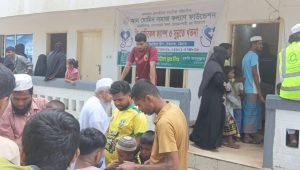
Motorcyclists have thronged the Chuadanga Deputy Commissioner’s (DC) office to collect “fuel cards”, leading to significant congestion.
On Monday morning, hundreds of drivers from the district’s four upazilas faced extreme suffering while standing in long queues to submit photocopies of required documents.
Applicants reported that despite waiting for hours to submit their applications, no clear information has been provided regarding when they will receive the cards. There is also uncertainty as to whether the cards will be issued on the same day.
Drivers argued that this ordeal could have been significantly mitigated if application booths had been set up at the upazila level.

A fuel card is a specialised payment card used to purchase petrol, diesel, and other fuels. While it operates similarly to a debit or credit card, it offers the advantage of monitoring fuel consumption, controlling expenditure, and maintaining digital records.
This initiative follows a meeting held on Sunday at DC’s conference room regarding the storage, transport, marketing, and usage of fuel oil. It was disclosed that the government plans to introduce “fuel cards” for all vehicles to combat ongoing instability and manipulation in the fuel sector.




Energy Division has already initiated preliminary activities to this end.
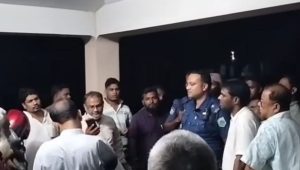
Deputy Commissioner Mohammad Kamal Hossain stated, “From 1 April, no fuel will be supplied to anyone without a fuel card”. In accordance with this directive, a two-day distribution drive is being conducted this Monday and Tuesday.
To collect the card, which is being provided free of charge, applicants must present their National Identity Card (NID), vehicle registration copy, driving licence, and one photograph. He further warned that “if the fuel card is not collected within the designated time, fuel will not be supplied subsequently.”
According to district administration sources, there are 22 fuel pumps in Chuadanga. Starting Monday, fuel distribution will be operational at every pump from 7am to 8pm. However, a special provision has been made for farmers, who will be able to collect diesel from the pumps 24 hours a day.
For emergency services, including the police and journalists, fuel collection will be restricted to two specific pumps in the district. Respective Upazila Nirbahi Officers (UNOs) will designate one pump in each upazila for emergency services.
To prevent the creation of artificial shortages, the district administration has appointed a tag officer at every pump.
Officials noted that if the current instability in the Middle East persists, import-dependent countries like Bangladesh could face immense pressure. There are already allegations that certain traders are attempting to create artificial crises by hoarding oil.