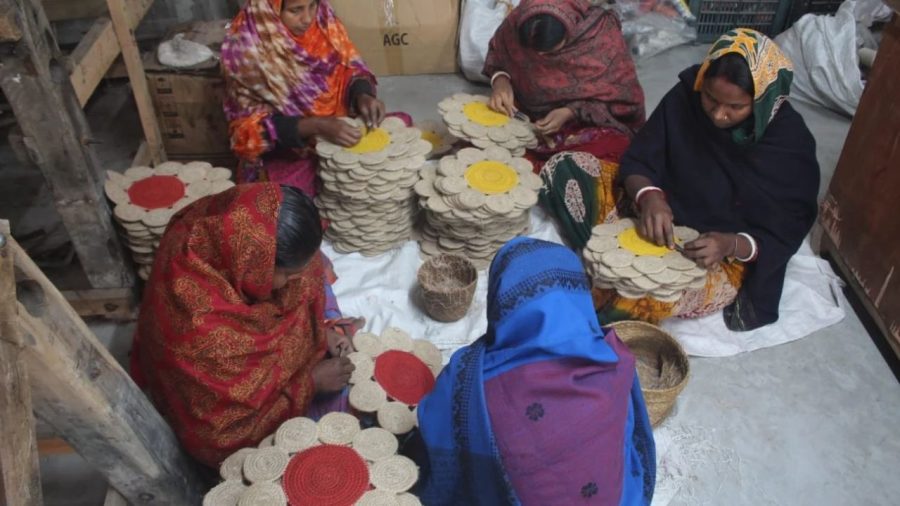



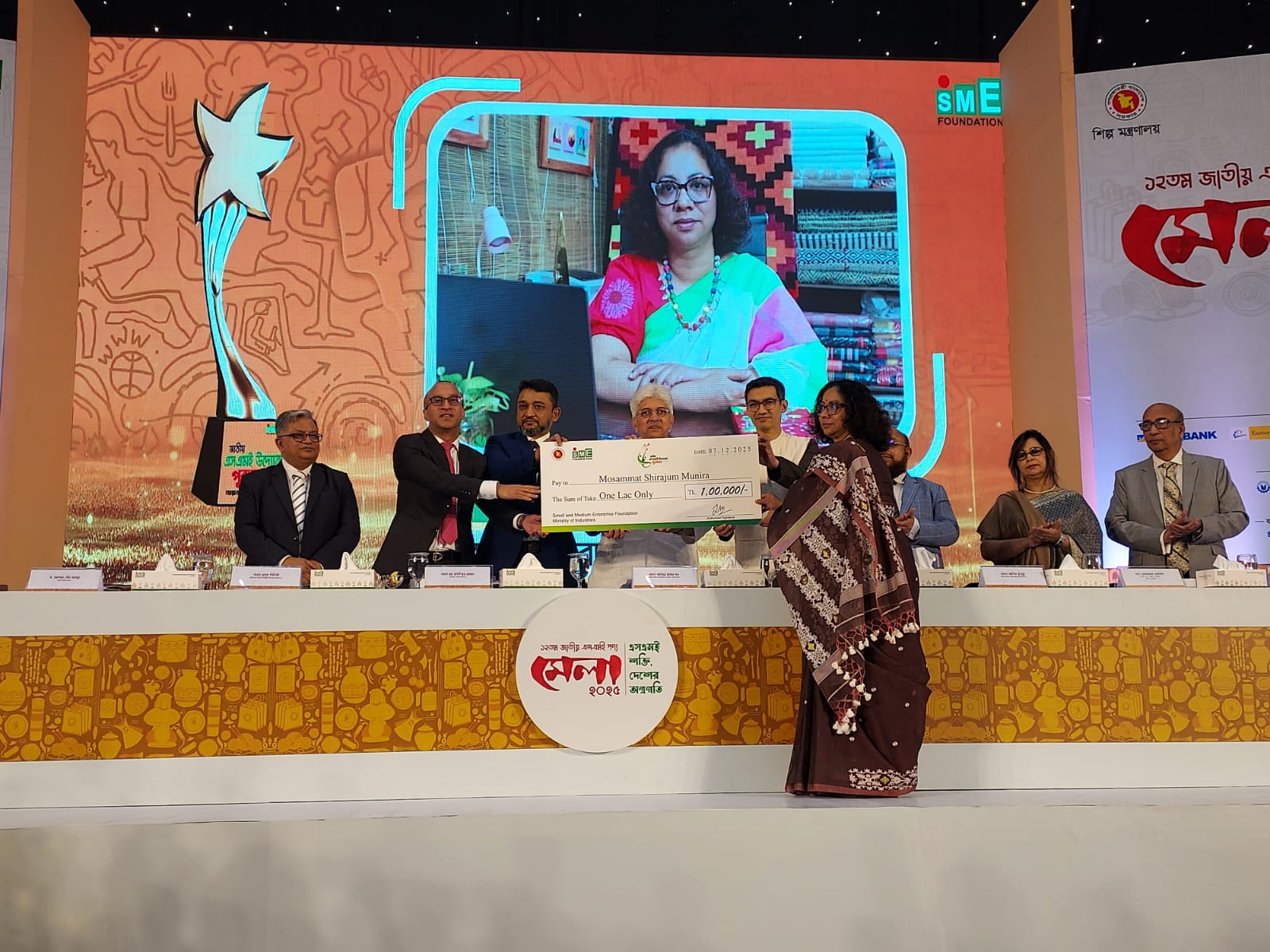
A Tk20,000 investment, 20 trained local women and a shared ambition set Sirajum Munira and Ferdous Ahmed on a journey that has turned their small handicraft venture into a business with capital of Tk1.5 crore.
Munira was working as a research manager at a missionary hospital in Parbatipur, Dinajpur. But balancing a 9-to-5 job with household responsibilities eventually left her exhausted and prompted her to revisit a dream she had held since her university days – building something of her own.
Her husband, Ferdous, a former university classmate, shared that ambition. He was then working at a bank, leaving home in the morning and returning after sunset. Both wanted to move beyond their salaried jobs and establish a business together.
After their marriage, the couple visited different places in search of an opportunity. In 2015, they were impressed by a handicraft business in Rangpur that produced attractive goods from jute. Inspired by its work, they returned to Parbatipur and trained 20 local women to make handicrafts. They also learned the necessary skills themselves.
By mid-2017, eight years into their marriage, they had a business idea, the determination to pursue it and a group of trained workers. They decided to take the plunge and launched Sutar Kabbo, making home décor items from jute yarn with an initial investment of just Tk20,000.
Nine years later, the business has capital of Tk1.5 crore, while monthly sales sometimes exceed Tk30 lakh.

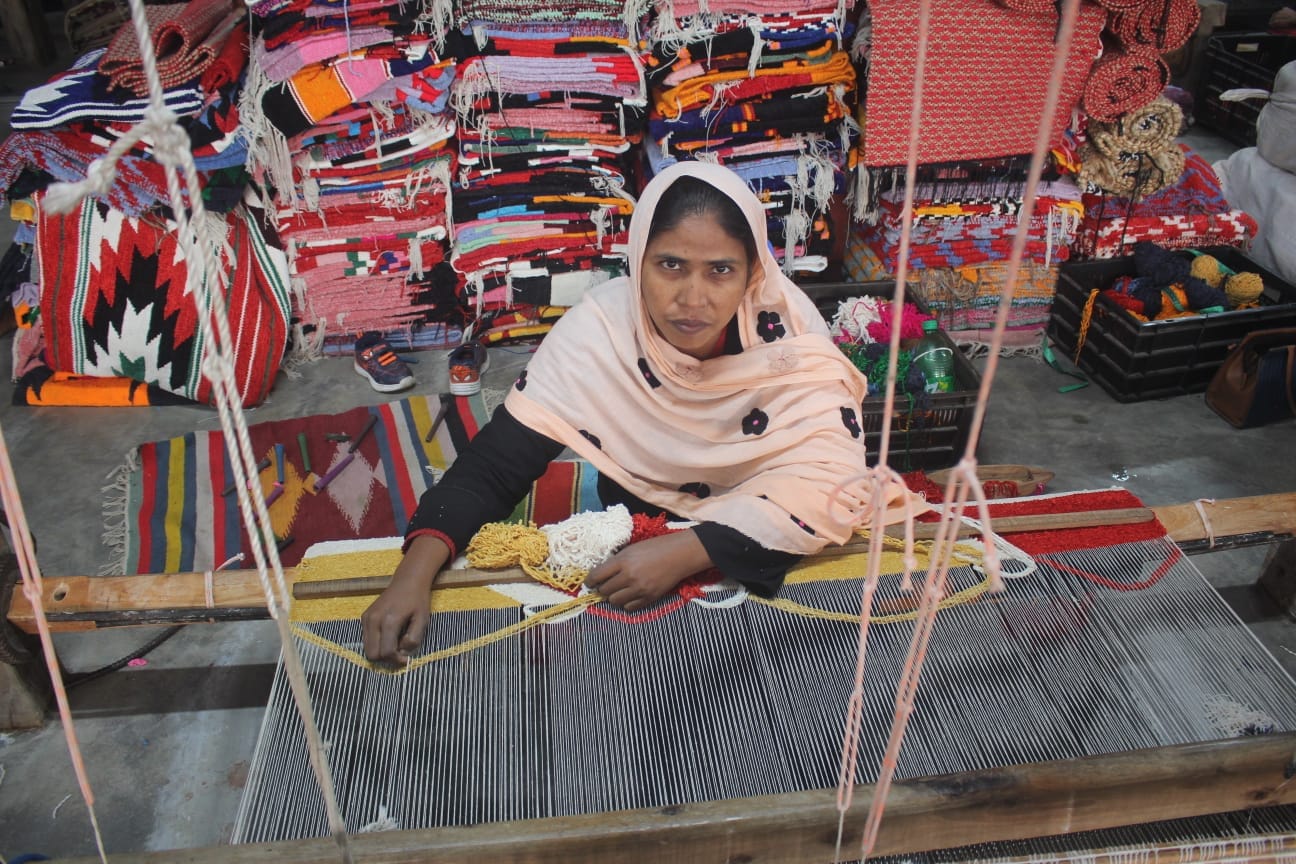
The journey began in a rented house, where Munira and Ferdous worked with 15 people to produce jute shataranji rugs, floor mats and nakshi kantha. They marketed the products themselves, cutting out middlemen and retaining the proceeds from sales.
Rather than opening a shop, they created a Facebook page to sell their products online, avoiding the costs of running a physical outlet.
At the time, consumer interest in jute products was limited. But the couple’s handmade creations began attracting buyers. Monthly sales initially ranged from Tk30,000 to Tk40,000.




They then turned their attention to Europe, where environmental awareness was stronger and demand for jute products was good. Their first breakthrough came in 2019, when they shipped products worth around Tk1.5 lakh to Italy.
The export order gave them confidence to expand. They leased eight decimals of land in Rajabashar village in Parbatipur and established a factory. As the business grew, they moved beyond the rented facility in 2023 and built a new factory on land purchased with their own earnings. The facility covers 12,000 square feet.
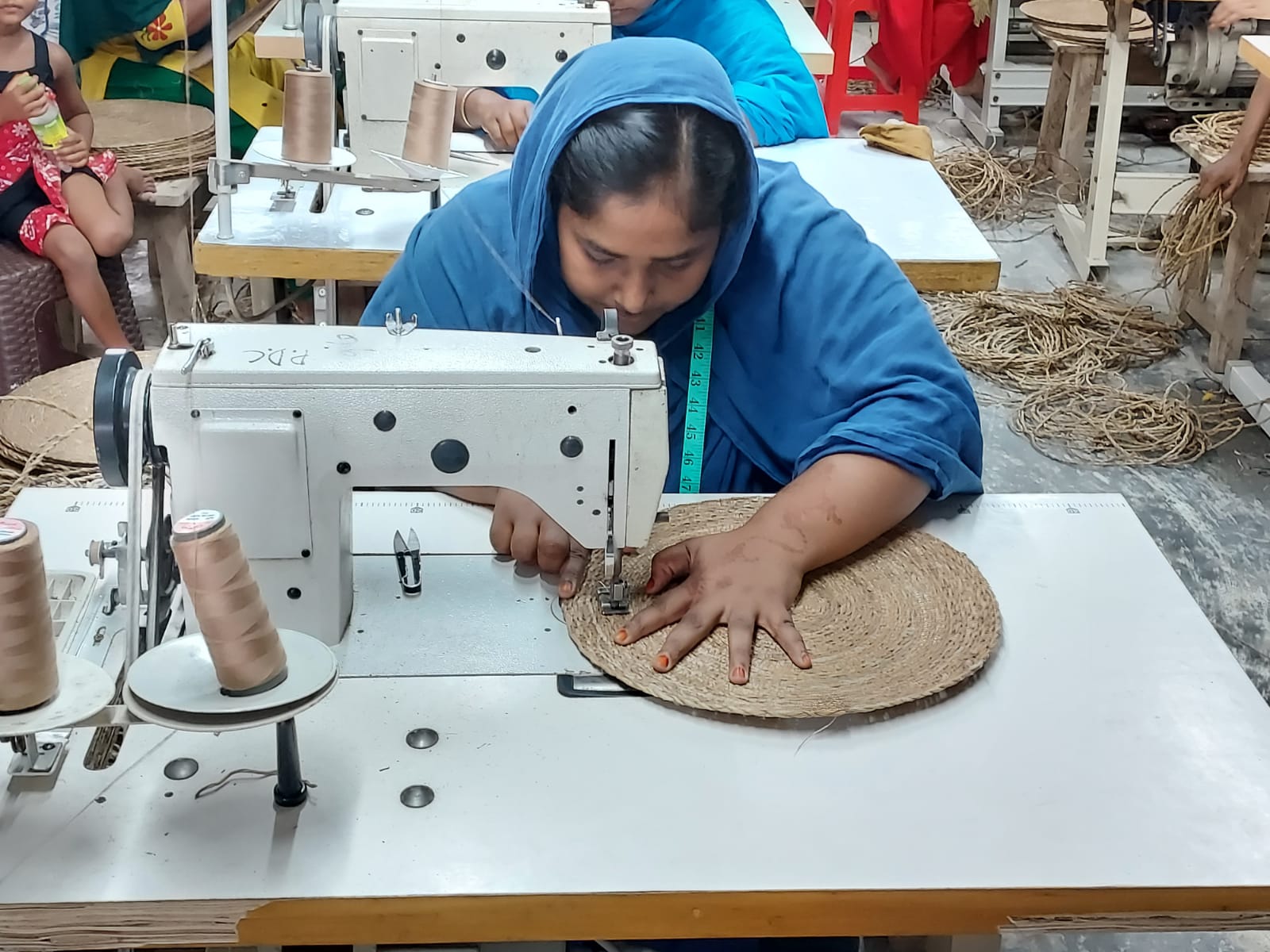
The factory now has 55 looms and 16 sewing machines. Its product range includes floor mats, placemats, floor rugs, table runners, shataranji rugs, wall hangings, plant baskets, laundry baskets, glass coasters, cushion covers, appliqué bed covers, bookmarks, children’s rugs and tufting rugs.
A screen-printing unit at the factory produces 100 table runners a day.
The business now employs 100 regular workers, 90% of them women. Skilled workers earn between Tk13,000 and Tk14,000 a month.
In September, Sutar Kabbo also opened a retail outlet in Dhanmondi, Dhaka.
For Munira, establishing a factory in a village in Parbatipur was far from easy. Bringing local women into the workplace and creating a regular 9am-to-5pm working environment required considerable effort. The couple also had to build a market for their products almost from scratch.

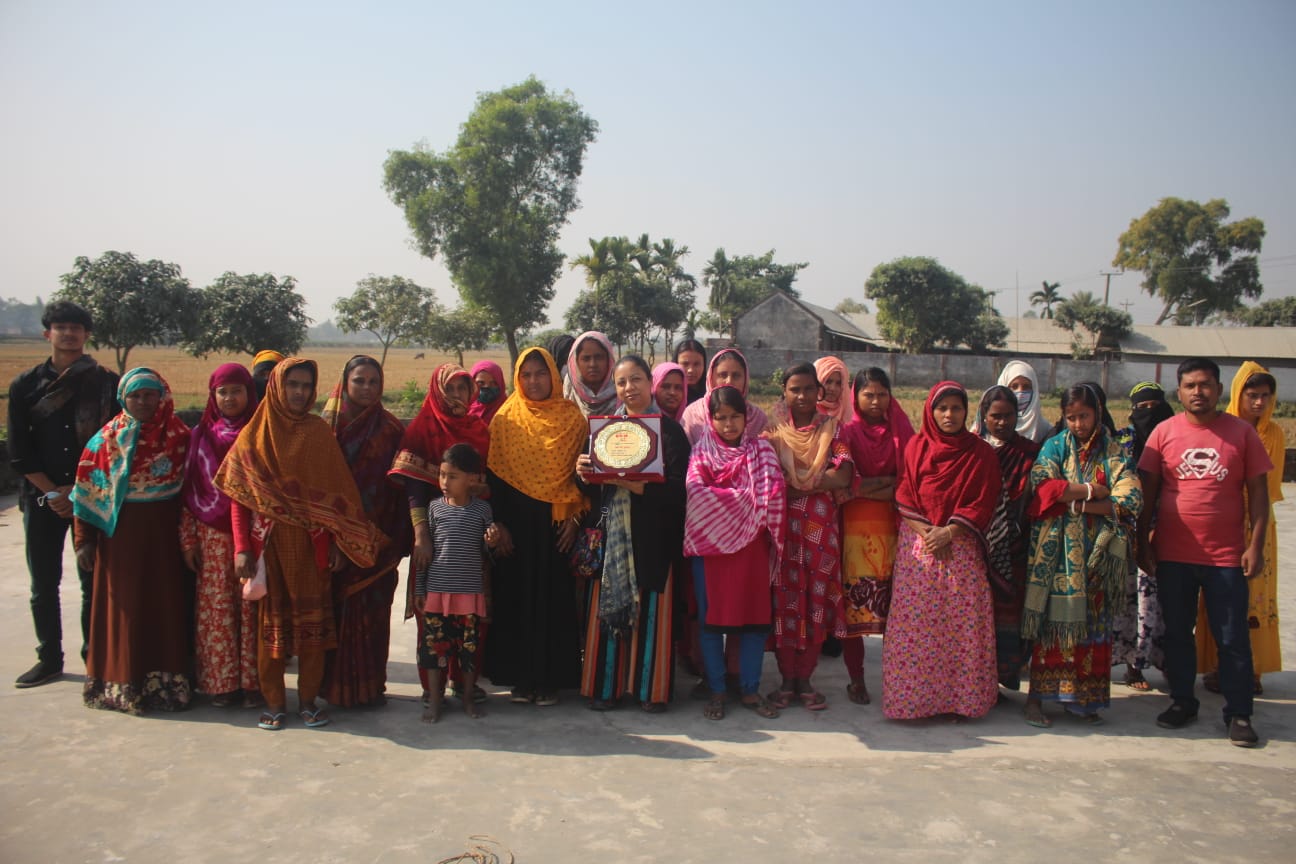
The business has grown, but Munira says access to resources and finance remains a challenge.
“There is a shortage of the resources needed to develop the market for jute products in Bangladesh. The resources that are available are also very expensive. As a result, we have faced various obstacles in both production and market expansion,” she told TIMES.
Access to finance has also been a major barrier to expansion. Munira said bank loans remained difficult for women entrepreneurs to secure because of complicated lending conditions and collateral requirements.
“The government often talks about providing loans without collateral. We have not actually received such loans. In many cases, government officials are asked to act as guarantors. These challenges still remain,” she said.
Ferdous has since left his banking job to become his wife’s business partner. He now serves as Sutar Kabbo’s executive director.
Giving credit to his wife for the business’s growth, he told TIMES, “Everything that has brought Sutar Kabbo this far is her contribution. I have only helped her. She has done everything else.”