Fish scales once dumped as waste in Bangladesh’s local markets are now creating extra income for low-income families and earning foreign currency through exports to several Asian countries, traders and fisheries officials in Chuadanga said.
The trade, centred around processed fish scales collected from local fish markets, has expanded across Chuadanga district with support from non-governmental organisation Wave Foundation, as growing overseas demand turns discarded fish by-products into an export-oriented commodity.
Bangladesh, one of the world’s largest fish-producing countries, generates large quantities of fish-processing waste every year.
Among the by-products, fish scales are increasingly being recognised as a valuable industrial raw material used in products ranging from cosmetics to pharmaceutical items.
According to district fisheries officials and local traders, fish scales collected from markets in Chuadanga sadar upazila and surrounding areas are now exported to Japan, China, Indonesia, the Philippines, Thailand and South Korea after processing.
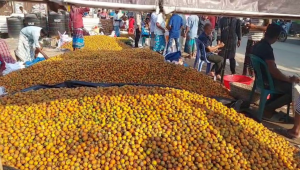
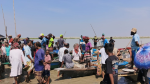
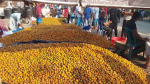
A visit to several fish markets in Chuadanga town found traders no longer throwing away fish scales, instead storing and drying them for sale.
The scales are used abroad in the production of lipstick, cosmetics, capsule coatings and other industrial goods.

People involved in fish cutting collect the scales during processing before washing them repeatedly with clean water and drying them under the sun.
Industry sources said the drying process reduces moisture levels to below 10 per cent, helping prevent decomposition before the scales are sold to local traders.
The scales are later supplied to wholesale buyers two or three times a year.
Depending on quality and size, each maund of fish scales sells for between Tk2,000 and Tk4,000.


Bangladesh currently exports mainly dried and processed fish scales, with demand particularly strong in East and Southeast Asian countries.
Several local companies are exporting hundreds of metric tonnes of processed scales every year, according to traders.
For many fish cutters, the trade has become a source of additional earnings.
Md Saiful Islam, who cuts fish at Boro Bazar in Chuadanga sadar, said scales once treated as useless waste now provide regular monthly income.
“Every day we collect around 15 to 20 kilograms of fish scales. Earlier we threw them away, but now we earn an additional Tk3,000 to Tk4,000 a month by selling them,” he said.
Another trader at the same market, Sharif Uddin, said he cuts nearly one maund of fish daily and earns extra money through the sale of scales.
“Besides income from fish cutting, we now earn extra money from selling fish scales. As the scales are being exported abroad, we are getting good prices,” he said.
At Darshana Bus Stand market in Damurhuda upazila, fish cutter Shukur Ali said workers had initially discarded scales before learning about their export value.
“After learning that the scales were being exported, we started storing and selling them. Wave Foundation provided us with training, equipment and financial assistance,” he said.
Wholesale traders collect scales from different markets before sending them to Dhaka and Chattogram for further processing and export.
Wave Foundation Fisheries Officer Sayeed-ur-Rahman said fish cutters are being encouraged to collect scales with financial and technical assistance from Palli Karma-Sahayak Foundation (PKSF).
“Fish scales, once considered waste, have now become a promising export product,” he said.
He said the sector could support environmentally friendly waste management while also creating jobs and increasing foreign currency earnings if more entrepreneurs entered the business.
Chuadanga District Fisheries Officer Forhadur Reza said the export trade had opened a new avenue for foreign currency income while creating employment opportunities.
“At one time it was treated as waste, but now it has become a resource,” he said.
He added that gelatin produced from fish scales can be used in pharmaceutical and cosmetics industries, although Bangladesh currently lacks processing factories, making exports necessary.