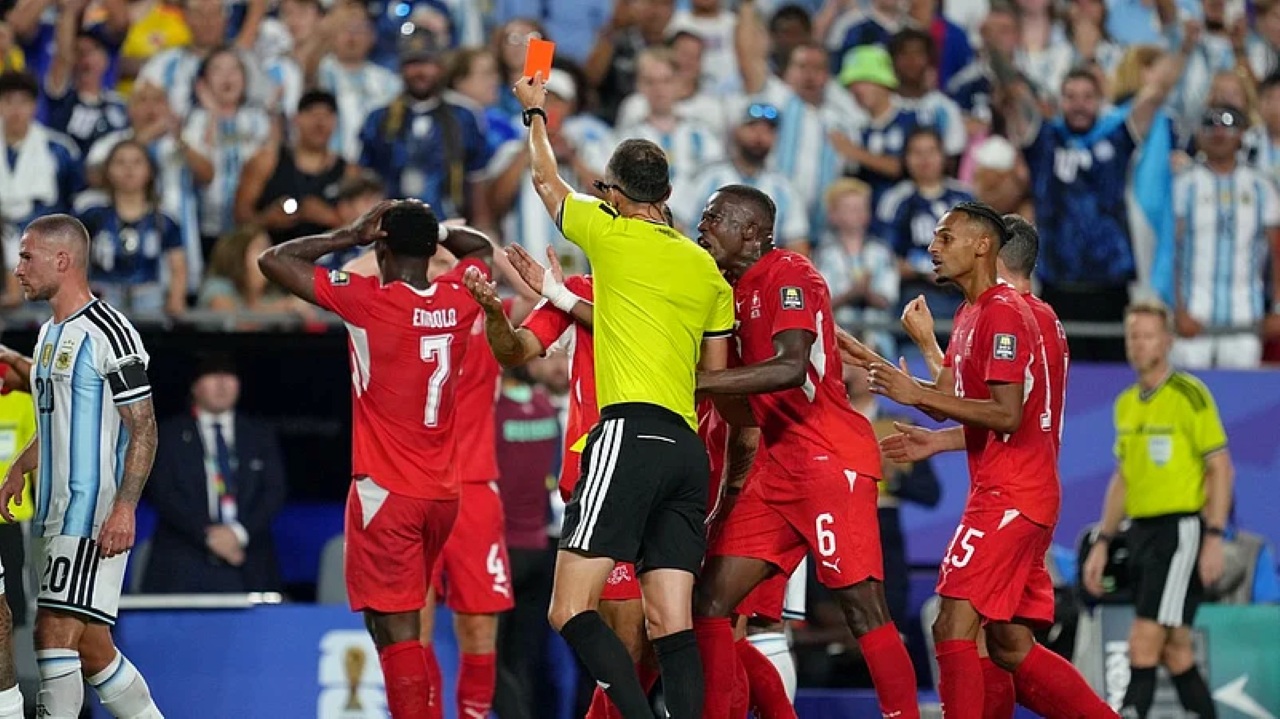



FIFA defended the application of the mistaken identity rule during Argentina’s FIFA World Cup match against Switzerland on July 11. The governing body insisted that the VAR intervention aligned with the spirit of the Laws of the Game.
The controversy followed the sending-off of Swiss forward Breel Embolo after a second yellow card. Video assistants determined that Argentina midfielder Leandro Paredes received a wrong caution for a non-existent foul. Referee Joao Pinheiro rescinded the booking and penalised Embolo for simulation instead.
Earlier reports indicated that the International Football Association Board questioned the interpretation, arguing that provisions permit officials to correct player identity rather than alter offence types. FIFA rejected claims of inconsistency, citing a similar incident involving Paraguay player Miguel Almirón against the United States.

“Simulation should not result in a disciplinary sanction against an opponent that could then lead to further consequences, such as a sending-off for a second yellow card or a match suspension for accumulated cautions,” FIFA stated.




The governing body maintained that the referee and video team avoided errors by restoring fairness.
“We do not consider this to have been an error by the referee or VAR, and the decision restored justice,” FIFA added.
FIFA confirmed ongoing contact with the International Football Association Board regarding the interpretation. Both organisations plan to discuss future revisions of the VAR Protocol to clarify the wording of the mistaken identity rule and prevent similar controversies. Two separate incidents during the tournament required intervention after players faced wrong yellow cards due to simulation.