The perfume of the harvest, that sweet, sun-baked scent of ripe paddy and the rhythmic hum of the thresher, has been stolen from the haor.
This Boro season, the golden crackle of curing grain has been drowned by a relentless deluge. In its place lingers only the heavy, heartbreaking stench of rot and the silent tears of farmers watching their lifework sprout into ruin in the rain.
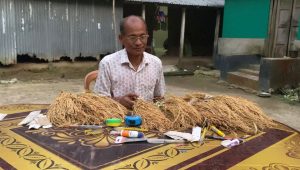
In Shantipur village in Kishoreganj, Abu Salek runs his fingers through a mound of paddy that should have been sold weeks ago. Instead, it is softening, souring and pushing out pale green shoots.
“We waded through waist-deep water to pull this crop out,” he says. “Now it is rotting because traders will not come, the government warehouse calls it ‘substandard’, and the market price will not even cover our wages. The flood did not just take our fields. It took our bargaining power.”
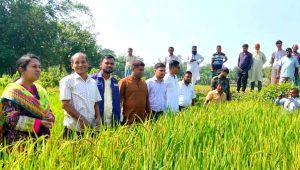
Across the haor basin, a dual crisis is unfolding. Thousands of hectares lie submerged, while those who managed to harvest are trapped by a market that has vanished, labour costs that have doubled, and a procurement system that feels out of reach. For haor farmers, survival is no longer just about fighting the water; it is about surviving the aftermath.
“The crop of a whole year’s hard work was submerged before our eyes,” says Salek, his voice steady but weary. “Now the paddy we saved faces a new crisis.”
A landscape of loss
According to the Department of Agricultural Extension, some 47,000 hectares of paddy lie submerged in Sunamganj, Kishoreganj and Netrakona. That is roughly one per cent of the country’s cultivated land, though officials warn the figure could rise to 77,000 hectares. In a region that produces one-fifth of Bangladesh’s Boro rice, such losses ripple far beyond the waterlogged fields. When haor harvests fail, rice prices climb nationwide.

Yet in the khalas, the open drying grounds scattered across the haor, the immediate crisis is not scarcity but surplus without buyers.
“In other years, traders would come and take paddy straight from the khala,” says Mohsin Mia, a farmer from Purbagram in Itna. “There was competition. This time, no one is even looking.”
The price of patience
Even when the sun appears, farmers explain, it takes three to five days of uninterrupted sunlight to dry paddy properly. With rain returning like clockwork, heaps of grain are rotting, sprouting and losing value by the hour. Traders, aware of the farmers’ desperation, offer no more than Tk 500 per maund.
The government procurement price stands at Tk 36 per kg, significantly higher than the market rate. So why not sell to the state?
“The rice we take to the godown is called bad, but the brokers still take it,” Mohsin Mia replies, with a shrug that speaks of long experience.

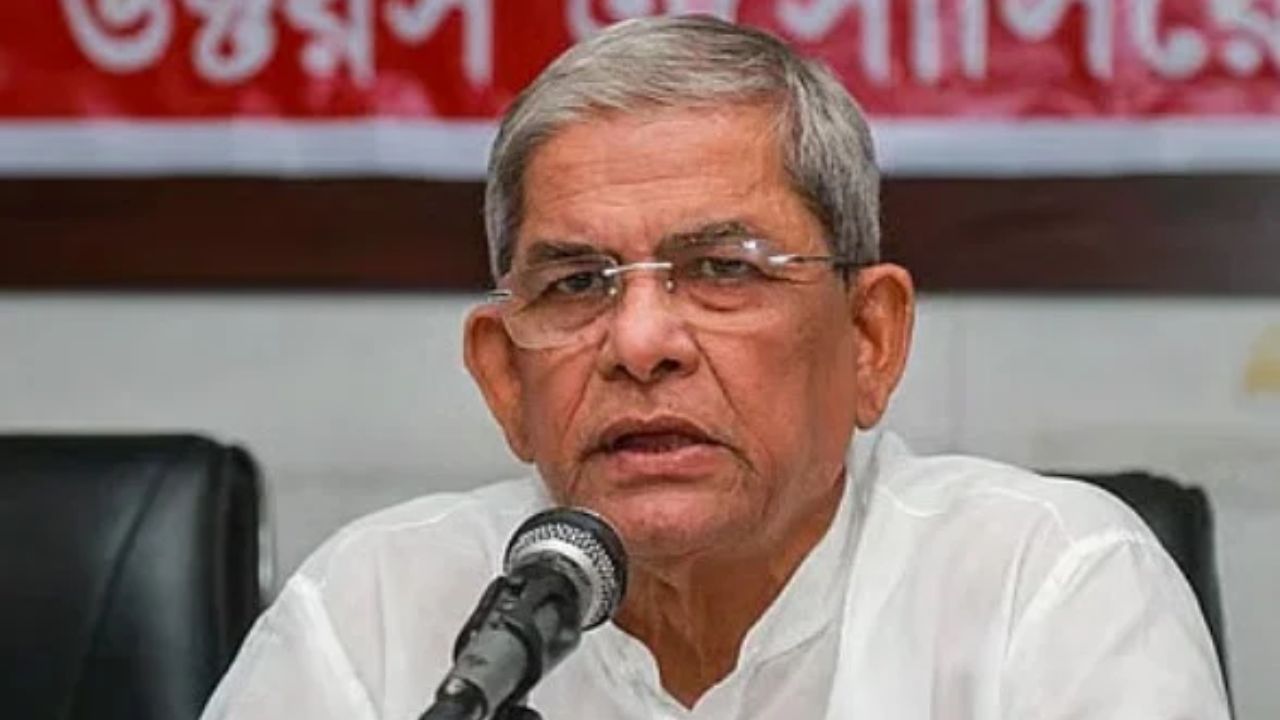
His words echo a broader frustration. Before the government announces its procurement price each year, many farmers have already sold to brokers out of necessity. The beginning of Baishakh brings pressing debts, school fees and household needs. Waiting is a luxury few can afford.
The long road to the warehouse
For those who do attempt to sell to government warehouses, the journey is fraught with hurdles. Farmer Ilias Hossain lists them without pause: moisture testing, quality checks, weight verification and bank account formalities.
“If they do not like your rice, you pay double to take it back,” he says. “Many would rather accept a lower price than face that hassle.”
Salauddin Sharif of Ashtagram calculates the numbers with bitter precision. “Harvesting costs have doubled, threshing has doubled, drying costs several times more. In total, we spend twice what we can ever hope to earn.”
Adding to the strain, labour wages have surged. Where a worker once charged Tk 800 a day, they now ask for Tk 1,500. With paddy prices hovering near Tk 12.50 per kg, the arithmetic simply does not add up.
Voices from the field
In Kalimpur village, Md Moyezuddin speaks plainly: “It takes courage to sell rice at the government price. We do not have that courage.”
His words are not an admission of defeat, but a reflection of a system that feels stacked against smallholders. When farmers bring paddy to procurement centres, they often encounter rigid standards that do not account for the realities of haor harvests. Grain dried under intermittent sun and handled in damp conditions rarely meets the required moisture thresholds.
Babul Akram, Food Controller of Itna Upazila, acknowledges the bind. “There is no provision to purchase wet rice or rice with high moisture content. If we buy substandard grain, it risks spoilage, and we face accountability. We cannot act without permission from higher authorities.”
He adds that procurement has been slow due to persistent bad weather.
Meanwhile, Itna Upazila Nirbahi Officer Makhan Chandra Sutradhar has invited farmers to report any harassment directly to his office. “If we find evidence of irregularities, action will be taken,” he assures.
Harvests rotting, hope drying
For many, the race is no longer about price, but preservation. Nazir Hossain of Purbagram watches his harvested paddy, brought home at double the usual cost, begin to mildew.
“It feels good to see the sun today,” he says, glancing skyward, “but I am worried about how long it will last.”
In Khayrat village in Karimganj, Habibur Rahman faces a quieter, more intimate loss. Five acres of paddy lie under water. What little he managed to salvage has been ruined by the flood. Even the straw, meant to feed his cows and calves, has rotted.
“Now I do not know what to feed ourselves, or what to feed the animals,” he says.
Assistance, listed but not delivered
Officials insist help is on the way. Md Sadiqur Rahman, Deputy Director of the Kishoreganj office of the Department of Agricultural Extension, confirms that crops on 12,000 hectares in the district have been submerged, affecting an estimated 50,000 farmers. A list of the affected has been prepared.
Deputy Commissioner Sohana Nasrin adds that food assistance will be provided to affected families for the next three months. Yet when pressed on timelines, the answer remains uncertain. The date, she says, has not yet been decided.
Between water and want
As haor farmers wait, their predicament captures a broader truth about resilience in the face of climate uncertainty. They are not merely victims of rain, but of a chain of vulnerabilities: weather that refuses to cooperate, markets that withdraw when they are needed most, and systems that, however well-intentioned, move at a pace that does not match the urgency of rotting grain.
Abu Salek returns to his khala and turns a handful of paddy in his palm. Some grains are firm, others soft with moisture. He does not speak for a while. Then, quietly:
“We work the water, and the water works us back.”