Bangladesh’s export earnings fell 7.1 per cent year-on-year to $4.40 billion in May as declining readymade garment (RMG) shipments continued to weigh on the country’s external trade performance, although exports rebounded 9.8 per cent from April.
According to Export Promotion Bureau (EPB) data sourced from the National Board of Revenue, cumulative exports for the July–May period fell 2.6 per cent to $43.80 billion, down from $44.95 billion in the same period a year earlier.
The figures underscore the challenge of sustaining the export momentum of the last fiscal year amid subdued global demand.
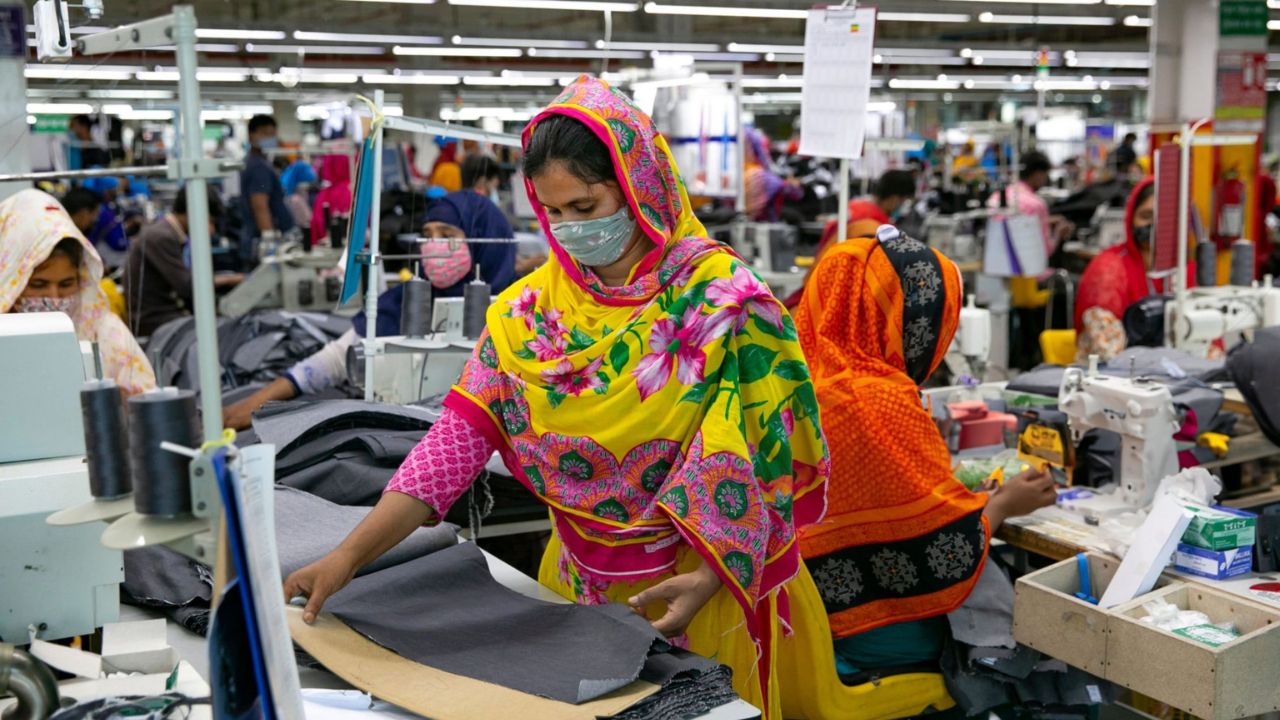
The RMG sector, which accounts for more than 80 per cent of Bangladesh’s export earnings, saw shipments fall 8.3 per cent year-on-year to $3.59 billion in May. Knitwear exports declined 8.9 per cent to $1.97 billion, while woven garment shipments dropped 7.5 per cent to $1.62 billion.

During the first 11 months of FY2025–26, overall garment exports fell 3.4 per cent to $35.31 billion, with knitwear and woven earnings declining 4.3 per cent and 2.4 per cent respectively.
In contrast, engineering products remained among the strongest-performing sectors. Exports in this category rose 19.2 per cent in May to $60.6 million and 20 per cent in July–May to $598.1 million.



Within this sector, bicycle exports jumped 60.6 per cent in May to $16.5 million and rose 28.3 per cent during the first 11 months of the fiscal year. Electric products recorded 22.2 per cent growth in July–May, while copper wire exports increased 16.1 per cent over the same period.
The pharmaceutical sector also recorded growth, with exports rising 20.3 per cent year-on-year to $23 million in May and 10.7 per cent across the July–May period.
Jute and jute goods contributed positively as well; exports of jute yarn and twine increased 15.6 per cent to $500.6 million in the July–May period, while May shipments rose 8.4 per cent to $91.6 million.
Conversely, raw jute exports fell 27.6 per cent as government policies continued to encourage domestic processing and higher-value exports.
Other sectors showed mixed results. Home textile exports rose 3.7 per cent in May to $87.2 million and 3.5 per cent in July–May.
However, leather exports remained under pressure, with leather and leather products falling 12.7 per cent in May and footwear exports declining 18.9 per cent.
Frozen and live fish exports dropped 22.1 per cent, mainly because of lower shrimp shipments. Significant drops were also noted in cotton (11.2 per cent in July–May) and tobacco (26.5 per cent).
The latest data underscore Bangladesh’s continued dependence on garments, with growth in engineering products, pharmaceuticals, home textiles, and value-added jute goods still remaining insufficient to offset the weakness in the apparel sector.