Europe doesn’t just follow a calendar; it beats with soul-electrifying energy. Imagine a continent where time is measured not in hours, but in 90-second heart-stopping spectacles through medieval squares and one-hour red-pulp riots in the Spanish sun.
It is a place where you can vanish behind a porcelain mask in a city of canals or drift across an electric ocean of sound on a hidden Adriatic beach. From the “diamonds of the kitchen” unearthed in the Italian soil to the ghostly green silk of the Arctic sky, Europe is a shifting mosaic of human passion and natural wonder, inviting you to stop watching the clock and start feeling the pulse.
The masked ghost and thundering hoof
In the winter’s tale, Venice transforms into a city of echoes, where nearly 3 million souls gather to wear anonymity like a second skin. The Carnival is a grand masquerade where the bauta mask – with its protruding, beak-like chin – serves as a silent accomplice, allowing the wearer to feast and drink without ever revealing the face behind the porcelain.
Beside it, the Medico della Peste (Plague Doctor) stands as a hollow-beaked sentinel, its long nose once a vessel for sweet-smelling herbs to ward off the “miasma” of history, now a haunting icon of the Venetian stage.
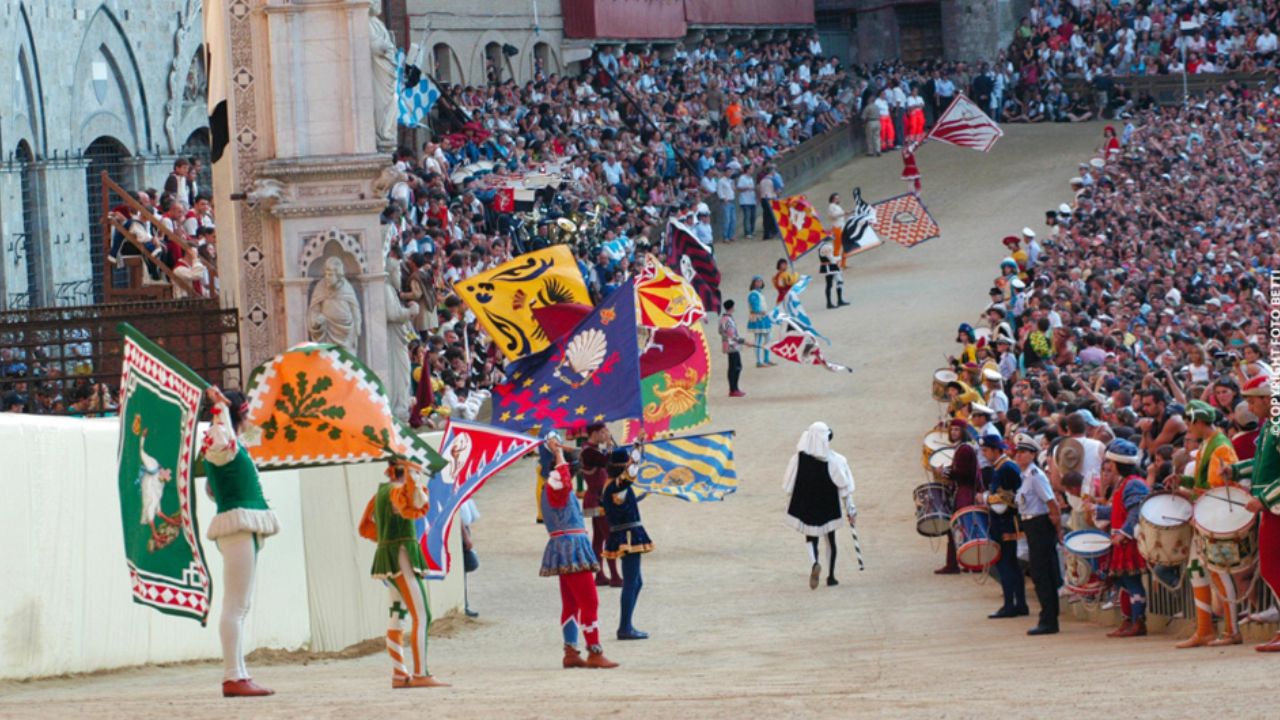
As the year turns toward the heat of summer, the medieval heart of Siena beats with a fierce, ancient rhythm. The Palio is not merely a race; it is a ninety-second lightning strike that ignites a centuries-old rivalry between the city’s 17 contrade (districts).

The Piazza del Campo becomes a dusty, sun-drenched arena where horses fly bareback, and the air is thick with the scent of competition. While the center of the square is a free sea of standing spectators, those who wish to watch from the high-altitude sanctuary of a balcony must navigate a market where seats can command prices between €350 and €600.
Electric oceans and secret groves
When summer reaches its zenith, Europe becomes a continent-sized jukebox. Major festivals like ULTRA Europe in Croatia and Tomorrowland in Belgium act as electric oceans, drawing thousands into waves of main-stage energy and dreamlike storytelling that feels as if a movie has come to life.
In Budapest, the Sziget Festival is a sovereign city of sound built upon an island, offering a week of “controlled chaos” and multi-genre exploration. Yet, for those who prefer the whisper of a secret grove to the roar of the stadium, “under-the-radar” gems await.




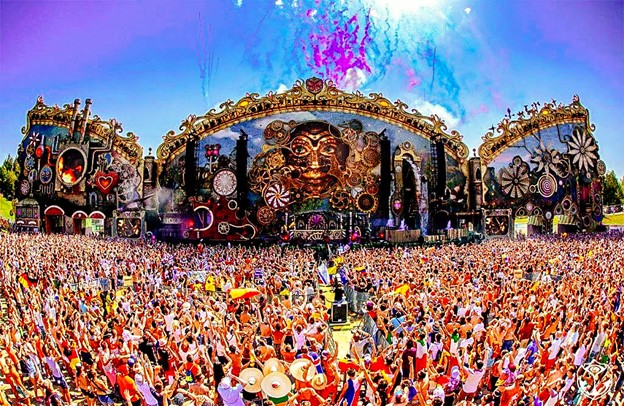
Kala offers “beats on the beach” along the quiet Adriatic shores of Albania, while Terraforma in Italy treats the gardens of a baroque palace as a laboratory for the ears, blending hypnotic electronic sounds with artistic experimentation.
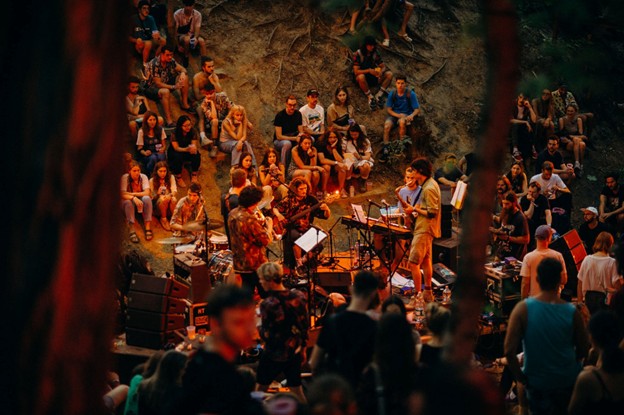
In Hungary, the Kolorado festival invites travelers into a flamboyant forest sanctuary, where music and nature merge into a single, vibrant organism.
The messy banquet of the earth
In August, the Spanish town of Buñol hosts La Tomatina, the world’s most chaotic harvest ritual. For one hour, the streets become a river of red pulp as thousands participate in a food fight of epic proportions.
Participants are urged to squash their “ruby bullets” before throwing them to avoid injury, and to wear old clothes that will eventually be sacrificed to the tomato gods.
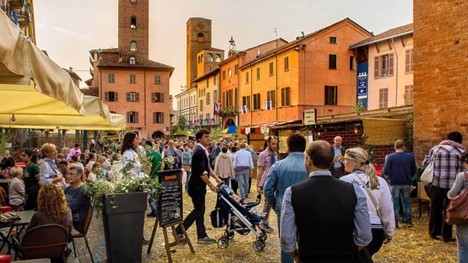
As autumn’s chill begins to bite, the focus shifts to the buried treasures of the soil. The Alba White Truffle Fair in Italy celebrates the “diamond of the kitchen,” rare fungi that can fetch over $100,000 at auction, their scent a pungent perfume of the deep earth.
Meanwhile, in France, the Bordeaux Wine Festival serves as a liquid pilgrimage along the quays of the Garonne, where the Wine Route leads travelers through the very soul of the region’s viticulture, illuminated by the celestial fire of drone light shows.
A city on a stage and arctic waltz
Every August, Edinburgh becomes a living, breathing stage for the Festival Fringe. With approximately 3,000 shows, the city is an explosion of creative wildfire, where theatre, comedy, and circus acts fill every pub and basement. Travelers are encouraged to be spontaneous explorers, using the “Nearby Now” app feature like a digital compass to find the next performance starting just around the corner.
When the sun finally retreats for the winter, the stage moves to the far north. The Northern Lights are a celestial waltz, where charged solar particles collide with the atmosphere to create curtains of emerald silk dancing across the Arctic sky.
To witness this ghostly apparition, travelers must journey to the “Northern Lights Belt” between 65 and 72 degrees north, seeking the dark, clear skies of Tromsø or the Lofoten Islands. It is an experience that demands the patience of a stone and the warmth of many wool layers, as the lights appear on no schedule but their own.
To successfully ride these seasonal waves, one must be an architect of logistics. The most iconic events require planning six to twelve months in advance, as beds in Siena or Buñol vanish like mist.
Security acts as a strict gatekeeper; for the Palio, large bags are forbidden, forcing modern pilgrims to seek out luggage sanctuaries like Radical Storage to unburden themselves of their worldly goods before entering the fray.
Whether chasing a thundering horse or a dancing light, the traveler is reminded that the journey is a tapestry, and each festival is a thread of gold woven into the experience.