


Employee unions of foreign-invested energy companies have strongly protested a government initiative to amend labour rules aimed at cancelling or limiting the mandatory 5% Workers’ Profit Participation Fund (WPPF).
The Chevron Bangladesh Employees Union (CBEU) and Tullow Bangladesh Employees Union (TBEU) have demanded an immediate halt to the move, calling for the existing 5% WPPF obligation to be maintained for foreign-invested energy firms.
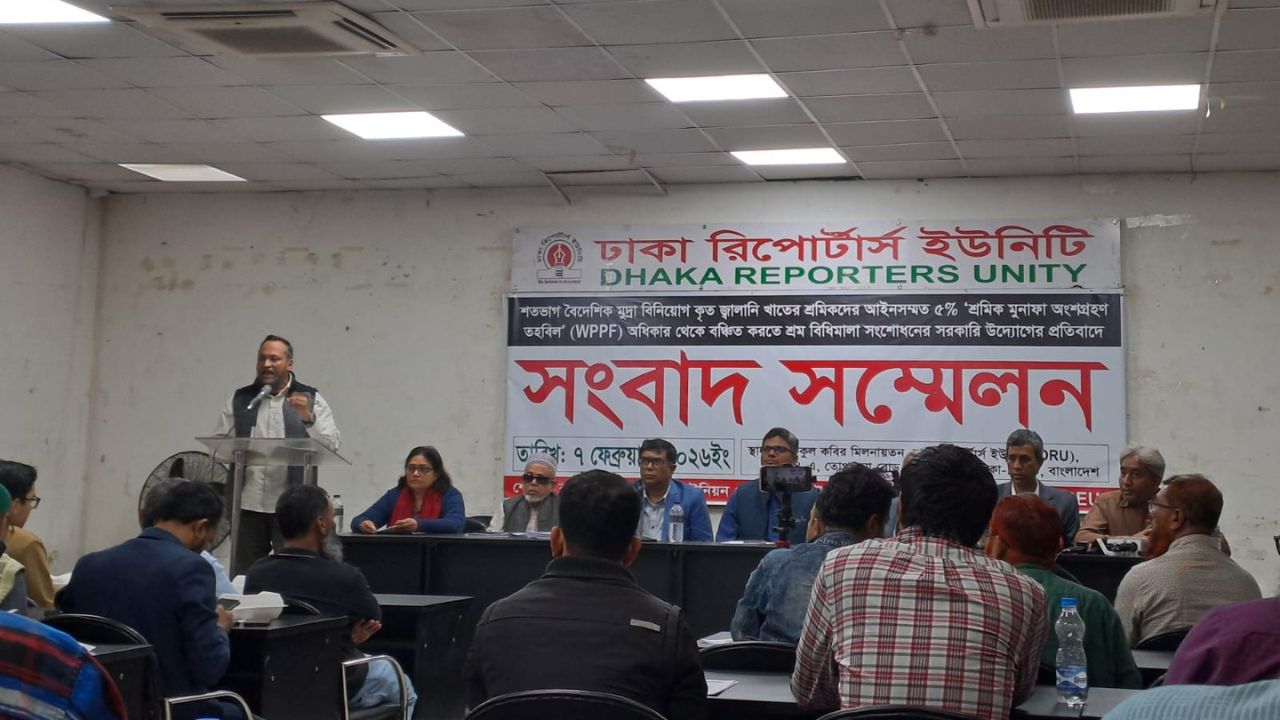
At a press conference held at the Dhaka Reporters Unity on Saturday, union leaders described the hurried attempt to amend the rules just before the national election as discriminatory, legally questionable, and a violation of labour rights and justice.
They alleged that the initiative aims to provide unfair advantages to certain foreign companies by curtailing the legitimate rights of national employees.
In a written statement, Mohammad Nure Alam Siddique, General Secretary of the CBEU, noted that under Bangladesh’s labour laws, it is mandatory for eligible institutions to allocate 5% of their annual net profit to the WPPF.

He highlighted that many local and foreign firms, including state-owned energy agencies, have long been complying with this law.
Siddique further argued that foreign-invested oil and gas companies already enjoy significant financial perks, such as 100% cost recovery, duty-free imports of machinery, and even the payment of their corporate income tax by the Bangladesh government.




Under these circumstances, exempting only these companies from WPPF obligations would be “discriminatory and illegal.”
The unions also highlighted ongoing legal battles over the issue. Following a writ petition by Chevron Bangladesh workers who had been deprived of WPPF since 2013, the High Court ruled in their favour on 10 December 2024.
The court ordered Chevron Bangladesh to form the necessary fund and pay the 5% WPPF within three months. Although the company appealed, the Appellate Division’s chamber court did not grant a stay on the order, sending the matter for a regular hearing on 28 October 2025.
Similarly, the TBEU stated that a 2021 case regarding WPPF was also decided in favour of the employees. The Appellate Division upheld that verdict in April 2025, and a petition by the company remains pending.
The unions asserted that any move to amend the labour rules now would constitute interference in matters of sub-judice.
The leaders also recalled a 2022 amendment that deprived workers in 100% export-oriented sectors of WPPF, a move that was widely criticised as one-sided. The High Court has since issued a rule asking why that change should not be declared illegal.
On 6 January 2025, union leaders met with the Labour and Employment Adviser, Brigadier General (retd) Dr M Sakhawat Hossain, to formally express their concerns. However, they alleged that the amendment process is being pushed forward with “unusual speed” due to pressure from certain vested interest groups.
Worker representatives from the National Tripartite Consultative Council (TCC) reported that despite their objections, the council finalised the rules during its 133rd meeting on 2 February.
This included a proposal to reduce the WPPF for national employees in the foreign-invested energy sector from 5% to 1% – a proposal the worker side rejected as a violation of International Labour Organization (ILO) Convention-144.
CBEU and TBEU leaders warned that if this “discriminatory initiative” to curtail legal rights is not withdrawn immediately, they will be forced to launch “tougher programmes and strong protest movements.”