Bangladesh has outlined a policy-backed pathway to green its industrial parks as a pilot Eco-Industrial Parks (EIP) Light Touch initiative concluded with concrete recommendations for nationwide replication.
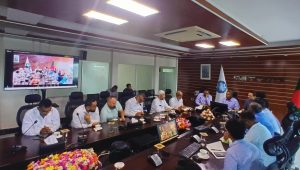
The initiative was led by the Ministry of Industries in collaboration with the United Nations Industrial Development Organization (UNIDO) and concluded at a closing workshop in Dhaka on Monday, according to a press release.
Industrial parks contribute more than 37 per cent of Bangladesh’s gross domestic product (GDP), but existing models face growing pressure from environmental compliance demands, resource constraints and sustainability expectations linked to graduation from least developed country (LDC) status.

The pilot, supported by the Swiss State Secretariat for Economic Affairs, benchmarked 10 industrial sites, including eight Bangladesh Small and Cottage Industries Corporation (BSCIC) estates and two Export Processing Zones (EPZs), against international EIP principles covering management, environmental, social and economic performance.
Speaking as chief guest, Ministry of Industries Secretary Md Obaidur Rahman said industrial parks must move beyond traditional land allocation and utility provision towards integrated, service-oriented and sustainability-driven ecosystems, adding that lessons from the pilot would inform revisions to the National Industrial Policy 2022.




Bangladesh Small and Cottage Industries Corporation Chairman Md Saiful Islam said the light-touch approach showed that many improvements do not require large capital investments, noting that better monitoring, management systems, coordination and capacity building could deliver tangible gains, especially for estates dominated by small and medium enterprises.
Bangladesh Export Processing Zones Authority (BEPZA) Member for Engineering Engr Abdullah Al Mamun said sustainability has become central to competitiveness, adding that benchmarking and policy dialogue highlighted the need for stronger park-level management, energy efficiency and environmental performance.
He said BEPZA plans to integrate EIP principles from the planning stage in new zones while continuing to strengthen monitoring, data systems and operational practices in existing ones.
A panel discussion at the event emphasised industrial symbiosis, policy coordination and phased implementation as practical routes for aligning industrial growth with sustainability objectives, while a technical session focused on options for gradually replicating selected EIP practices across industrial zones