Every Eid season tells us something about Bangladeshi cinema. For filmmakers like me, watching the trailers of Eid releases is more than a festive habit—it is a way of understanding how the industry is imagining its audience.
Who are these films for? Who will go to the theatre? And perhaps most importantly during Eid—who will go together?
This year, after watching the trailers of Prince: Once Upon a Time in Dhaka, Domm: Until the Last Breath, Pressure Cooker, Rakkhosh, and Bonolota Express, what feels immediately clear is that this is not just a clash of films, but a quiet division of audiences.
The lineup naturally splits into two groups – films meant for collective, family viewing and films meant for a more restricted, adult audience. And that division alone may shape the entire box office outcome of this Eid.
Prince, directed by Abu Hayat Mahmud and produced by Creative Land, stands as the most visibly commercial project of the season.
With Shakib Khan leading the cast alongside Tasnia Farin, Jyotirmoyee Kundu, and Dibyendu Bhattacharya, the film builds a stylized gangster narrative rooted in power, violence, and dominance.
Cinematographer Amit Roy, known for his work on large-scale productions like Animal, brings a polished visual scale, while art director Shihab Nurun Nabi and costume designer Farzana Sun shape the film’s aesthetic identity.
From the trailer, the film clearly aims for a strong theatrical opening driven by star power. However, with an Adult (A) certification, the film automatically limits its access to the full spectrum of Eid audiences, particularly families who traditionally attend cinemas together during the holidays.

Domm: Until the Last Breath, directed by Redoan Rony and produced by SVF, Alpha-i, and Chorki, offers a very different experience. With Afran Nisho, Chanchal Chowdhury, and Puja Cherry in the lead, the film presents a survival story set against expansive natural landscapes.
Cinematography by Mikhail Siryanov gives it a cinematic scale, while Shahidul Islam’s art direction and Edila Farid’s costume design ground it in realism. More importantly, the film has received a Universal (U) certification, making it accessible to viewers of all ages.
That alone places Domm in a strong position during Eid, where families often choose films they can watch together. Combined with Nisho’s popularity and the emotional tone of the story, this could translate into both strong turnout and sustained audience flow.
Pressure Cooker, directed by Raihan Rafi and jointly produced by Kanon Films and Impress Telefilm Limited, with Raihan Rafi and Faridur Reza Sagor also serving as producers, moves into a more urban, intense narrative space.
With Shobnom Bubly, Nazifa Tushi, Snigdha Chowdhury, and Maria Chowdhury, the film appears to explore layered human conflicts within a pressured city environment. Cinematographer Zohair Musavvir, along with art director Nasib Khan and costume designer Bijaya Bloom, shapes a contemporary, fast-paced visual tone.
However, like Prince, the film carries an Adult (A) certification, which positions it more toward younger viewers and limited audience groups rather than full family attendance. It may generate strong discussion and engagement, but its theatrical reach could be segmented.



Rakkhosh, directed by Mehedi Hassan Hridoy and produced by Real Energy Production, leans even further into darker psychological territory. With Siam Ahmed and Susmita Chatterjee the film explores themes of moral conflict, greed, and human breakdown.
The visual tone, supported by art director Tareq Bablu and costume designer Mesfir Ayaz, reinforces its intense and gritty nature. It also carries an Adult (A) certification, which again places it outside the family-viewing bracket.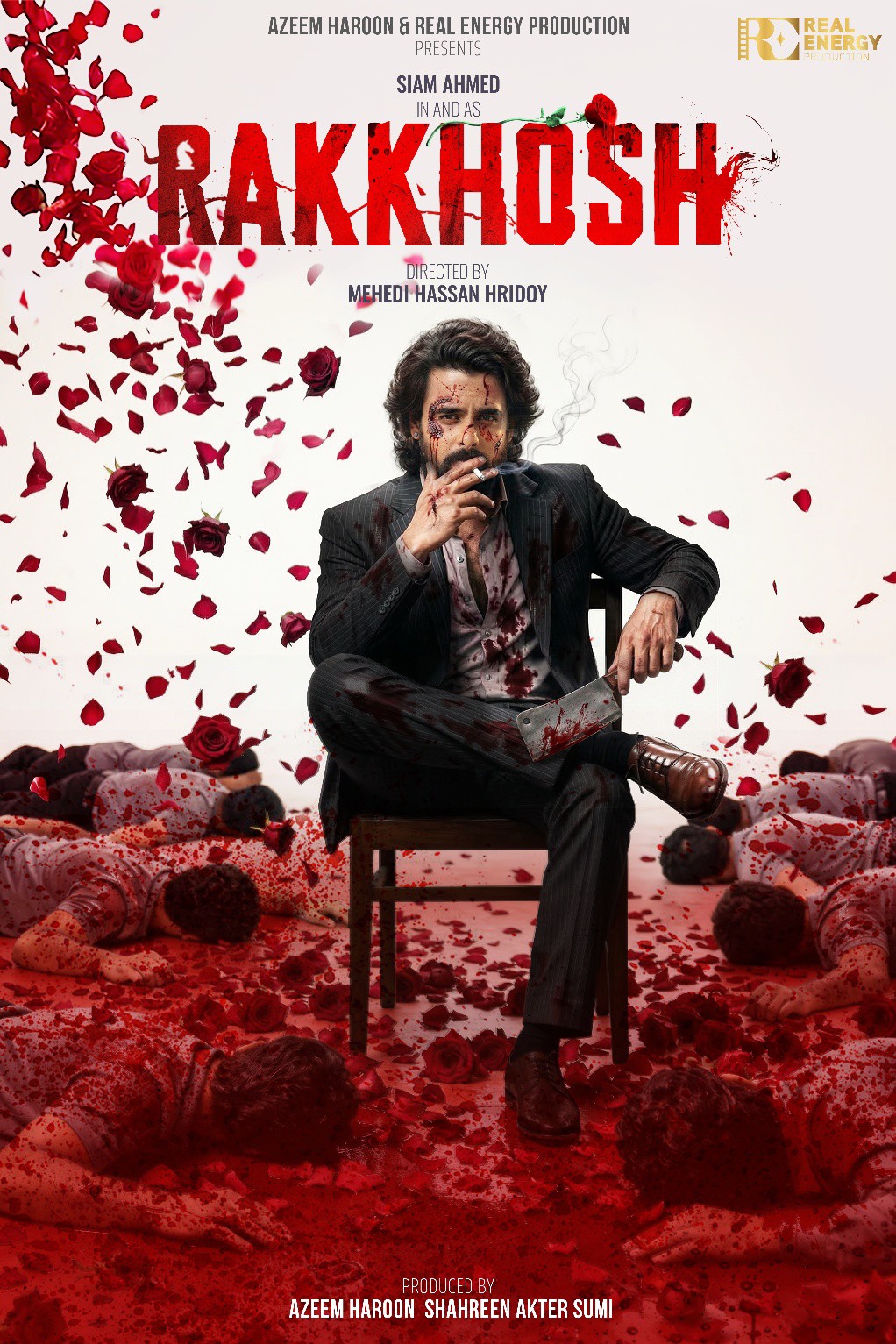
From what the trailer suggests, this is a film that will appeal strongly to a specific group of viewers, but it may not function as a collective Eid outing choice.
In contrast, Bonolota Express, directed by Tanim Noor and produced by Buriganga Talkies, hoichoi studios, and DOPE, occupies a very different emotional space.
Inspired by Humayun Ahmed’s Kichukkhon, the film brings together a large ensemble cast including Mosharraf Karim, Chanchal Chowdhury, Sariful Razz, Sabila Nur, Azmeri Haque Badhon, Shamol Mawla, Zakia Bari Momo, Labonno Chowdhury, Intekhab Dinar, Sabrin Azad, and Shamima Nazneen.
Cinematography by Barkat Hossain Polash, along with art direction by Razim Ahmed and costume design by Tania Rahman, creates a grounded and human-centered visual world.

The film has received a Universal (U) certification, making it accessible to all age groups. This is particularly important during Eid, when families prefer films that everyone can watch together without hesitation.
In many ways, Bonolota Express feels aligned with that collective viewing culture.
This distinction between U-certified and A-certified films may become one of the most defining factors of this Eid. During the festival, audiences often go to theatres in groups—families, relatives, mixed-age gatherings.
When a film restricts that experience, it inevitably narrows its reach. In that sense, Domm and Bonolota Express may hold a structural advantage over Prince, Pressure Cooker, and Rakkhosh, simply because they allow inclusive viewing.
There is also a recent example that makes this dynamic even more relevant. Tanim Noor’s Utshob, released in a previous Eid, found strong success partly because it attracted family audiences.
If that pattern repeats, and if Bonolota Express and Domm successfully draw in those viewers, then their box office journey may not just be strong—it may be steady and long-lasting.
At the same time, it is hard to ignore a tonal similarity across some of the darker films this year.
Prince, Rakkhosh, and parts of Pressure Cooker seem to carry shades of a more aggressive, hyper-masculine character style that has recently gained popularity in South Asian cinema, particularly after films like Animal.
Whether this is a passing influence or something that will evolve into a local storytelling language is a discussion for another time. But it does raise an interesting question – if family-oriented films perform better this Eid, will that shift what filmmakers choose to make for future festivals?
From a simple observational point of view, the box office this Eid may unfold along two parallel tracks. Prince may dominate the initial rush through star power. Pressure Cooker and Rakkhosh may find their audiences among younger viewers and those drawn to darker themes.
But Domm and Bonolota Express, because of their accessibility and emotional range, may build a more inclusive audience base.
In the end, this Eid feels less like a competition between films and more like an experiment in audience behavior. It is a test of whether the festival still belongs to collective, family viewing—or whether it is gradually shifting toward segmented, individual choices.
The answer, perhaps, will become clear only after the crowds settle and the theatres tell their story.