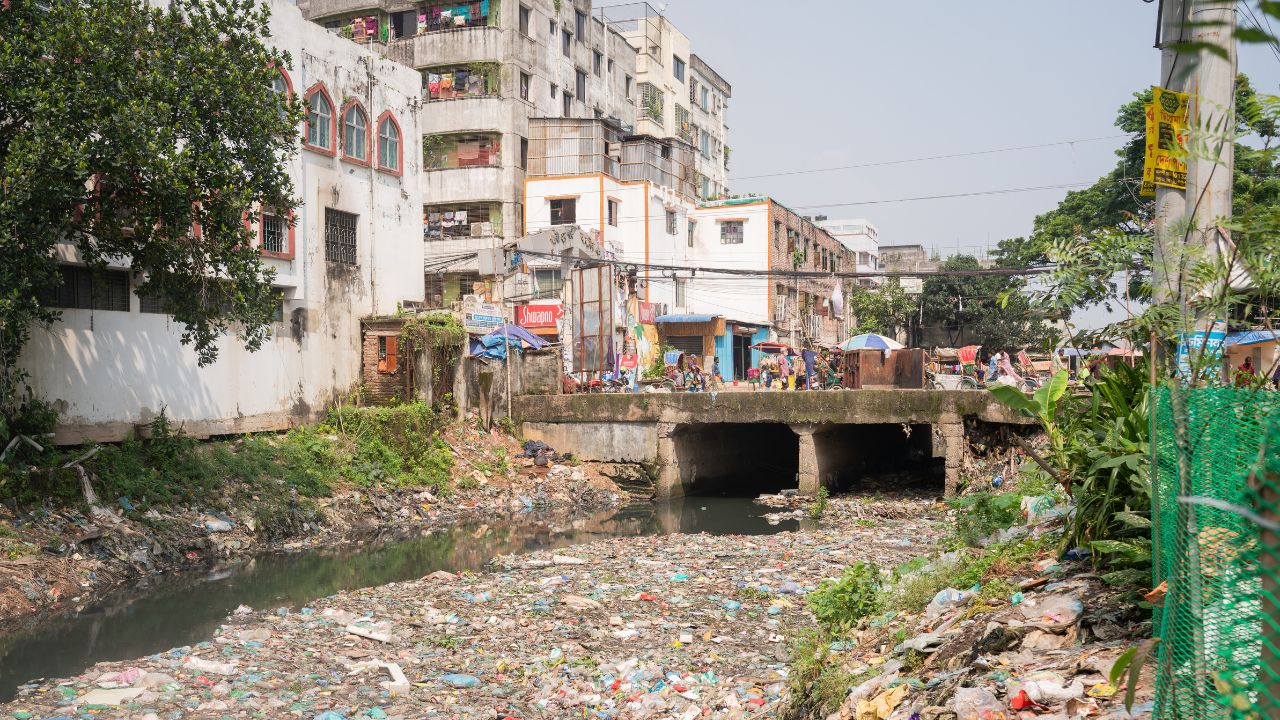



Dhaka once lived with water. Its canals moved silently through neighbourhoods, carrying rainwater away, cooling the air and shaping the city’s landscape. Today, those waterways are almost gone. What remains are narrow, blackened strips of stagnant water, choked by garbage and shadowed by illegal structures.
Over the decades, Dhaka has lost around 120 kilometres of canals. Entire waterways have disappeared under concrete, boundary walls, housing projects and roads. Others survive in name only. Environmental experts say 26 major canals are now “almost dead.” They no longer flow. They only collect waste.
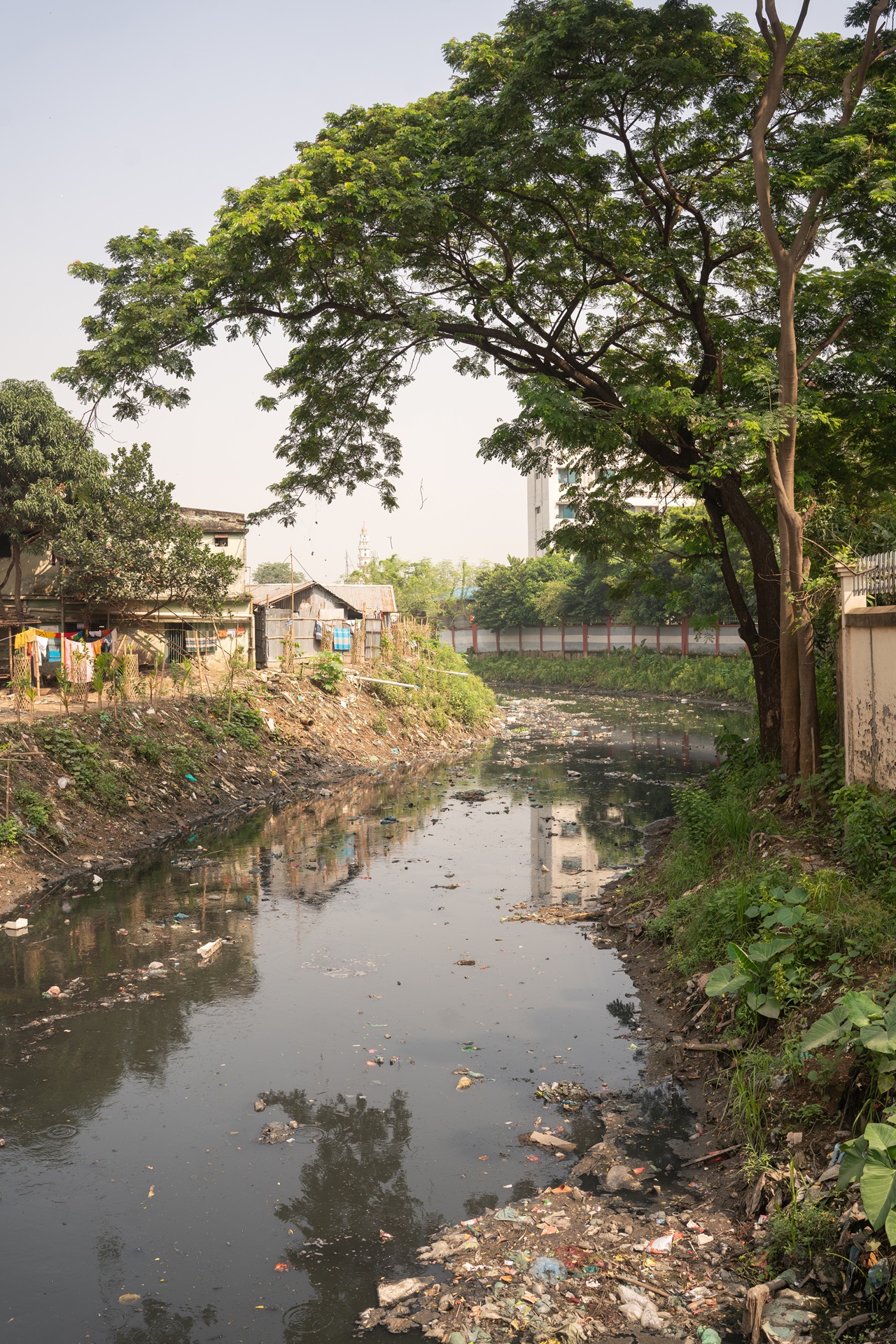
Walking along the canals of Ibrahimpur, Baunia and Rupnagar, the story becomes painfully clear. The sour, thick smell hits first. Nearby residents keep windows shut. Many say they cannot sleep at night because mosquitoes swarm from the stagnant water. Health risks rise in these areas every year, especially dengue.

The reasons behind this decline are no mystery. Untreated sewage flows directly into many canals because the city lacks proper sewerage systems. Household waste, plastics and industrial effluents are thrown in daily. Over time, the water stops moving. It becomes a sludge-filled ditch.
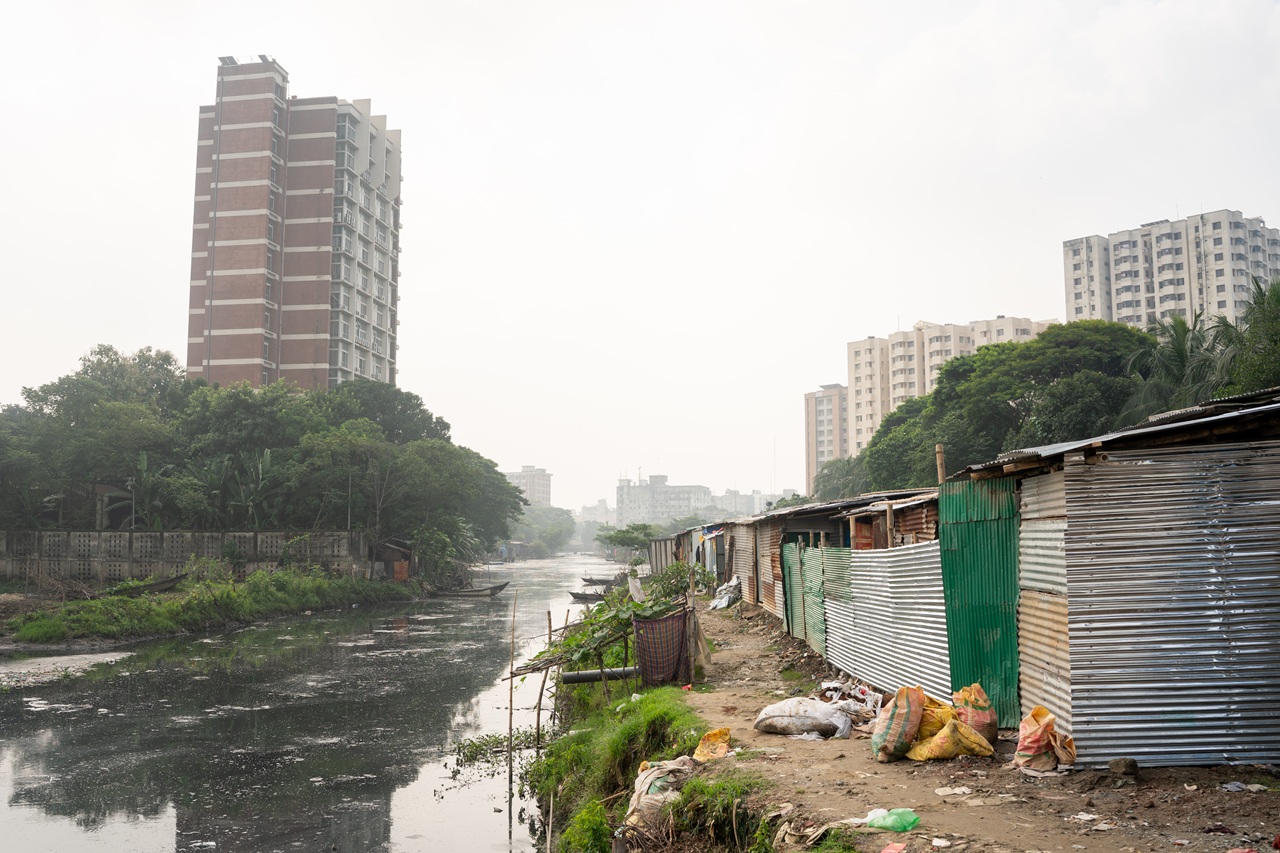
Even when the city cleans or dredges a canal, it doesn’t stay clean for long. Local dumping continues. Within weeks, water turns black again. Boats meant to clear blockages cannot even pass through some stretches.




The loss of canals is not just an environmental tragedy. It is a flood crisis. Studies show that re-excavating just 15 key encroached canals could reduce Dhaka’s waterlogging by almost 80%. Yet year after year, the city drowns during the monsoon and the cycle repeats.
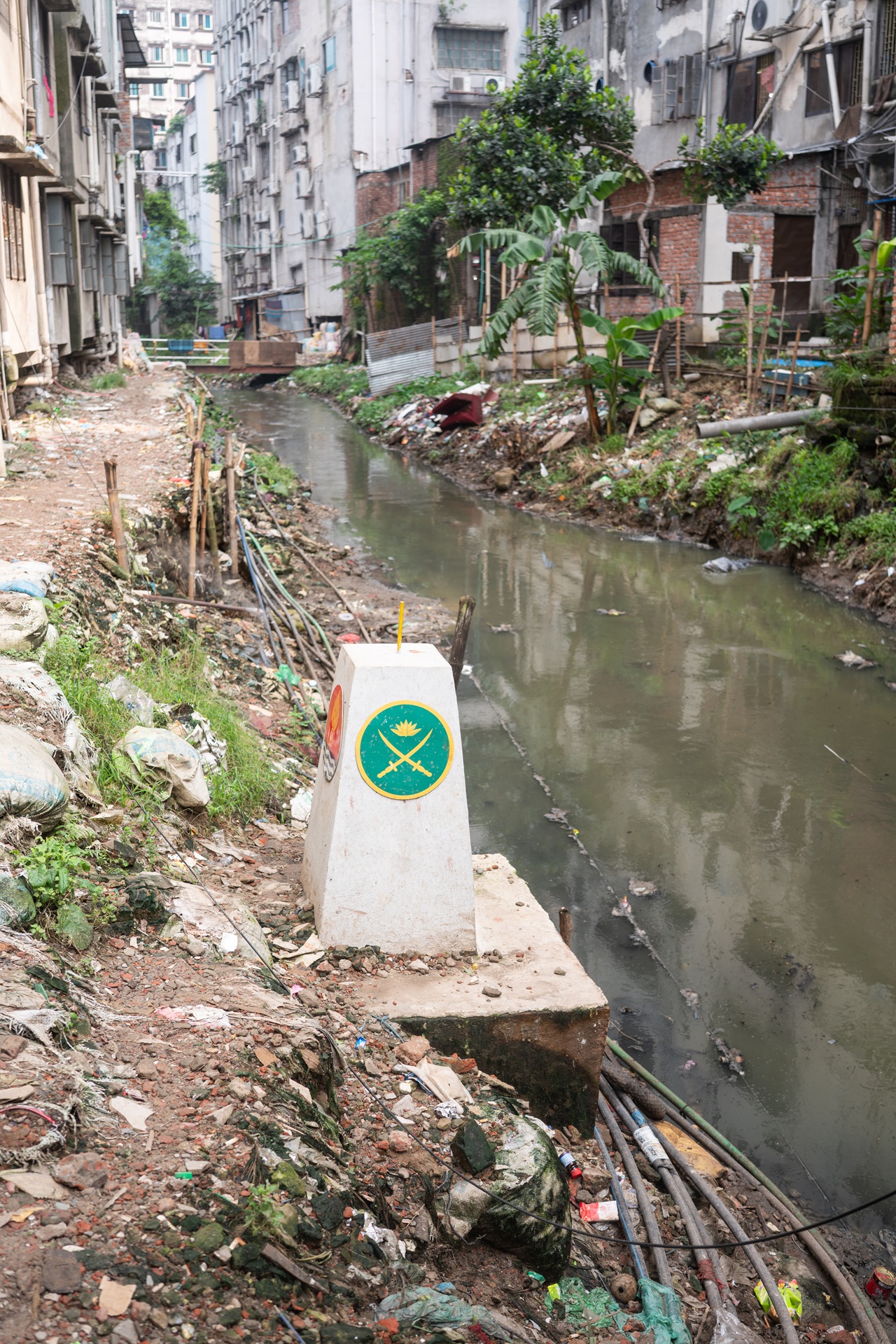
Dhaka WASA is officially responsible for maintaining the canals and they face constant criticism. Activists and environmentalists argue that the city does not need more new canals. It needs to save what still remains. Once a canal disappears, it rarely comes back.
The damage goes far beyond flooding. Polluted canals drain into rivers, spreading toxins downstream. Aquatic life dies. Water quality drops. Local ecosystems collapse. But the canals are not just ecological assets. They are cultural memories of a city built on water. Their disappearance marks a deeper loss.
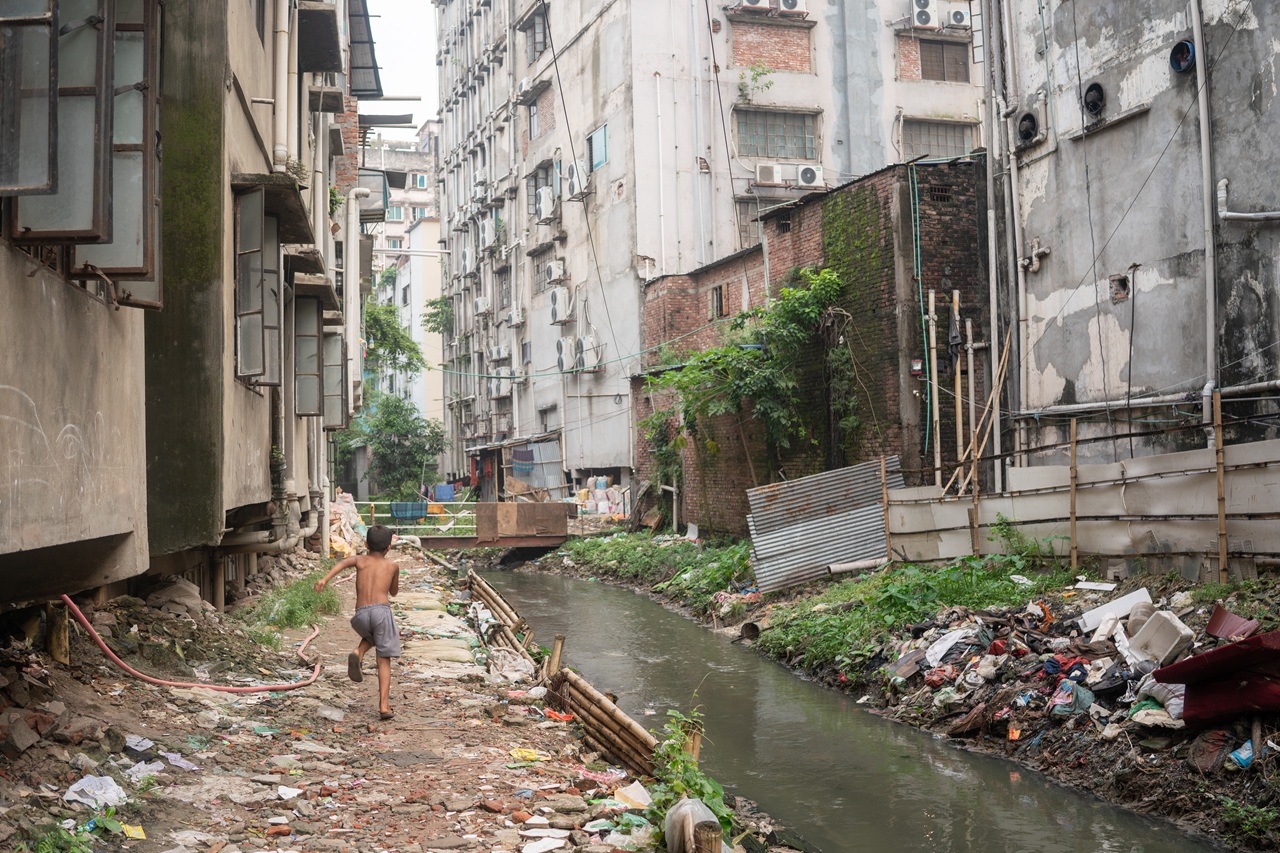
Saving Dhaka’s canals will require more than dredging. It demands enforcement, restoration and public respect for the waterways. Without that, the canals will continue to shrink, stink and silently vanish, one by one, until nothing is left.