

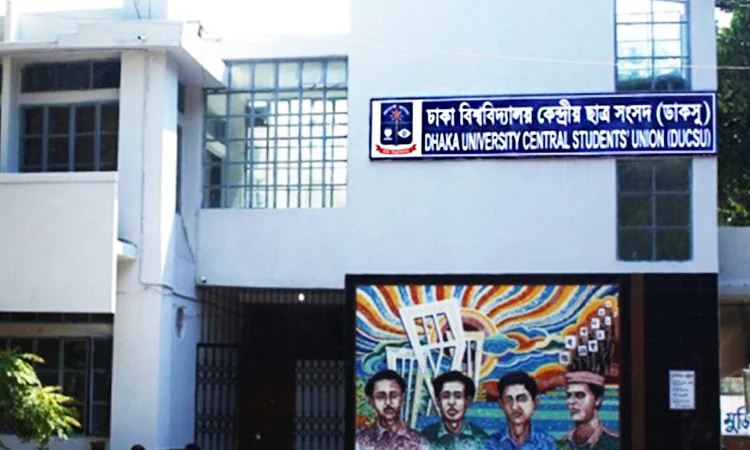



Candidates from different panels for the upcoming Dhaka University Central Students’ Union (Ducsu) elections are considering female and non-residential voters as potentially decisive factors in determining the results.
General students say that the previous record of aspirants, particularly regarding their advocacy for student rights, will also be considered when casting votes. They claim that the female candidates contesting for the top posts will make the election more interesting.
Out of 39,775 total voters, 18,902 voters, or approximately 47.5 percent, are female students, while the number of non-resident students is nearly half of the total voters. Approximately 18,000 to 19,000 voters are staying outside of the dormitories, according to information collected from hall provosts and the official university website.
Although female voters make up nearly half of the total votes, only 60 contestants – 13 percent – are women contesting for 28 central positions, among 462 candidates. The situation is similar in the dormitory union elections. Among 1,108 candidates fighting for 234 hall posts, just 188, or 17 percent, are women.
“Female voters and non-residential voters could be a deciding factor this time, and the Independent Students’ Unity panel will try to woo them and ensure they cast their votes,” Umama Fatema, former coordinator of the Anti-Discrimination Student Movement, who is contesting for the vice-president (VP) post told TIMES of Bangladesh.
Tanvir Al Hadi Mayed, a candidate for the post of assistant general secretary from the Jatiyatabadi Chhatra Dal (JCD) panel, the student wing of BNP, also believes that female and non-residential voters could play a significant role.

“We are not prioritising any particular group over others. However, I believe female voters and minority groups could become a crucial factor for candidates,” he said. The Chhatra Federation panel has left the vice-president and general secretary posts vacant, while Armanul Haque is contesting for the assistant general secretary post. Haque said students who have been vocal about the dormitory seat crisis may find greater support.
“There is growing support for those aligned with the spirit of 1971 and 2024, especially those who have long been fighting to resolve crises like seat shortages,” he said. He added that students were likely to favour candidates who avoid gender-based or identity-based bullying.
“Those who respect gender, religious, and ethnic diversity seem to have an edge. In contrast, some who oppose co-education or reject non-Bengali identities may find themselves vulnerable,” Haque explained.




Meanwhile, Faria Motin of the left-leaning coalition Protirodh Parishad believes “individual popularity could play a bigger role in this election,” adding that experienced student politicians may also gain an advantage. She is contesting for the post of literature and culture secretary.
“This time, it will be a different race since Chhatra League is not in the battle. Although female voters are crucial, many encounter challenges in active politics. Whether they all will come for voting fully remains a big question,” she pointed out. Regarding the role of the university administration, she emphasised the need for a fair and neutral role, as well as security on campus.
Chhatra Dal has also alleged administrative failure in ensuring fairness, referring to an incident where a mob obstructed its leaders from Fazilatunnesa Mujib Hall while collecting nomination papers. At an emergency press briefing at Madhur Canteen on 18 August, DU Chhatra Dal president Ganesh Chandra Roy Sahos alleged that security officials present at the spot remained idle, forcing their activists to leave the hall.
Abdul Qader, VP candidate from the Bangladesh Democratic Student Council panel, said female, non-resident, and minority voters would be crucial in the election. “These groups face daily security concerns on campus, and their rights are often overlooked. Candidates who address their issues will gain a clear advantage,” he said.
Candidates from the Jamaat-backed Chhatra Shibir panel avoided talking about the issues.
Women lead movements yet lag in electoral races
Despite playing a crucial role in the July Uprising as frontline fighters, women have unexpectedly fallen behind in political participation in the post-government change landscape. This trend is visible in the Ducsu elections, where the number of female candidates is significantly low. Of the 462 valid candidates for 28 positions in the central student union, only 60 are female, making up less than 13 percent of the total candidates. A total of 509 candidates submitted nomination papers to participate in the election. However, 47 of them were rejected in the preliminary screening for various errors.
An analysis based on the positions reveals a clear gender imbalance in the central union elections.
For the position of VP, only 5 out of 48 candidates are female. Similarly, in the general secretary race, out of 19 candidates, only one is female. The assistant general secretary post, with 28 candidates, has 4 female candidates. There is no female among the 13 candidates vying for the Social Service Secretary post. The same is true for the Student Transport Secretary and International Secretary races, both contested by 9 male students.
The number of female candidates in the secretary positions for Liberation War and Democratic Movement, Science and Technology, Career Development, Human Rights and Law, Health and Environment, Sports, Research and Publication, and Literature and Culture is also very small.
Going against the trend, a larger number of women are contesting for the less significant Reading Room and Cafeteria Secretary posts. Nine out of 11 candidates for these two posts are women.
Additionally, 215 members will be contesting for general member positions. Only 24 are female. The Ducsu election is scheduled for 9 September and will take place outside the residential halls for the first time. The election schedule was announced on 29 July, with the last Ducsu election held in 2019.