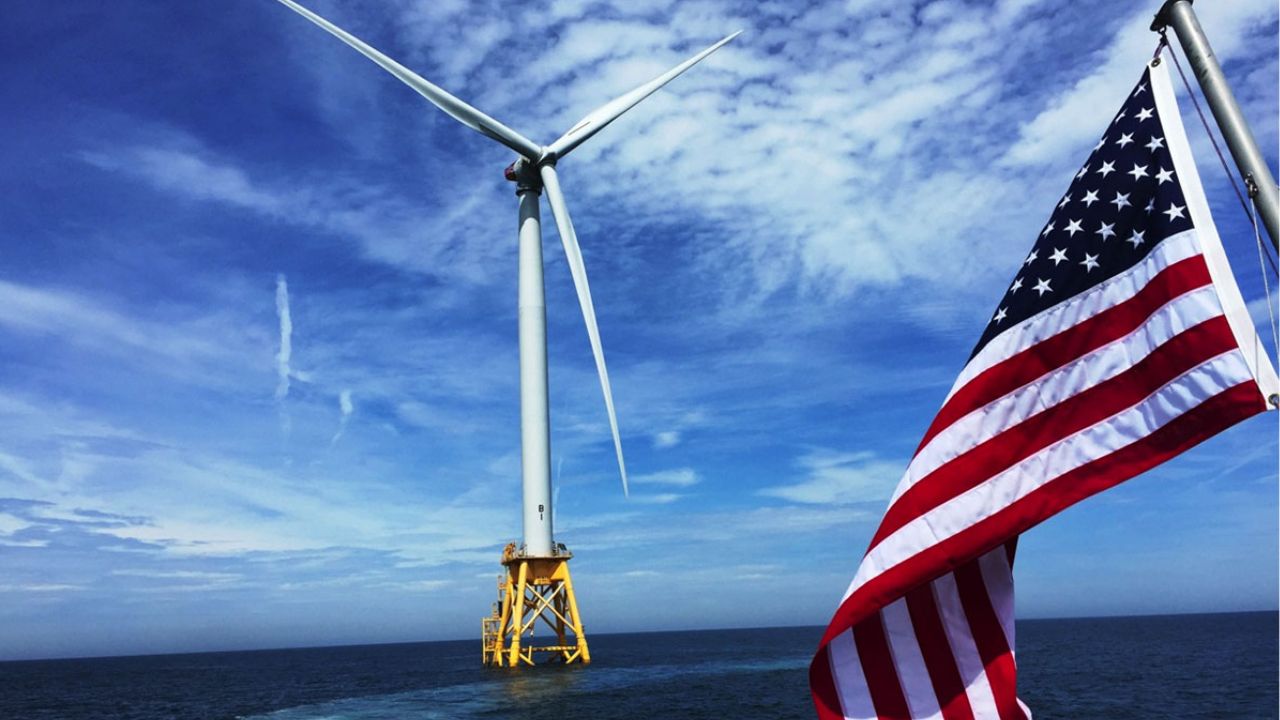



The Trump administration will hand German energy giant RWE $1.2 billion to kill its entire US offshore wind portfolio– a move that turns President Trump’s cries of “drill, baby, drill” and a crusade against “big, ugly windmills” into hard cash and a hard deadline for the sector.
RWE confirmed it will surrender lease areas off California, Louisiana and in the New York Bight. “After careful consideration, it was determined there is no path forward to permit these projects in the US for the foreseeable future,” the company stated. Of the payout, $900 million will be channelled into a liquefied natural gas export terminal in Louisiana, while the remainder flows to conventional gas ventures. Despite abandoning offshore wind, RWE still plans to invest roughly $19.6 billion in the US over six years to grow its generation capacity– now overwhelmingly centred on gas, reports BBC.
Interior Secretary Doug Burgum framed the deal as a victory for affordable energy. “Americans deserve an energy system built on common sense and not one dependent on costly subsidies,” he posted on X. “We welcome RWE’s agreement and voluntary investment in projects that strengthen our nation’s energy security.”

The settlement is the third such wind-lease termination inked this year, marking a swift deadline-driven purge. In March 2026, the Department of the Interior struck a deal with French major TotalEnergies to end its offshore wind plans; the firm instead committed to building an LNG plant in Texas and developing conventional oil in the Gulf of Mexico. Last month, Charlotte-based Duke Energy accepted $129 million to relinquish its Carolina Long Bay wind lease.



The sequence underlines Trump’s relentless campaign against turbines, which he routinely derides as “big, ugly windmills” that menace birds. Just this week he declared “any country with windmills is a loser,” and days after his January 2025 inauguration he vowed “we’re not going to do the wind thing” while pushing a “drill, baby, drill” fossil fuel expansion.
For RWE, the $1.2 billion settlement converts a politically paralysed portfolio into cash chasing a rapidly growing US LNG export market. The Louisiana terminal investment aligns perfectly with the administration’s drive to boost energy exports and accelerate project timelines. RWE’s statement made clear that permitting barriers had rendered the offshore wind leases unworkable, and the payout effectively compensates for the loss of development rights.
Taken together, the three deals expose a readiness to spend public funds to wind down a renewable sector by a set political deadline, while steering corporate capital into gas and oil – a practice critics brand a fossil fuel subsidy disguised as energy security. The administration argues it is delivering reliable, affordable power without distortionary support.