Hundreds of double-decker sleeper coaches illegally built on single-decker chassis are operating on highways, raising serious safety concerns and exposing gaps in monitoring by the Bangladesh Road Transport Authority (BRTA).
After obtaining registration and fitness certificates as regular single-decker buses, many vehicles are taken to local workshops where their bodies are removed and replaced with unauthorised double-decker sleeper structures.
Transport owners estimate that 800 to 1,000 such buses are currently operating across the country. Despite repeated warnings and requests from operators for action to authorise double-decker chassis similar to those used by government-run Bangladesh Road Transport Corporation (BRTC) buses, the BRTA has yet to take any major steps in this regard.
The issue has come under renewed scrutiny following the Osmaninagar road accident in Sylhet that killed nine people earlier this month.
On 7 August, nine passengers were killed when Unique Paribahan and Bengal Paribahan buses collided head-on on the Sylhet-Dhaka highway in Osmaninagar. A video circulated on social media showed the Bengal bus losing control while overtaking another vehicle at high speed before crashing into the Unique bus, which was thrown off the road into a nearby paddy field.
The Bengal Paribahan bus involved in the crash had also been converted from a single-decker chassis into a two-storey sleeper coach.
Transport expert and Bangladesh University of Engineering and Technology (Buet) Professor Mohammad Hadiuzzaman said such modifications reflected a profit-driven approach that compromised passenger safety.
“Bus owners are compromising safety only for the sake of profit,” he said.

Following the accident, the BRTA said it would launch drives against unauthorised buses and workshops involved in such conversions. Officials also said illegal buses would be seized and sent to dumping yards. However, only two buses have had their registrations cancelled so far.
How single-deckers become double-deckers
The conversion process begins with the import of 12-metre Ashok Leyland 12MFE single-decker chassis. Owners then install temporary single-decker bodies at local workshops and present the vehicles to the BRTA for registration as regular air-conditioned buses.
After receiving registration and fitness certificates, the vehicles are taken back to workshops, where the temporary bodies are removed and replaced with heavier double-decker sleeper structures.
BRTA Metro Circle-2 Deputy Director (Engineering) Syed Ainul Huda Chowdhury told TIMES of Bangladesh that such buses had no legal validity.
“Those vehicles have no legality,” he said.
Green Line Paribahan General Manager Mohammad Abdus Sattar also admitted that the company operates such buses without approval.

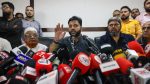
“The government does not approve any of our double-decker buses. Our 20 vehicles are operating illegally,” he said.
Road Transport Owners Association General Secretary Md Saiful Alam said most double-decker buses operating in Bangladesh were built on single-decker chassis, with the number exceeding 800.
“The BRTA does not check them, and police also allow them to operate, although this falls under their responsibility,” he said.
Saiful Alam, also general secretary of the Dhaka Road Transport Owners Association, told TIMES that more than Tk1,000 crore had already been invested in the sleeper bus sector.
“When we entered the sector, we found 700 to 800 buses already operating. We have sent letters to the BRTA and the ministry seeking a legal solution. A Buet committee has been examining the issue for the past six months,” he said.
Bus-Truck Owners Association General Secretary and Hanif Enterprise owner Mohammad Hanif said sleeper buses operating on highways were unsuitable for long-distance travel.
“These buses create serious risks. We have repeatedly informed the authorities, but they have not paid attention,” he said.
Bangladesh Road Transport Owners Association Additional Secretary General ASM Ahmed Khokon questioned why such modifications were not detected during annual fitness inspections.
“Even after converting a single-decker bus into a double-decker, these vehicles are supposed to undergo yearly fitness tests. Why did the BRTA not identify the changes during those inspections?” he said.
Another accident raises alarm
On Monday morning, another converted double-decker sleeper coach met with an accident on the Dhaka-Chattogram highway.
The Royal Cox Paribahan bus, travelling from Cox’s Bazar to Dhaka, hit a vehicle ahead near Eliotganj. The front portion of the bus was damaged and a fire broke out from its gas cylinder.
No casualties were reported as passengers managed to evacuate the bus safely.
Police, BRTA trade blame
The highway police and transport authorities have traded blame over how such buses continue to operate on highways.
Highway Police Chief Faruk Ahmed told TIMES that police could not determine whether a bus had approval for structural modifications.
“Police cannot know whether a particular bus has approval. If a vehicle with a number plate is on the road, whether its body has been extended beyond the approved limit is a matter for the BRTA to check, not the police,” he said.
Hadiuzzaman, former director of Buet’s Accident Research Centre, said imported complete-built-unit double-decker buses had proper structural safety, but risks emerged when single chassis were modified at local workshops.
“The problem arises when single chassis are converted at local workshops,” he said.
He called for a clear policy on allowing double-decker buses in the private sector, noting that BRTC already operates such buses with government approval.
BRTA Deputy Director (Engineering-3) Kazi Mohammad Morshalin said the authority had held a meeting on the issue but could not disclose details at this stage.
“Detailed information will be shared after our activities are completed,” he said.
Another BRTA official said a committee had been formed under Shafiquzzaman Bhuiyan, Director (Engineering) of the BRTA Dhaka divisional office, to decide on action against illegal double-decker buses.
However, repeated attempts to contact Shafiquzzaman over several days went unanswered.