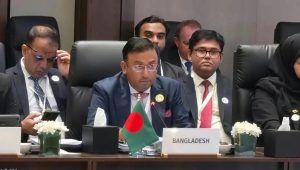
Thirty-six hours after the assassination of Iran’s Supreme Leader Ayatollah Ali Khamenei, Bangladesh issued an official condolence statement, joining a growing number of countries reacting to the dramatic development that has sparked protests and strong political responses across several global cities.
In a statement released Monday afternoon, the Ministry of Foreign Affairs expressed sorrow over the killing and conveyed sympathy to the Iranian people. “The Government of Bangladesh is saddened to learn that Iran’s Supreme Leader Ayatollah Ali Khamenei was assassinated in a targeted attack, which constitutes a violation of international law and established norms,” the statement said. It added that Bangladesh extends its “heartfelt condolences to the brotherly people of Iran.”
Reaffirming its longstanding diplomatic position, Dhaka emphasised that conflicts cannot provide lasting solutions and reiterated its support for peaceful resolution of disputes through dialogue, mutual respect, and adherence to international law.

However, the timing and wording of the statement have drawn attention within diplomatic circles, particularly when compared with two earlier statements issued by Bangladesh following the escalation of hostilities in the Middle East.
In the immediate aftermath of the attacks, Bangladesh released press statements on Saturday and Sunday outlining concerns over regional stability and the safety of civilians and Bangladeshi nationals. While both statements called for restraint and a return to diplomacy, observers noted the absence of any direct condemnation of the military strikes carried out against Iran, a sovereign state.




Instead, stronger language was used to condemn violations of sovereignty affecting several other countries in the region. Analysts say this contrast has raised questions about whether Dhaka adopted an unusually cautious tone reflecting geopolitical sensitivities, particularly regarding relations with Washington.
Diplomatic observers argue that Bangladesh traditionally attempts to maintain a balanced foreign policy, especially during major international crises. The difference in wording between the earlier statements and Monday’s condolence message has therefore prompted debate over whether the language reflected a deliberate policy calculation or shortcomings in diplomatic communication.
The issue has also drawn comparisons with Bangladesh’s previous response to tensions involving Iran. In June last year, the government issued a statement expressing “deep concern” over attacks targeting Iranian nuclear facilities, warning that such actions could further destabilize an already fragile regional environment and threaten international peace and security.
Officials familiar with the matter said the contrasting tone of recent statements surprised some within the foreign policy establishment, with questions emerging over whether the messaging indicated a shift in diplomatic posture or simply inconsistencies in drafting.