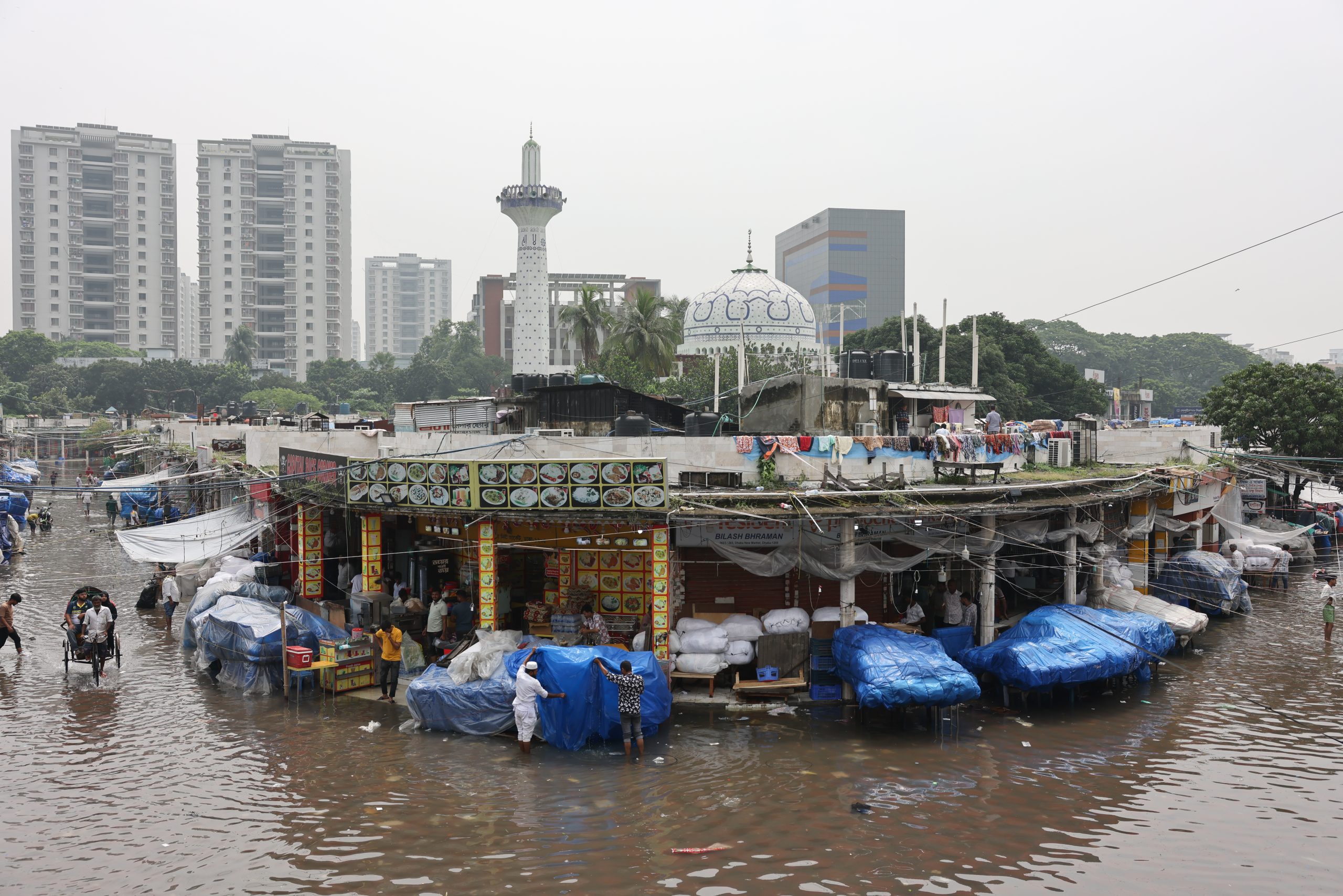

Heavy rainfall accompanied by thunder lashed Dhaka overnight and into the early hours of Tuesday (October 1) and by morning, the capital was once again submerged. Streets turned into canals, neighbourhoods into ponds and daily life came to a standstill.
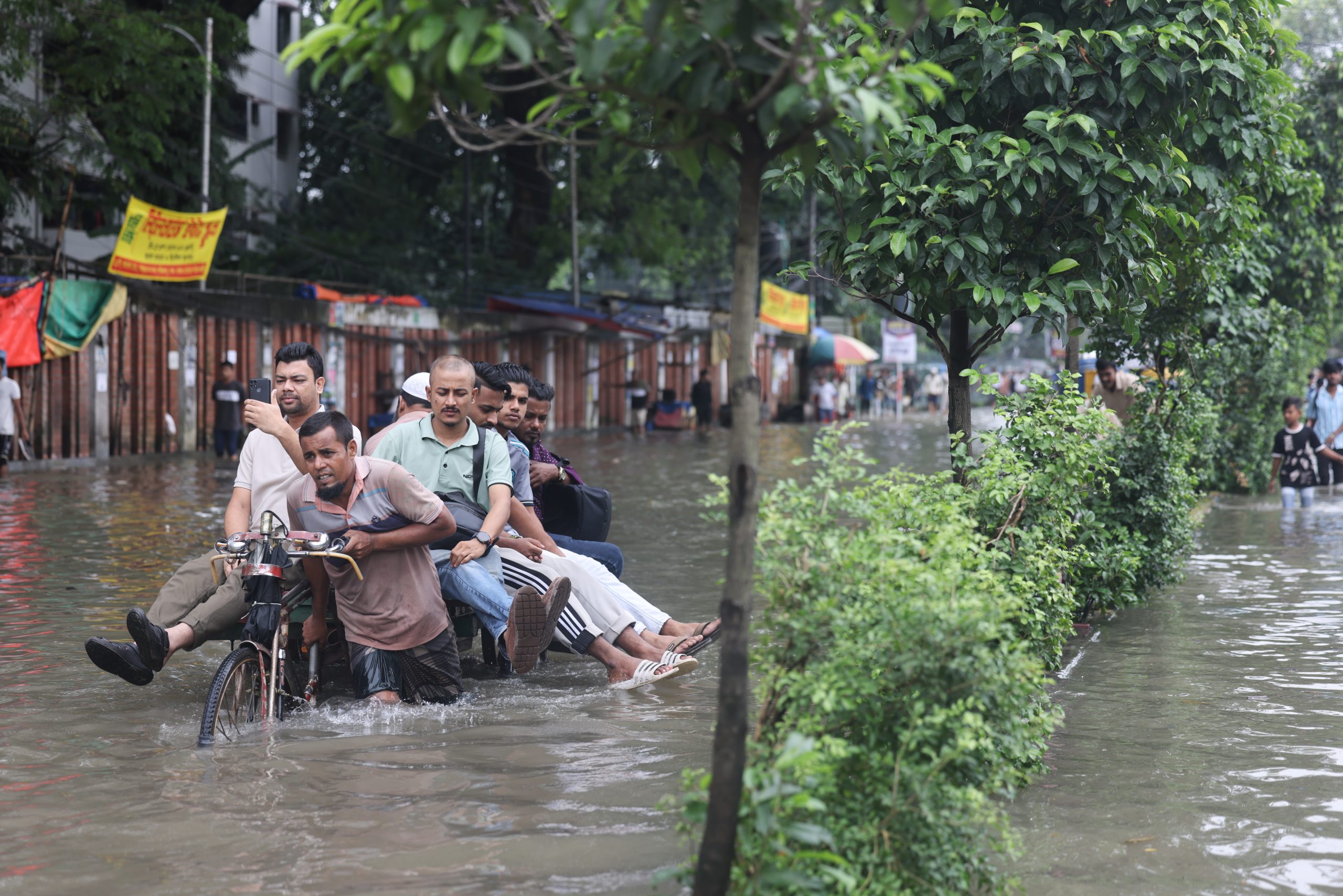
Thousands of people found themselves stranded in knee-to-waist-deep water, struggling to get to school, to work or simply to move around their own city.
The rain, which began yesterday afternoon and intensified overnight, exposed yet again how fragile Dhaka is in the face of a single night’s downpour. Parents carried their children on their shoulders to reach schools, only to find them closed.


Office workers waded through murky water in pants rolled high, desperate not to be late. Rickshaw pullers were forced to push their vehicles through flooded lanes; their daily income washed away along with their energy.
For residents, it was a familiar misery. “Every year it’s the same story. One night of rain and we’re underwater. Who is responsible for this?” asked Ahsan Oni, 25, standing in front of his building with water nearly up to her thighs.




Others echoed the same frustration. “I woke up this morning to get medicine for my brother, but the whole road outside was clogged with water. People were wading knee-deep to work, and there were hardly any rickshaws. I had to wait a long time for one. Every year, the government promises improvements, but nothing changes. One rain and everything floods,” said Asif Khan, 25, a student living beside Green Road.
Behind these repeated scenes of suffering lies a man-made disaster. Dhaka’s drainage system has long been a failure. Despite generous budgets, the network is poorly designed, haphazardly built and often compromised by corruption.
What little infrastructure exists is easily overwhelmed by a few hours of rain. On top of that, the city has destroyed almost all its natural water reservoirs, canals, wetlands and lowlands that once absorbed excess rainwater. Where water used to flow and settle naturally, there are now residential blocks, shopping malls, roads and concrete.
Garbage makes matters worse. Plastic bags, bottles and household waste are dumped directly into drains, clogging them so completely that when it rains. The water has nowhere to go but back into the streets. And when it comes to cleaning or maintenance, the authorities are nearly invisible. Drainage channels are rarely unclogged in time and even when they are, the work is done haphazardly, without proper manpower or planning.
Urban planners have been warning for years that this cycle of waterlogging is not just an inconvenience; it is a crisis created by mismanagement, greed and neglect. For ordinary citizens, though, such solutions remain distant.
What they know is the helplessness of waking up to find their homes surrounded by filthy water, their routines shattered, their children shivering on the way to school, their livelihoods slipping away in the flood. One night of rain is enough to bring Dhaka to its knees, and the people who live here have little choice but to suffer through it repeatedly.