



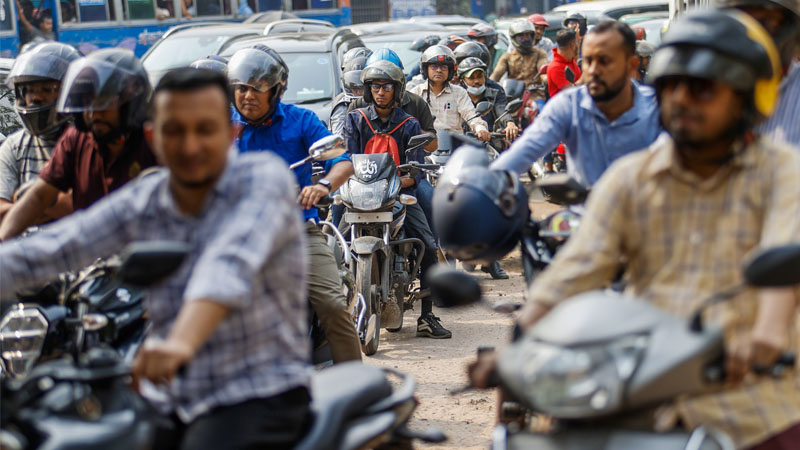
Motorcycle ride-sharing fares in Dhaka have seen a sharp increase as drivers begin charging exorbitant rates following the government’s announcement of a fuel price hike.
While bus owners are still negotiating new fare structures, bikers have already started demanding up to 50 per cent more than previous rates.
The government recently raised the prices of petrol and octane by 16 per cent, citing the rise in crude oil prices on the international market due to the Iran war.
The new prices are close to the rates set in August 2022. Currently, the BNP government has fixed the price of octane at Tk140 per litre and petrol at Tk135 per litre. In comparison, the prices during the Awami League tenure were Tk135 and Tk130 respectively.
Disproportionate fare hikes
Four years ago, when similar prices were announced, public transport and app-based ride-sharing fares were increased proportionally. However, passengers note that even when fuel prices were subsequently reduced in stages, fares never returned to their previous levels.

Now, with petrol and octane priced only Tk5 higher than that period, commuters are questioning why fares have surged so drastically.
Mouri Sultana, a resident of Hatirpool, reported that her usual commute to Gulshan, which typically cost Tk120 to Tk130, has risen to Tk200 over the last two days. Many drivers are now bypassing ride-sharing apps entirely, forcing passengers to travel based on verbal negotiations.

One driver, Hasibul Islam, admitted to charging up to Tk250 for a trip from Tejgaon to Wari, even though the app suggests a fare of around Tk150. “We have to do this to survive the fuel crisis and the price hike,” he claimed.
Similar reports indicate that even short-distance fares have increased by Tk60 to Tk80.
Drivers cite fuel crisis
The fuel shortage has led to long queues at petrol pumps, resulting in fewer motorcycles on the streets and leaving passengers with little room to bargain.
Rahmat Ali, a resident of North Badda, attempted to go to Karwan Bazar on Monday morning. Despite offering Tk150, he could not find a driver willing to take him, eventually being forced to pay Tk200.
Students and residents from various parts of the city shared similar grievances. Nurjahan, a student from Old Dhaka, noted that a trip to Bosila now costs between Tk170 and Tk200, up from the previous Tk120.
Hasan Mahmud of Hazaribagh expressed deep concern, asking, “Where will we go if transport costs keep rising like this?”
Drivers, however, argue they are struggling. Abdus Sobhan, a driver in the Shahbagh area, explained that getting fuel is an ordeal.
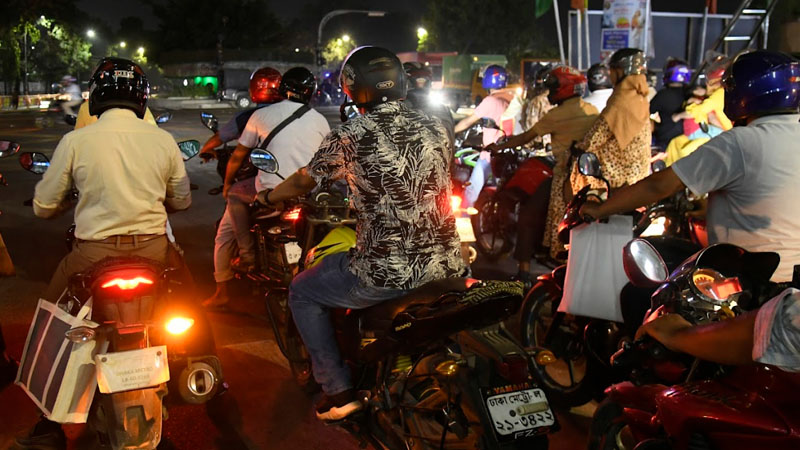
“It takes hours of queuing to get fuel that only lasts a few trips. There is always the fear of the bike stopping mid-way, so we have no choice but to raise fares,” he said. Another driver, Md Anis, claimed that even at Tk200, his daily earnings have dropped from Tk1,500 to just Tk700 or Tk800.
Growing public outcry
While ride-sharing apps still display the old rates – such as Tk170 to Tk180 for a trip from Natun Bazar to Mirpur DOHS – finding a ride through the app has become increasingly difficult. Passengers often accept the higher negotiated rates because CNG auto-rickshaws are even more expensive and slower in Dhaka’s traffic.
The fuel crisis has also caused a decline in the number of active ride-sharing drivers. In response, drivers held a demonstration in the capital on Sunday, demanding a formal fare increase to Tk35 per kilometre, a minimum fare of Tk300, a reduction in app commissions, and reforms to existing policy.
Speaking to Times of Bangladesh, SM Nazer Hossain, Vice President of the Consumers Association of Bangladesh (CAB), said the convenience of rapid travel by motorcycle is becoming unaffordable for many.
“Daily commuting costs are rising, and city dwellers are facing increased suffering as they are forced to seek alternative transport,” he noted.