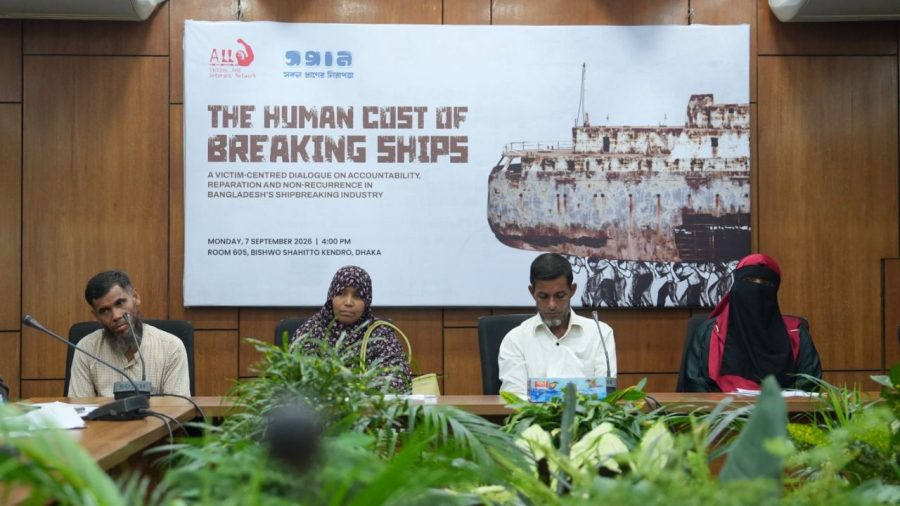



Rights advocates and civil society representatives at a roundtable on Monday demanded a comprehensive, victim-centred remedy system for workers killed or injured in Bangladesh’s shipbreaking industry, stressing that one-off compensation is insufficient.
They called for a framework that addresses the long-term needs of affected workers and their families, ensuring fair compensation, medical and psychological care, rehabilitation, legal assistance, and education for the children of victims.
The speakers also demanded independent investigations into accidents, accountability for those responsible, and effective measures to prevent recurrence.
The roundtable, titled “The Human Cost of Shipbreaking: Accountability, Remedy and Prevention of Recurrence in Bangladesh’s Shipbreaking Industry,” was held at Bishwa Sahitya Kendra in the capital’s Banglamotor area.
Jointly organised by Sokoler Praner Nirapotta (SOPRAN) and All Victims and Veterans Network (AVN), the event marked the second anniversary of an explosion aboard MT Suvarna Swarajya at SN Corporation shipbreaking yard.
The discussion examined worker deaths, causes of workplace accidents, accountability gaps, and existing compensation and remedy mechanisms in the industry.
Presenting the keynote, SOPRAN researcher Apsara Islam Tandra said one-off financial payments could not constitute an effective remedy for death or injury.

She emphasised that a comprehensive remedy must include adequate and fair compensation, necessary treatment, psychological support, long-term rehabilitation, disclosure of the truth behind incidents, and safeguards against their recurrence.
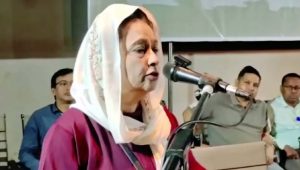
Family members of deceased workers shared their experiences and demanded long-term assistance and justice.
They said the death of a family’s breadwinner caused consequences extending far beyond an immediate financial crisis, threatening the family’s living standards, healthcare, children’s education, and future security.
Sabina Khatun, wife of deceased worker Habib, said the money she received following her husband’s death was insufficient to secure her family’s future. “Is the value of a person’s life only Tk700,000?” she asked.

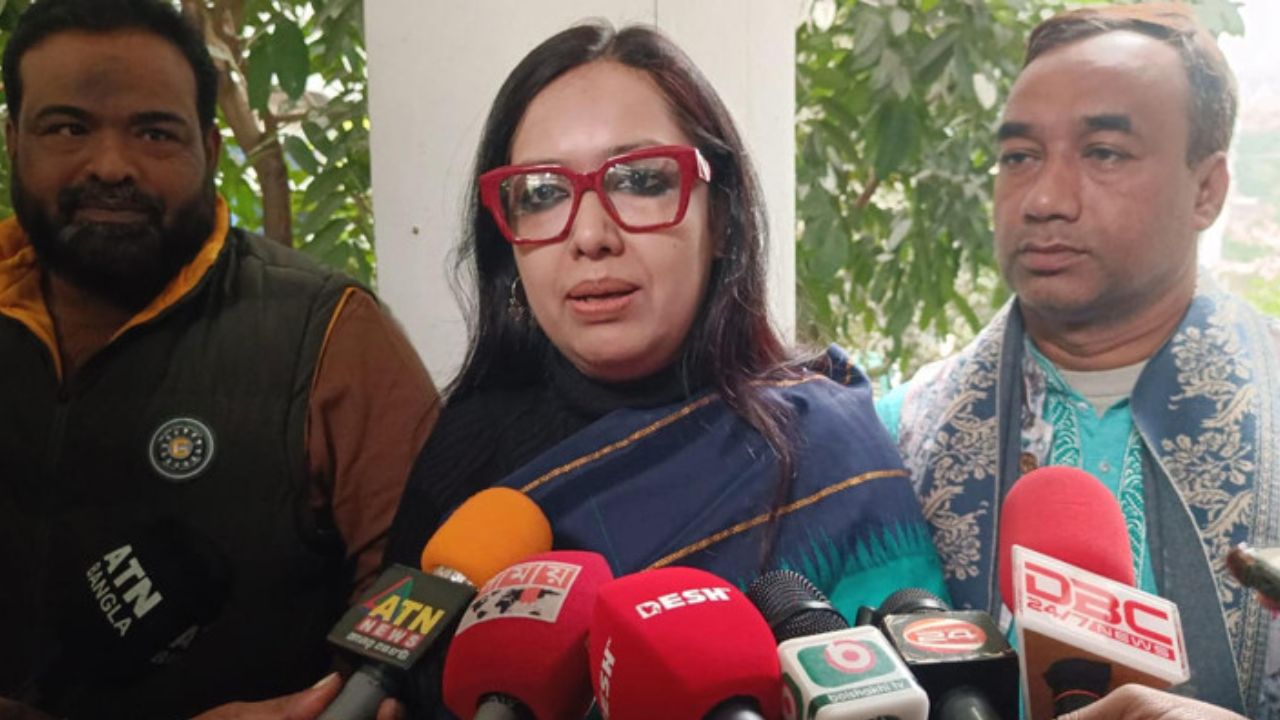


Rokeya Begum, mother-in-law of deceased worker Barakat, demanded regular monthly assistance for affected children instead of a single payment.
Sharmin Begum, wife of deceased worker Jahangir, sought sustained support for her family, particularly for her children’s education and healthcare. Kamal Sheikh, father of deceased worker Khairul, demanded justice and accountability for the death of his only son.
Syed Sultan Uddin Ahmed, executive director of Bangladesh Institute of Labour Studies, said the country had relevant laws and institutions, but implementation and coordination among responsible agencies remained weak.
He highlighted that although investigation committees are formed after industrial accidents, their reports are rarely made public, stressing the need to disclose findings, identify causes, and establish responsibility.
Mohammad Tayebur Rahman, assistant director of Bangladesh Legal Aid and Services Trust, said compensation should not be based on a fixed amount alone.
He urged that a worker’s age and income, the number of dependent family members, and the accident’s long-term social and economic consequences should also be considered.
He called for an effective employment injury compensation scheme, speedy trials, alternative dispute-resolution mechanisms, and accessible legal support for victims.
Saima Karim Shannon, assistant human rights officer at the Office of the UN High Commissioner for Human Rights, said such incidents were not isolated accidents but reflections of structural problems within the industry.
She called for accountability across the entire ownership and responsibility chain, along with institutional reforms.
Barish Hasan Chowdhury, policy and advocacy coordinator of the Bangladesh Environmental Lawyers Association, pointed out that certification as a green shipbreaking yard alone did not guarantee worker safety.
He stressed that existing laws and court directives must be properly enforced alongside occupational and environmental safeguards.
Member of Parliament Abdullah Al Amin identified the power imbalance between workers and owners, workers’ reluctance to pursue lawsuits, and weak enforcement of laws as major barriers to justice.
Romana Schweiger, senior rule of law adviser at UNDP Bangladesh, emphasised accessible legal assistance for affected workers and families.
She said the National Human Rights Commission could play an important role in reviewing incidents, advocating remedies, and ensuring action by responsible authorities.
Participants concluded that workplace safety, independent investigation, accountability, fair compensation, long-term treatment, rehabilitation, psychological assistance, and children’s education must be incorporated into a single, coordinated accountability and remedy framework.
SOPRAN researcher Jeba Sajida Saraf moderated the discussion.