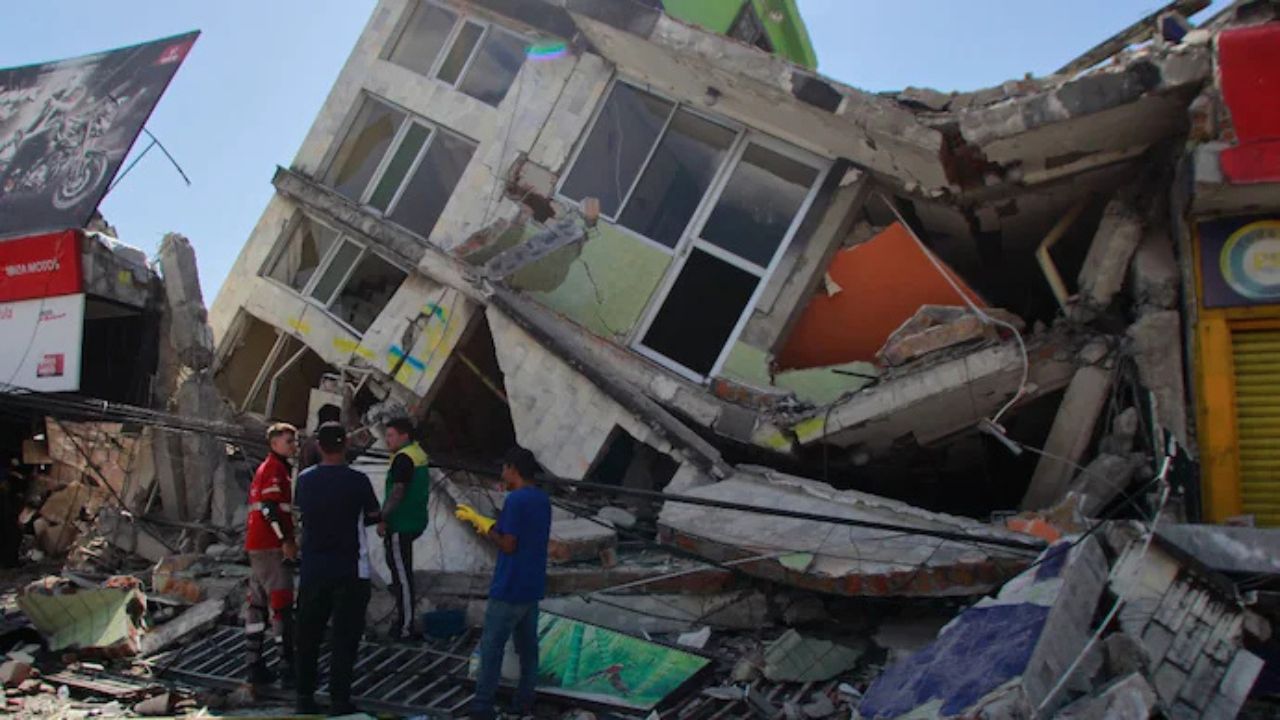



The death toll from a devastating earthquake that flattened dozens of buildings in western Colombia rose to 250 by 10pm (BST) on Tuesday, local authorities said, as emergency workers continued digging through the rubble in search of survivors.
The 7.4-magnitude earthquake, one of the most powerful to hit the South American nation in decades, struck the coffee-growing region early on Monday. It reduced multi-storey buildings to rubble across cities including Cali and Pereira, and caused part of a historic cathedral in Manizales to collapse.
Authorities warned that the casualty count could rise as search-and-rescue teams reach more remote areas, posing an immediate crisis for newly elected far-right President Abelardo de la Espriella.
By Monday night, citizen-run websites had listed more than 2,700 people as missing, though officials cautioned that this figure has not yet been formally verified. Across the region, around 1,600 structures have been severely damaged or destroyed.

Emergency crews — supported by police, military personnel, and civilian volunteers — worked through the night using excavators and their bare hands to pull people from the debris.
Jose Fernando Usma, head of search and rescue for the Quindío branch of the Colombian Red Cross, confirmed that rescuers had detected sounds beneath the rubble.
“We still have a significant window of opportunity,” Usma said. “We have approximately 24 hours left where we can reasonably hope to find survivors.”



Cali among hardest hit
In Cali, a city of 2.2 million people, at least 95 fatalities have been confirmed. Dozens of structures were either destroyed or left structurally unsafe, forcing thousands of residents into the streets.
Several upper floors of a local hospital collapsed, including sections dedicated to paediatric care. Hospital director Irne Torres Castro told Caracol Television that while some patients remained trapped, around 600 others were receiving treatment on debris-strewn streets outside.
Carmen Yasmín García, 43, a Cali resident assisting rescue teams, said her group had managed to pull seven people alive from a collapsed building, though four individuals and a dog remained trapped.
“A short while ago we heard scratching, but now there is silence,” García said. “We remain hopeful that the dog is alive and that we can extract the remaining people.” She appealed for additional volunteers and heavy equipment.
In Pereira, the capital of the hard-hit Risaralda region, authorities reported 72 deaths. Officials in neighbouring Valle del Cauca, which encompasses Cali, recorded 38 fatalities, while a further 13 people were killed in Chocó, the rural province closest to the epicenter.
Pereira suffered extensive destruction, with entire residential blocks reduced to piles of concrete and twisted steel. Verified video footage showed the city’s airport swaying violently during the tremor, with large sections of the ceiling collapsing as passengers scrambled for cover.
Security forces deployed
President De la Espriella, who assumed office only days ago, announced that 1,000 security personnel would be deployed to Cali by dawn following reports of looting. Both Cali and Pereira imposed overnight curfews on Monday as authorities worked to maintain public order amid ongoing rescue efforts.
“Our sole intention is to cooperate in every necessary way,” De la Espriella told reporters on Monday evening. “There are no political or ideological divisions when it comes to protecting our citizens and showing solidarity.”
The disaster has drawn immediate comparisons to the catastrophic 1999 earthquake that struck the same coffee-growing region, which claimed more than 1,000 lives. It also follows heightened regional anxiety over seismic activity after major quakes hit neighbouring Venezuela earlier this year.