


At least 132 people have been killed after a powerful earthquake struck Colombia, prompting President Abelardo de la Espriella to declare a national disaster and impose emergency measures.
Officials warn the toll could rise further, with many feared trapped under collapsed buildings, BBC reports.
The 7.4‑magnitude quake hit at 07:34 local time (12:34 GMT) at a depth of 103km in Chocó province, according to the country’s geological service.
Tremors were felt across western Colombia, shaking cities hundreds of miles from the epicenter near San José del Palmar. Despite damaged roads, the local mayor reported no casualties in the village itself.

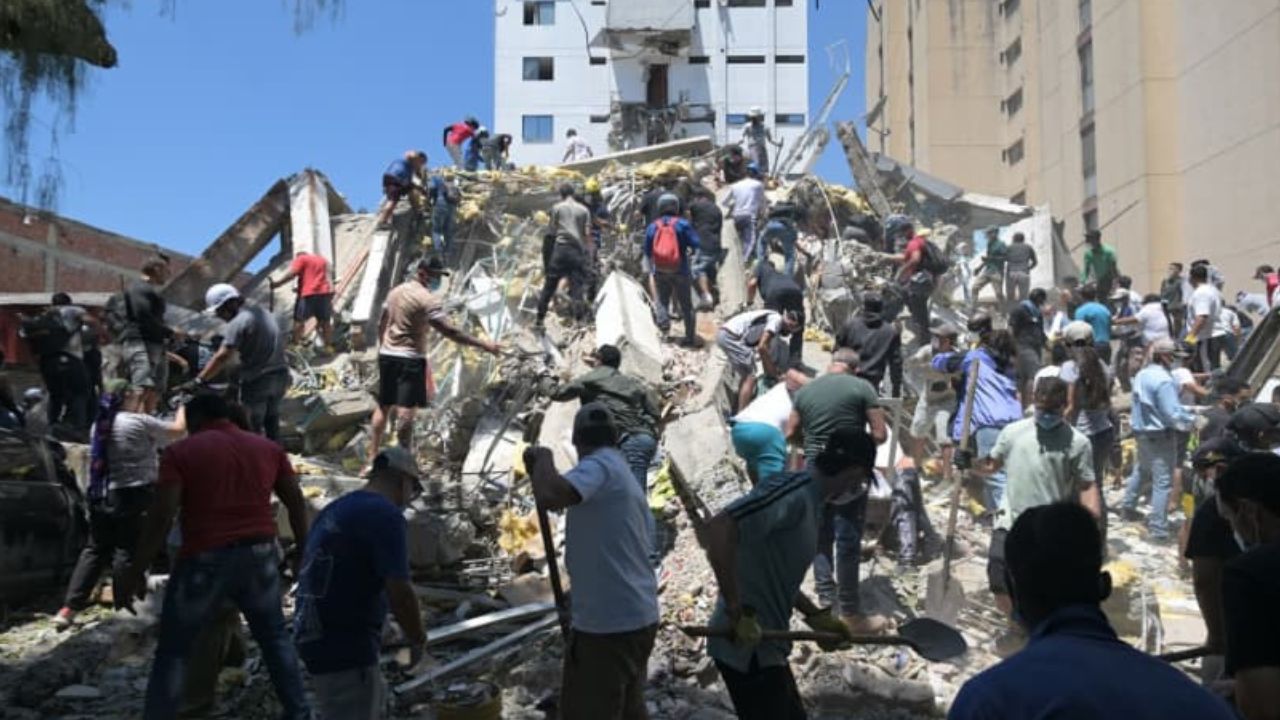
Pereira, about 55km from the epicenter, suffered some of the worst destruction. At least 40 people were killed in the metropolitan area, 65 buildings collapsed, and residents remain trapped in 15 structures.
Videos verified by the BBC show a building collapsing in Plaza Bolívar, scattering debris across the square. A curfew has been imposed until 05:00 Tuesday.



In Cali, 32 buildings collapsed, while Manizales reported two deaths. Witnesses described cracks in hotel walls, falling bricks, and widespread panic.
Journalist Luis Felipe Molina said strict seismic codes helped limit damage, though homes shook violently and glass shattered. Fatalities were also reported in Quibdó, Medellín, and across Valle del Cauca, BBC reports.
More than 480 people have been injured, according to Colombia’s Association of Capital Cities, and over 1,500 homes damaged nationwide.
Airports in Pereira, Manizales, Quibdó, Armenia, Cartago and Buenaventura sustained damage. In Bogotá, trees and traffic lights swayed, with cracks reported in buildings but no major structural failures. Tremors were felt as far as Venezuela, Ecuador and Panama.
President de la Espriella, who took office only days ago, invoked special powers to reallocate budgets and coordinate rescue operations.
US Secretary of State Marco Rubio pledged readiness to assist, EU chief Ursula von der Leyen confirmed Copernicus satellite data is aiding rescue teams, and El Salvador’s President Nayib Bukele offered personnel and equipment.
The US Geological Survey estimates 1.5 million people experienced shaking close to magnitude seven. Deep earthquakes are often less destructive than shallow ones, but can release energy that severely damages buildings and trigger strong aftershocks.
The disaster comes less than two months after twin quakes in Venezuela killed more than 6,300 people, underscoring the seismic vulnerability of the region.