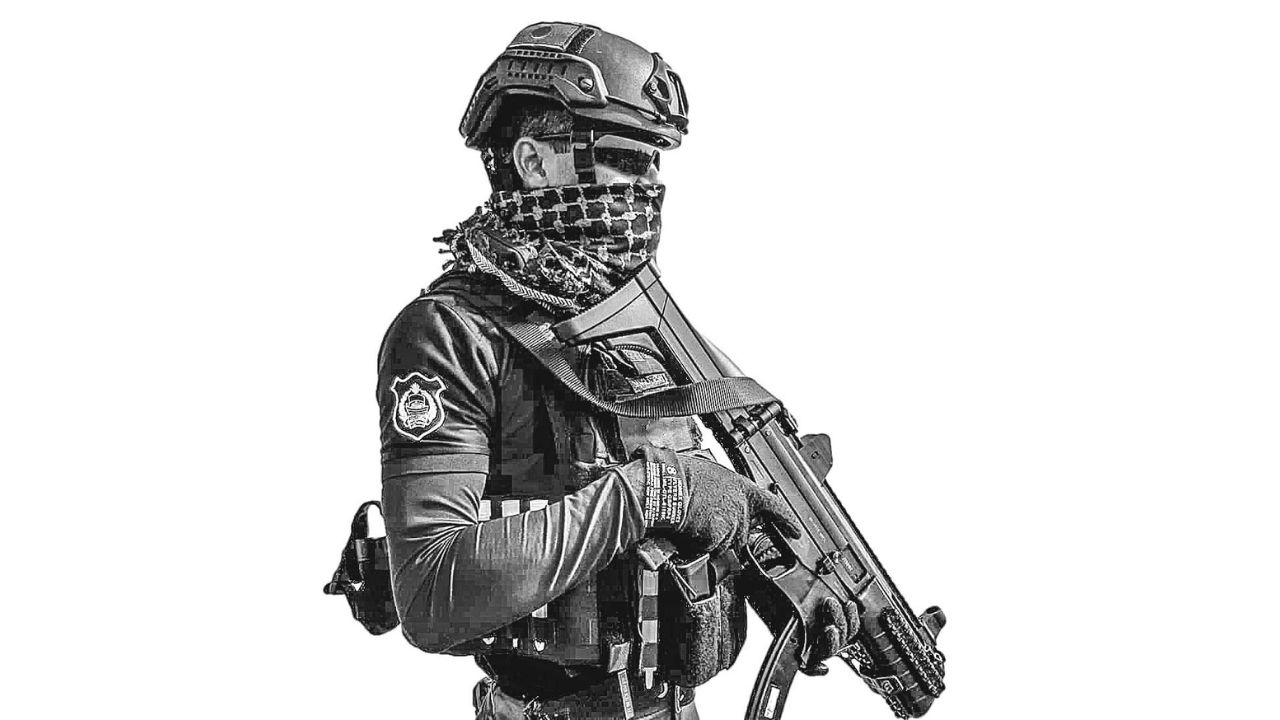

As election-related violence escalates across Bangladesh, the Chattogram Metropolitan Police (CMP) has adopted one of the toughest security stances seen in the country, training hundreds of constables in submachine gun (SMG) tactics under a shoot-at-sight directive targeting armed assailants.
Chattogram has been a hotspot for violence for some time, with recent incidents claiming dozens of lives, underscoring growing concerns over security in the run-up to the polls.
The move comes amid growing concern over candidate safety, following a string of attacks in recent weeks — including the shooting of BNP candidate Ershad Ullah in Chattogram and the gun attack on Inqilab Moncho candidate Usman Hadi in Dhaka.
CMP officials say the force has begun specialised training for constables to respond to armed threats during the election campaign, with a target of training at least 1,000 personnel.
According to police sources, the training focuses on the use of SMGs not only for static protection duties, such as guarding checkpoints, but also for rapid response in situations involving sudden armed attacks or clashes initiated by criminal or political arms cadres.
The modules include controlled firing, tactical movement, threat identification and coordination, with an emphasis on neutralising armed attackers while minimising collateral damage.
So far, around 100 constables have completed the training, with further batches scheduled in the coming weeks.
Shoot-at-sight directive
CMP Commissioner Hasib Aziz said the shoot-at-sight order would be applied strictly against armed individuals posing an immediate threat.

“This is not about indiscriminate force,” he told TIMES of Bangladesh on Sunday. “It is about protecting lives — of candidates, voters and law enforcement personnel — when faced with armed violence.”
He said the directive had been issued under existing legal provisions and was now being implemented in response to the evolving security situation.
“Following recent attacks on candidates, we have reassessed our preparedness,” he said. “Our goal is to ensure that trained constables can respond effectively to armed threats during the election period.”
Legal basis for use of force
Police officials cite multiple legal provisions to justify the directive.
Sections 96 to 106 of clause 1860 of the Penal Code, recognise the right of private defence, allowing the use of force — including lethal force — if there is an imminent threat to life and if the response is necessary and proportionate.




Section 100 permits causing death in self-defence where there is a reasonable apprehension of death or grievous harm.
In addition, Section 46(3) of the Code of Criminal Procedure (CrPC) allows police to cause death while attempting to arrest a person accused of an offence punishable with death or life imprisonment, if that person violently resists or attempts to flee.
Police Regulations also provide operational guidance on the use of firearms in extreme circumstances.
Deployment across the city
Police sources say constables at 32 check posts across Chattogram city have already been equipped with SMGs. All patrol teams are also expected to be provided with the weapons as part of the enhanced security plan.
CMP intelligence units, officials added, are working alongside trained constables to identify arms cadres and prevent sudden outbreaks of violence.
According to police assessments, armed groups and criminal elements often exploit election periods to settle scores or influence outcomes.
Candidates voice anxiety
Across party lines, candidates say the recent shootings have heightened fear and uncertainty.
Segupta Busra Misma, NCP candidate for Chattogram-10, said no candidate now feels completely safe.
“After what happened in Chattogram-8 and Dhaka-8, we constantly assess risks before visiting areas, holding meetings or moving without security,” she said.
While welcoming stronger security measures, she stressed the importance of coordination. “Police action must be proactive, not just reactive. Clear communication between candidates and law enforcement is essential so violence can be prevented before it happens.”
BNP candidate Abu Sufian described the election atmosphere as tense and unpredictable.
“The shooting incidents have sent a chilling message. Our activists are scared,” he said. “While SMG training may deter armed groups, the root causes of violence must also be addressed, and coordination with law enforcers must improve.”
Police urge caution in campaigning
CMP Commissioner Aziz said security could not rely on force alone. He urged candidates to assist police by sharing information and avoiding individuals linked to violence.
“We have asked candidates to avoid individuals with records of terrorist or violent activities,” he said. “If police identify any miscreants at election rallies, we will take immediate action and detain them.”
Differing views on use of force
Former Inspector General of Police Muhammad Nurul Huda cautioned that police action must always be proportionate.
“Action should be proportionate to the level of threat,” he told TIMES. “There is nothing in the CrPC that says someone must or should be subjected to ‘brushfire’.”
He added that while armed individuals involved in anti-state activities — particularly in the hill tracts — may have to be shot depending on circumstances, the law does not mandate special training specifically for shooting.
“Police training covers how different situations are to be handled,” he said.
Meanwhile, speaking to TIMES, Dhaka Metropolitan Police Commissioner SM Sajjat Ali drew a distinction between the capital and Chattogram.
“The criminals operating in Dhaka are not particularly hardened,” he said, adding that police pistols were sufficient to deal with them. “The situation in Chattogram is different.”
A hardening security landscape
With SMG training expanding and shoot-at-sight directives enforced, CMP’s approach marks a significant hardening of election security in the port city.
However, some candidates argue that those facing higher risks require closer communication and tailored protection, warning that force alone cannot address the deeper drivers of election violence.
As campaigning continues under the shadow of armed attacks, the coming weeks will test whether the show of force can restore confidence — or further underscore the fragility of election-time security.
Kamruzzaman Khan in Dhaka contributed to the report.