
Christopher Nolan has shared why IMAX 70mm remains his favourite way to watch films as The Odyssey becomes the first feature shot entirely on IMAX film.
According to the Associated Press (AP), the Oscar-winning filmmaker said his fascination with IMAX began in childhood after watching nature documentaries at Chicago’s Museum of Science and Industry. Ever since, he dreamed of making a major Hollywood film specifically for the format.
That ambition has now been realised with The Odyssey, which opens in cinemas on Friday. Nolan said the achievement became possible only after years of technical development.
Earlier IMAX film cameras were too noisy for dialogue scenes. After Oppenheimer, filmmakers worked with IMAX to create a new soundproof camera housing, known as “the blimp”, which dramatically reduced operating noise. The new camera system, named The Keighley, honours longtime IMAX executives Patricia and David Keighley. David Keighley died three weeks after completing work on The Odyssey.
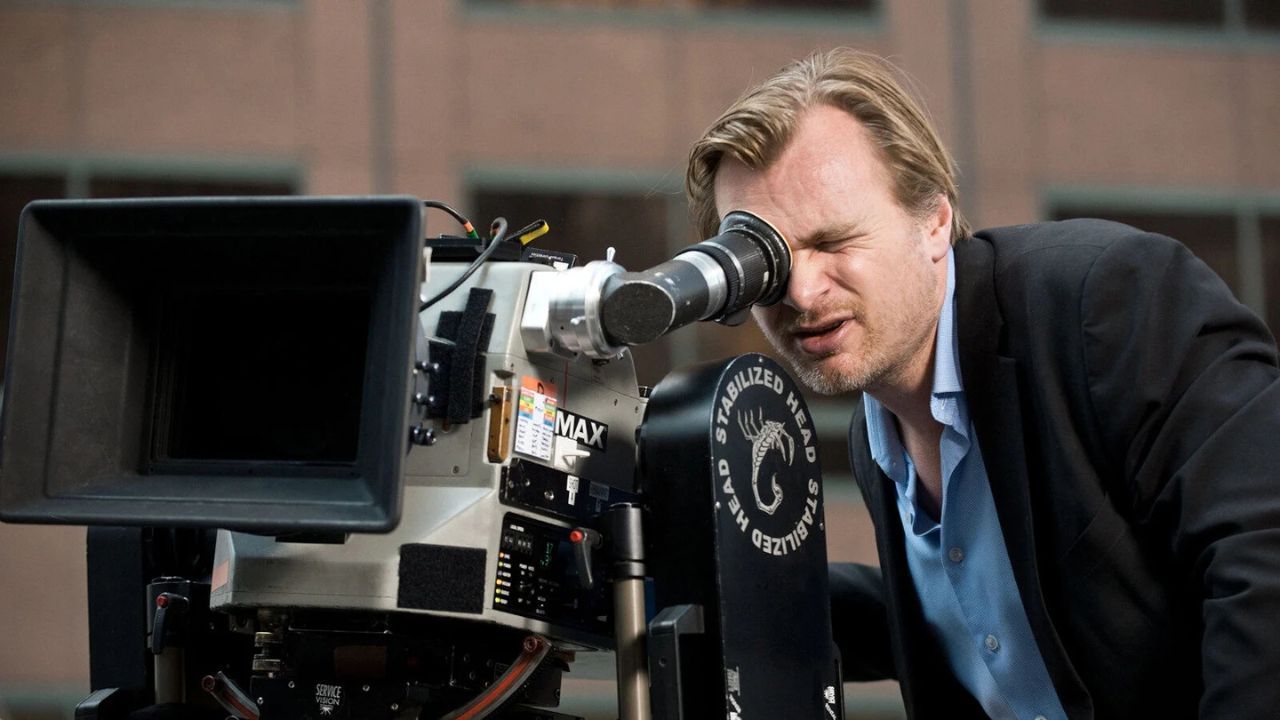
The upgraded system also presented new challenges. The enclosed camera weighed about 300 pounds, film magazines required reloading every two-and-a-half to three minutes, and filmmakers developed a mirror system so actors could maintain eye contact around the oversized camera.

Despite those difficulties, Nolan said the effort aimed to give audiences an experience they could not find anywhere else.
As The Odyssey arrives in cinemas, audiences can choose from several formats, including IMAX 70mm, standard 70mm, IMAX digital, 35mm, Dolby Cinema and other premium large-format presentations.
Speaking to AP in 2023, Nolan said watching a film on an IMAX screen offers an experience that simply cannot be recreated at home.




Nolan has previously used IMAX film on The Dark Knight, Dunkirk, Tenet and Oppenheimer. He said IMAX 70mm delivers exceptional sharpness, clarity and depth, creating an immersive image that fills the audience’s field of vision without requiring 3D glasses.
“The screen disappears,” Nolan said, describing the effect.
He recalled using IMAX cameras for the opening aerial sequence of The Dark Knight, saying audiences gasped during early screenings because they had never seen anything similar.
Technically, IMAX film provides almost 10 times the resolution of traditional 35mm projection. Each frame carries roughly 18,000 pixels of detail, compared with about 1,920 pixels on a standard home HD display.
Nolan also explained why films are shot on 65mm but projected in 70mm. The additional 5mm originally accommodated the soundtrack on film prints. Although sound is now digital, the traditional format remains unchanged.
He added that filming for IMAX requires careful framing because cinemas use different aspect ratios. His team uses a technique known as “centre punching the action” to ensure important visual elements remain visible across every format. Cinematographer Hoyte van Hoytema also monitors framing for multiple screen sizes during production.
On full-size IMAX 1.43:1 screens, audiences see the complete image. Other formats, including 35mm, digital projection and CinemaScope, crop parts of the top and bottom. Nolan said the artistic composition remains intact across every version.
Although IMAX 70mm is his preferred format, Nolan acknowledged that it remains rare, with only 32 cinemas across the United States and Canada equipped to screen films that way. He also praised standard 70mm prints, calling them “a fabulous presentation”.
Most audiences will watch The Odyssey in digital formats. These include IMAX digital, laser projection, Dolby Cinema and premium large-format screens such as Regal RPX, Cinemark XD and Cineplex UltraAVX. Nolan said his team spends months preparing digital versions from the original IMAX film to maintain the highest possible image quality. He also praised modern laser projection systems for their picture quality and contrast.
According to Nolan, IMAX has helped drive major improvements in cinema presentation over the past two decades, raising standards for both filmmakers and audiences.
When choosing a seat, Nolan recommends sitting near the front, around the middle of the third row, for CinemaScope presentations. For full-size IMAX 1.43:1 theatres, he prefers seats slightly behind the centre of the auditorium for the best viewing experience.