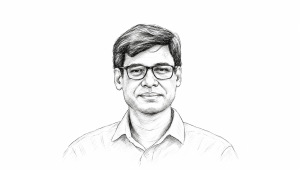
Bangladesh plans to curb large corporate borrowing from banks and shift financing towards bonds, as the central bank seeks to reduce default risks and revive the capital market, Bangladesh Bank Governor Ahsan H Mansur said.
He said the country must move away from a bank-dominated system towards a more balanced structure in which bond financing plays a leading role.
Mansur made the remarks while speaking at a seminar titled Bond Market Development in Bangladesh: Challenges and Recommendations at a hotel in Gulshan on Monday.
“Corporates will be steered away from banks. Large borrowers will not be allowed to exceed the single borrower limit,” he said.
Under existing rules, banks can lend up to 25 per cent of their capital to a single borrower or group, including 15 per cent funded and 10 per cent non-funded exposure, with relaxed limits for some sectors.

Mansur said stricter enforcement would act as a “push factor” towards bonds.
“We will talk to corporates and offer attractive facilities so that they move towards bonds,” he said, adding that issuance time and costs would be reduced.




“It is time to consider incentives to make corporates bond oriented. We are working on this,” he said.
Bangladesh Bank and the Bangladesh Securities and Exchange Commission have jointly conducted research on bond market development, with Bangladesh Institute of Bank Management Director General Md Ezazul Islam presenting recommendations, including a one-stop online bond purchase facility at the central bank.
Mansur said Bangladesh’s financial system remains skewed towards the money market, unlike global systems dominated by bonds.
“Here the money market comes first. We must bring a major change,” he said.
He said savings certificates worth Tk5–6 lakh crore could be made tradable in the secondary market.
“If we do this the size of the bond market could double overnight,” he said.

High inflation and bank lending rates of around 16 per cent remain the biggest obstacles to bond market development, he said, adding that a functional bond market could be built within five to seven years if macroeconomic stability is restored.
Bangladesh Securities and Exchange Commission Chairman Khondoker Rashed Maqsood said easy access to bank loans discourages corporates from entering the capital market.
“When corporates get loans easily from banks, they do not want to come to the capital market,” he said.
Finance Division Secretary Khairuzzaman Mozumder said treasury bonds have entered the secondary market, but tax collection challenges persist due to software limitations.