
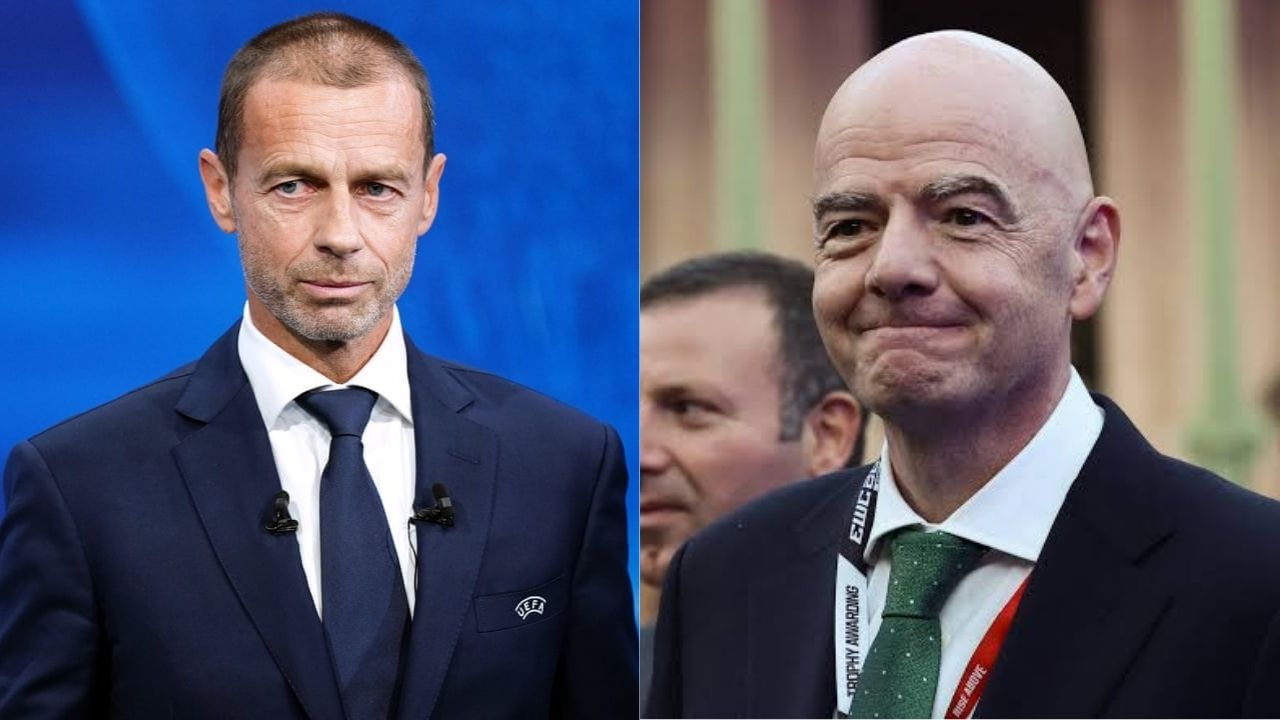



FIFA president Gianni Infantino has positioned himself as a champion of football’s smaller nations ahead of next year’s presidential election, while UEFA president Aleksander Ceferin has ruled out challenging him but expects another candidate to enter the race.
Infantino, who has led FIFA since 2016, is seeking another term that would keep him in office until 2031. His position has come under increasing pressure following his now-abandoned proposal to create a commercial entity for FIFA’s tournament rights and sell a 20 per cent stake to private investors.
UEFA, along with the Asian Football Confederation and CONCACAF, has opposed the plan. Ceferin suggested Infantino could either step aside or face a challenger when the election takes place in March.
“There are two options,” Ceferin said on The Rest Is Politics: Leading podcast. “One option is that he realises that he doesn’t have the support… And the second option is that he goes to the elections in March, but in that case, I think he will have a candidate against him.”

Ceferin also said he had no intention of running himself, arguing that his decision not to seek the FIFA presidency strengthened his position in the dispute.
There has also been discussion among UEFA, AFC and CONCACAF about a possible no-confidence vote against Infantino before the election, according to sources familiar with the process.
Ceferin said opposition to Infantino’s commercial proposal extended beyond Europe’s major football nations. He pointed to smaller associations including San Marino, Cyprus and Liechtenstein, saying they had also rejected the idea.




Infantino, meanwhile, has continued to appeal directly to smaller national associations. During a visit to the Dominican Republic, he said FIFA’s priority was to reduce the financial gap between football’s wealthiest and less-developed nations.
“We want to grow football in every one of our 211 countries in the world,” Infantino said in a FIFA video interview.
He said FIFA needed to provide investment, opportunities and resources across the game and argued that narrowing the gap between major football nations and the rest remained a central objective.
Infantino said he was pleased with his reception in the Dominican Republic, where he attended an Under-14 tournament funded through FIFA development programmes.
His presence had been criticised by CONCACAF president Victor Montagliani, who had asked him not to attend because it could overshadow the tournament.
The pressure on Infantino increased on Sunday when six Nordic FIFA members, Denmark, Finland, Iceland, Norway, Sweden and the Faroe Islands, issued a joint statement calling for his resignation.
Ceferin also rejected suggestions that UEFA was acting against the interests of smaller football nations.
“I think someone should remind him that he is a European, and that he was supported by UEFA, which he forgot,” Ceferin said.