Seventeen-year-old tea vendor Mahmud moved his cart into a side alley during the morning operation but returned as soon as the officials left. “Once or twice a year, they come for these drives. When it’s over, we return,” he said, eyes fixed on the returning stream of pedestrians.
Nearby, Tarekul Islam, a mobile parts vendor who has operated on the Banglamotor footpath for 17 years, arranged his goods back on the pavement. “If they suddenly remove us, we have nothing to eat. I closed my stall while the magistrate was here, but the moment they left, I reopened it,” he told this reporter.
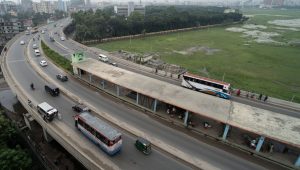
On Wednesday, the Dhaka Metropolitan Police (DMP), led by a special metropolitan magistrate and the Tejgaon deputy commissioner, carried out a clearance drive along the busy stretch from Banglamotor to Moghbazar intersection. Shop extensions, temporary stalls, motorcycles, and illegal roadside structures were removed to ensure unobstructed pedestrian movement. Judicial Magistrate Imran Ahmed said the operation aimed to reduce public inconvenience and restore walkways for commuters.

DMP Additional Commissioner (Traffic) Md Anisur Rahman noted that eateries, vehicle repair workshops, welding units, and clothing and furniture outlets had extended their operations illegally onto footpaths. “The drive began in the Ramna division and will continue in phases, eventually reaching Gulshan. There are also plans for designated holiday and night markets for hawkers,” he said.




Yet, within hours, many of the cleared areas were occupied again. Tea stalls, mobile shops, and other small businesses reappeared, shrinking the space for pedestrians. Authorities warned that future operations would involve swift, follow-up actions to prevent traders from returning immediately. Assistant Commissioner Atik Mahmud of the Ramna Traffic Zone said the campaign would be carried out over five days in phases across the city.
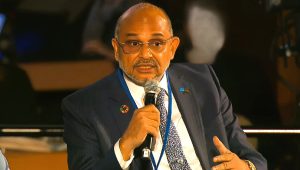
Urban planning experts warn that repeated evictions alone cannot solve Dhaka’s long-standing footpath problem. Jahangirnagar University professor Adil Mahmud Khan said, “The key is to identify and dismantle the networks behind these occupations. Many times, influential political or powerful figures are involved, which discourages any government from taking effective action.” He added that proper rehabilitation for street traders and a systematic approach are essential; otherwise, the eviction drive remains a game of cat-and-mouse, and the public sees little real change.
Dhaka’s footpath encroachment has persisted for decades. While authorities conduct drives periodically, traders often return within hours or days. Without addressing the underlying structures enabling illegal occupation and ensuring realistic rehabilitation, experts say these efforts risk becoming temporary measures with little lasting impact.