With Ramadan shopping intensifying across Bangladesh, banks prepare for one of the busiest spending periods of the year, with credit card transactions estimated to rise by 30 to 50 per cent during Ramadan and the weeks leading up to Eid, City Bank PLC Head of Cards Tauhidul Alam said.
The festive period consistently generates a major spike in card spending across apparel, dining, electronics and online retail as families make seasonal purchases and banks roll out promotional campaigns.
“Eid is consistently one of the most important spending periods of the year in Bangladesh,” Tauhidul Alam said in an interview with TIMES of Bangladesh’s Taike Mohammad Jubayer.
Cashback push during Eid shopping
City Bank has launched a nationwide Ramadan and Eid campaign focusing on spending categories that typically rise during the festival, including fashion, electronics, dining and online shopping.
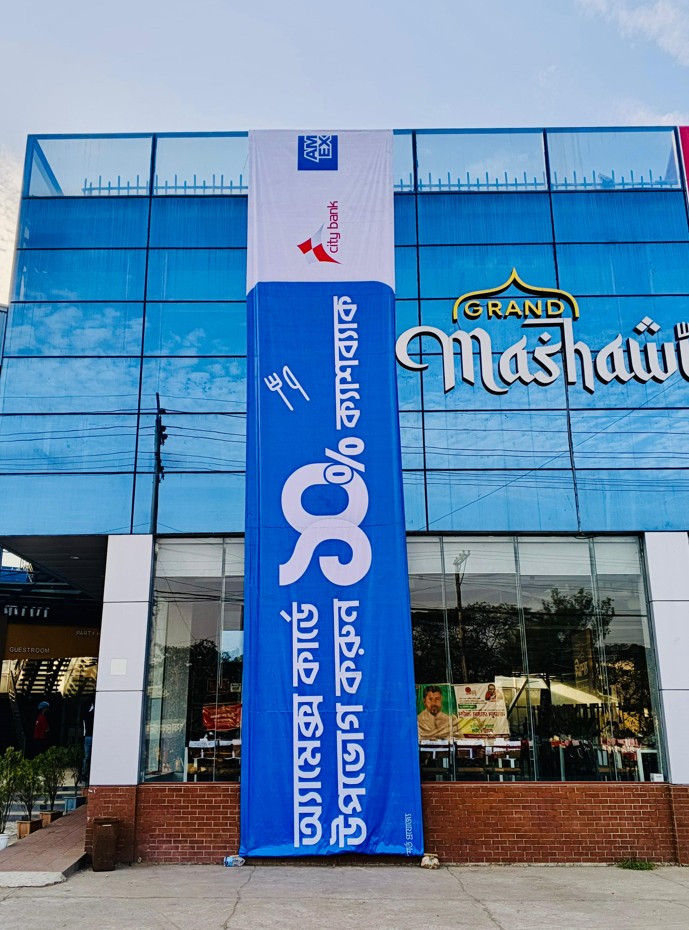
Cardmembers can enjoy up to 25 per cent cashback at selected retail partners, particularly through the bank’s premium American Express cards.
American Express Platinum Reserve cardmembers can receive up to 25 per cent cashback capped at Tk1,500 per transaction, while Platinum and Gold cardmembers can receive 10 per cent cashback capped at Tk500 per transaction on qualifying purchases.
The campaign has a nationwide footprint spanning several thousand merchant outlets across all 64 districts of Bangladesh, allowing cardmembers to enjoy these benefits not only in major cities but also in regional retail hubs.
In addition to cashback offers, City Bank is offering accelerated reward points including up to five times reward points on offline purchases.
Special dining privileges during Ramadan are also part of the campaign, including companion buffet offers at selected restaurants.
The objective is to make Eid shopping more rewarding for cardmembers while helping partner merchants benefit from increased consumer spending across the country.
Eid drives the shift from cash to cards
Eid campaigns now also reflect a broader structural shift in consumer payment behaviour. With the growth of e-commerce, digital payments and installment facilities, more customers are shifting their Eid shopping from cash to cards.
Compared with regular months, transaction volumes during Ramadan and the Eid shopping period typically increase by 30 to 50 per cent depending on the category, driven by seasonal shopping demand, large family purchases, gifting and promotional campaigns offered jointly by banks and merchants.

Over the years, banks have also observed a clear structural trend. With the expansion of e-commerce, digital payments and installment facilities, Eid campaigns are no longer only about discounts but have become an important tool for accelerating digital payment adoption and strengthening merchant partnerships.
A diversified credit card portfolio
City Bank continues to define the credit card landscape in Bangladesh through a diversified and innovation-driven portfolio.
The bank issues cards across American Express, Visa and Mastercard networks, allowing it to cater to every consumer segment — from mass-market users to ultra-high-net-worth individuals.
A cornerstone of the portfolio is City Bank’s role as the exclusive issuer and acquirer of American Express cards in Bangladesh.
This allows the bank to provide a premium experience combining global prestige with locally curated benefits. The product range extends from everyday utility cards to high-end travel and lifestyle cards featuring concierge services, global lounge access and bespoke privileges.
Strong growth in 2026
City Bank’s credit card business has recorded strong growth this year. The bank has seen an 18 per cent surge in credit card billing in 2026.
The growth is fuelled by three strategic drivers. The first is the digital shift, marked by an unprecedented rise in e-commerce and mobile-integrated payments including Google Pay.




The second driver is financial flexibility through the increasing adoption of FlexiBuy installment facilities and value-driven reward programmes that help customers manage inflation-adjusted spending.
The third driver is ecosystem expansion through a significant increase in merchant acceptance points across both brick-and-mortar retail outlets and sophisticated online platforms.
By merging premium branding with functional digital tools, City Bank has gradually transformed the credit card from a simple payment tool into a broader lifestyle enabler.
Why customers use credit cards
A credit card today offers more than just payment convenience. A credit card allows customers to make secure payments without carrying cash, track expenses digitally and enjoy a grace period of up to around 45 days before paying for purchases.
Many cards also offer reward points, cashback, travel benefits, installment options and purchase protection.
City Bank focuses on building a strong ecosystem of merchant partnerships so that cardmembers receive meaningful value from everyday spending whether it involves dining, shopping, travel or online purchases.
When used responsibly, credit cards can also help individuals build a positive credit history, which becomes important for accessing other financial products such as personal loans, auto loans and home loans.
How banks earn from credit cards
Credit card economics are often misunderstood because interest income is only one component of revenue. Banks typically earn revenue from several streams including merchant discount rate or interchange income from transactions, interest income from revolving balances, annual and service fees, installment processing fees and foreign transaction fees.
Even when customers pay their full outstanding balance every month, banks still earn interchange revenue from merchants whenever a card is used.
Promotional campaigns such as cashback or discounts are structured carefully and are usually co-funded by the bank, the merchant partner and sometimes the payment network.
Who bears promotional costs
Promotional costs are generally shared among several stakeholders. In most cases, the merchant partner bears the largest portion of the discount because the campaign drives additional sales and customer traffic.
The bank may contribute a portion of the offer to increase its attractiveness, while global payment networks sometimes support strategic campaigns.
This shared model ensures that campaigns remain economically sustainable while driving higher transaction volumes for all parties involved.
The economics of card transactions
A card transaction involves several participants including the issuing bank, the acquiring bank, the payment network and the merchant.
The merchant typically pays a merchant discount rate which is distributed among these participants. A portion goes to the issuing bank as interchange income, while the acquiring bank and the payment network receive their respective shares.
From the issuing bank’s perspective, revenue from each transaction must cover a range of costs including card issuance and servicing, fraud monitoring and security infrastructure, reward programmes, promotional campaigns as well as technology and payment network fees.
Margins on individual transactions are generally modest and the business relies on scale and transaction volume to remain sustainable.
Changing user behaviour
User behaviour in the credit card market has evolved significantly in recent years. A large portion of cardholders pay their balances in full every month, effectively using their cards as a convenient payment tool rather than a borrowing instrument.
Another growing trend is the use of installment facilities for larger purchases, particularly for electronics, travel and lifestyle expenses.
Penalties typically arise from late payments rather than deliberate borrowing behaviour. Overall, the industry observes that the majority of cardholders remain within the interest-free grace period.
Consumer awareness around responsible credit usage has also improved considerably over the past decade.
Market share across networks
Bangladesh’s credit card market is served primarily by three global payment networks — Visa, Mastercard and American Express.
According to Bangladesh Bank transaction data published in November 2025, Visa accounts for 70.6 per cent of the market, followed by Mastercard with 17.0 per cent and American Express with 12.0 per cent.
Among issuing banks, the market is led by a handful of major players including City Bank, Standard Chartered Bank, Eastern Bank and BRAC Bank.
City Bank holds a particularly strong position due to its diversified network portfolio and its exclusive American Express franchise in Bangladesh.
Innovation in card products
City Bank has introduced several industry-first innovations in the credit card space. The bank introduced the country’s first metal credit card, bringing a premium global product experience to Bangladeshi cardmembers.
It has also pioneered wearable credit card products including payment-enabled accessories and currently offers the widest range of wearable card options in the market.
City Bank was also the first bank in Bangladesh to enable Google Pay for both Visa and Mastercard credit cards, allowing customers to make secure contactless payments directly from their smartphones.
The card-first banking strategy
City Bank’s credit card strategy is built on the principle that a card is not just a payment tool but a strategic gateway to a lifelong banking relationship.
“A credit card is not just a payment tool. It is a gateway to a lifelong banking relationship,” Tauhidul Alam said.
The bank’s growth strategy is driven by three core pillars.
Strategic acquisition focuses on expanding credit access responsibly by onboarding high-potential customers who meet rigorous risk and data-driven criteria.
Lifestyle engagement deepens loyalty through a robust ecosystem of rewards, exclusive merchant partnerships including American Express benefits and a seamless digital experience via the Citytouch app.
Ecosystem integration focuses on converting cardholders into full-service banking customers.
Over time, a meaningful percentage of cardholders become depositors by opening savings or fixed deposit accounts or become borrowers by taking personal, auto or home loans as they consolidate their financial lives under one trusted financial institution.
This card-first approach significantly lowers customer acquisition costs for other banking products while increasing long-term retention and expanding the overall wallet share of customers.