
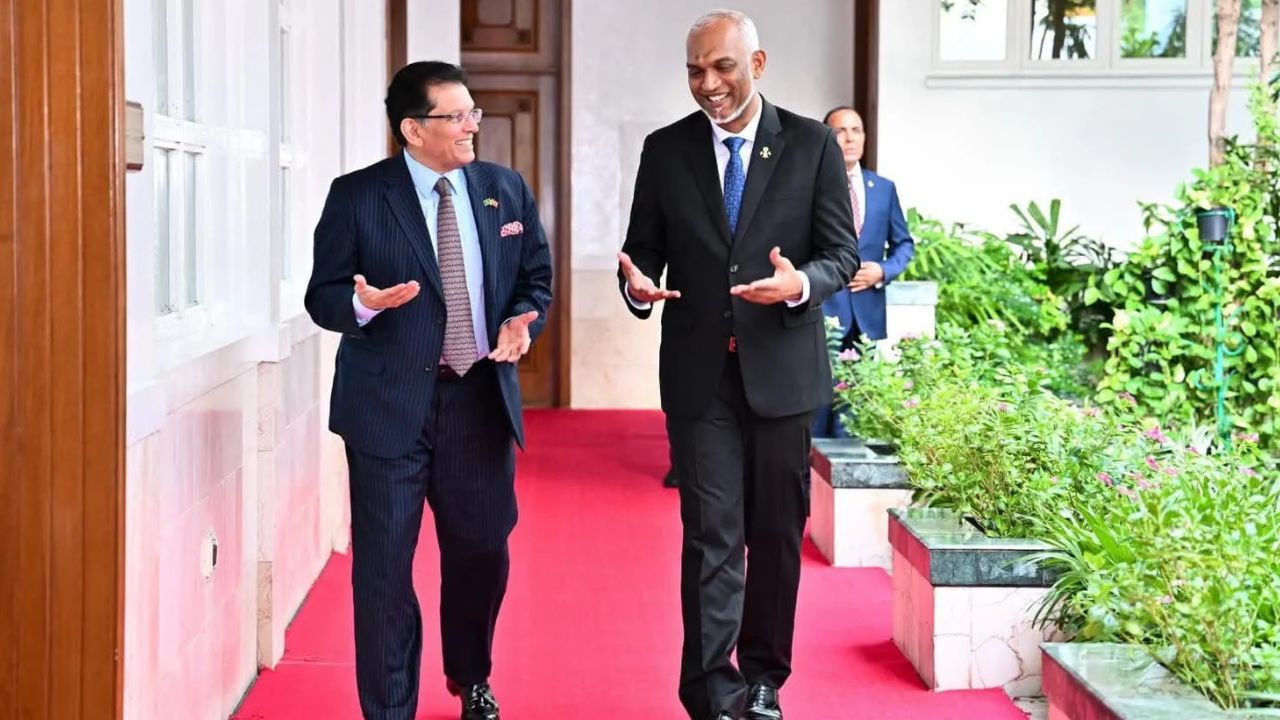




Andy Burnham is scheduled to become the United Kingdom’s next prime minister on Monday, inheriting a daunting roster of challenges as the country’s seventh leader in a single decade.
Burnham was overwhelmingly confirmed as the new Labour Party leader on Friday, during a special conference in London where he was seen shaking hands with former leader Neil Kinnock.

His ascension follows the resignation of Keir Starmer last month. Despite his rapid rise, analysts suggest the former Greater Manchester mayor faces a “whirlwind” transition, with his specific cabinet and national vision still being finalised.

Sunder Katwala, director of the British Future think tank, noted that the speed of events, just four weeks since Burnham’s by-election victory, has left little “thinking time” for the incoming premier, reports Al Jazeera.
Fiscal constraints and ‘Manchester model’
The new prime minister enters Downing Street facing a tightening fiscal vice. The UK government spent approximately £110 billion ($148bn) on debt interest in the 2025-26 period alone, and taxes are projected to reach their highest share of the economy since World War II by 2030.
Experts are divided on whether Burnham can scale his regional successes to a national level. While Gareth Dale of Brunel University points to Burnham’s fare-capped bus network in Manchester as evidence that “meaningful reforms” do not always require massive spending, others warn that bond markets may be less permissive of national fiscal manoeuvring.
Anand Menon, a prominent political analyst, cautioned that Burnham must balance his identity as a regional champion with the needs of a country that “isn’t just Manchester”.
Strained relations with Beijing, Washington
Burnham’s first day in office will be overshadowed by a diplomatic row with China following the full nationalisation of British Steel’s Scunthorpe works.
The Chinese owner, Jingye Group, has vowed legal action for compensation, while Beijing has accused London of undermining investor confidence. This complicates efforts previously made by Starmer to reset ties with China.
On the global stage, Burnham must also navigate personal chemistry with US President Donald Trump. Due to the UK’s dependence on the US for technology and defence, Menon suggests a dramatic reconfiguration of the transatlantic relationship is unlikely. However, Burnham is expected to be “more avowedly domestic” than his predecessor, potentially giving less attention to European Union relations.
Defence, welfare, and rise of right
Internal party friction is expected over reports that Burnham plans to prioritise military spending over welfare. His projected policies include allowing new North Sea oil and gas drilling, a move that would dial down “net zero” targets and maintaining a “brutal” stance on the asylum system. Critics warn these shifts could alienate Green-leaning voters and embolden the far right.
The political landscape remains volatile. While Labour entered government in 2024 with a significant lead, recent polls show the Reform UK party has surged to 24-26 per cent, placing them nearly neck-and-neck with Labour.
Menon noted that while an “anti-Reform coalition” exists among the electorate, Burnham’s long-term success will depend on his performance once the “difficulties of government set in”.
Social cohesion and Gaza
The incoming PM also faces pressure regarding social identity and foreign policy. On 18 July, protesters marched in London calling for Burnham to stand up for Palestinians.
Although Burnham has apologised for the previous government’s stance on Gaza and hinted at being less “knee-jerkly supportive” of Israel than Starmer, analysts warn that turning these words into policy will depend heavily on international events and the risk of rupturing ties with Washington.
Domestically, Sunder Katwala argued that Burnham’s government must tackle Islamophobia and anti-Semitism as universal societal issues, rather than leaving minority groups to challenge prejudice alone.


