
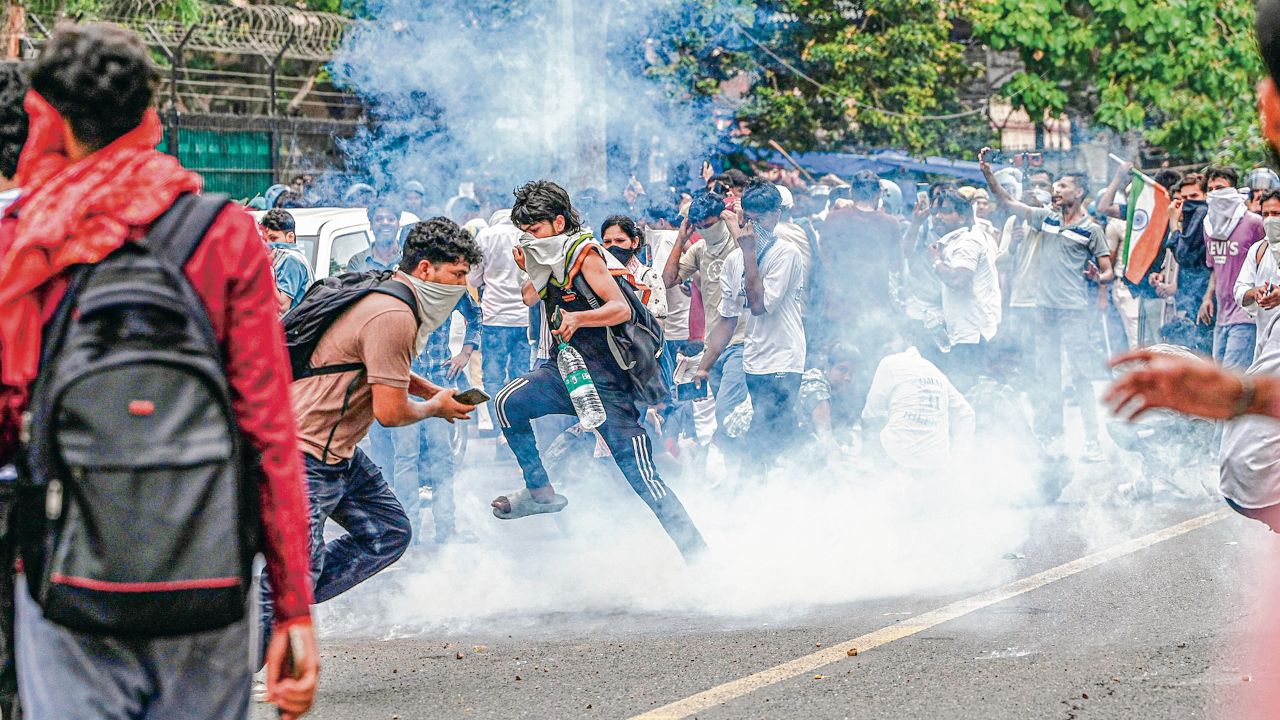



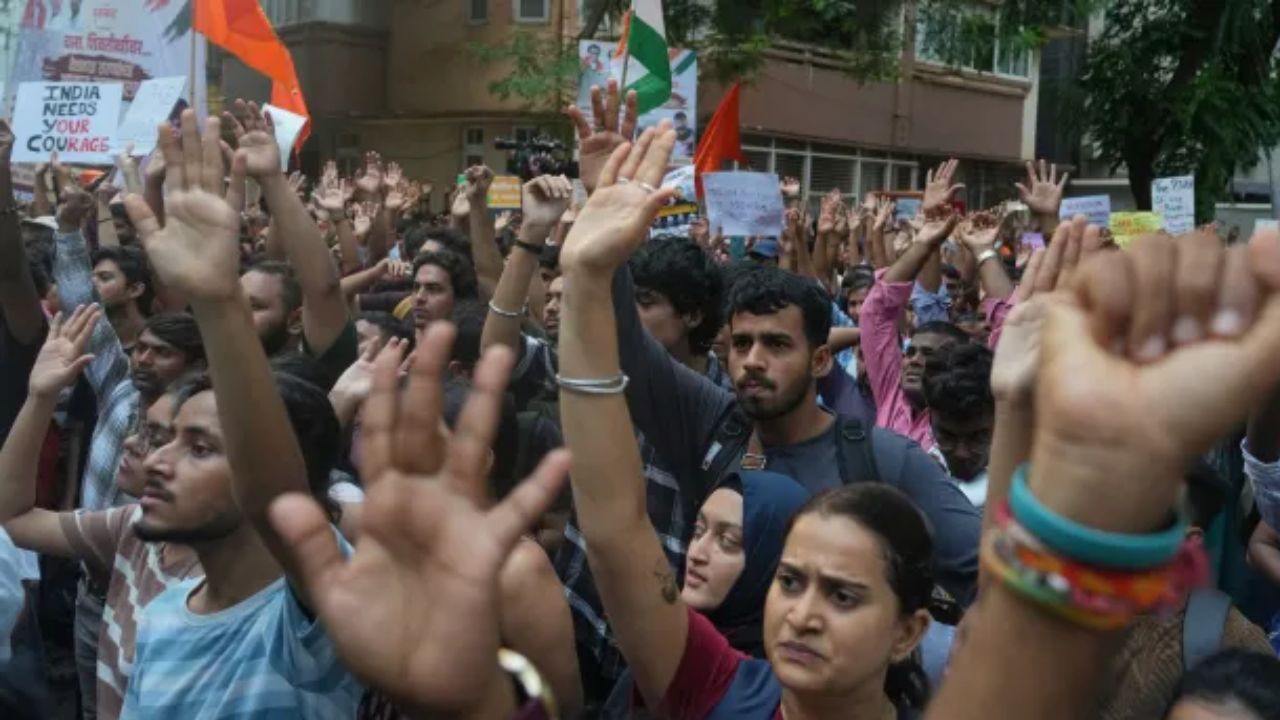
Thousands of students, parents, activists and political leaders are expected to march towards the Indian parliament on Monday after the Cockroach Janta Party (CJP) called for sweeping reforms to the country’s education system.
The protest site at Jantar Mantar in New Delhi is packed with demonstrators, while authorities have deployed several hundred police and paramilitary personnel across the area, reports BBC.

Tensions escalated on Saturday after activist and educator Sonam Wangchuk, who was observing the 21st day of a hunger strike in support of the CJP, was forcibly taken to hospital. He has continued his fast from there.

The Delhi Police said the protesters had not been granted permission to hold the march.
However, a CJP spokesperson told the BBC that the procession would go ahead despite the restrictions.
Founded by Abhijeet Dipke, the CJP began in May as an online satirical movement protesting paper leaks and alleged irregularities in public examinations.
The movement has since attracted widespread public support and has consistently demanded that Education Minister Dharmendra Pradhan accept responsibility and resign.
Pradhan has dismissed the CJP and its supporters as “the B-team of disruptive elements”.
The government of Prime Minister Narendra Modi has not held any discussions with the protesters so far.
Despite persistent rain on Monday morning, protesters gathered in large numbers at the 300-year-old Jantar Mantar observatory, chanting slogans demanding Pradhan’s resignation.
Many carried the Indian national flag, while others held plastic roses as a symbol of peace.
Security remained tight throughout the capital. Police sealed roads leading to the protest venue, erected barricades on several major streets and carried out vehicle checks, questioning motorists and passengers travelling towards the area.
Dipke, who announced his own hunger strike after Wangchuk was taken to hospital, addressed supporters from the stage while holding the Indian flag in one hand and the Constitution in the other. He described the turnout as “CJP’s first win”.
He also demanded Wangchuk’s release from hospital so he could join the march.
Wangchuk’s wife, Gitanjali Angmo, is expected to participate in the demonstration.
Wangchuk has said he would end his fast if the government took accountability “for the recent failures in the education system”; if he and the CJP leadership reached parliament and MPs assured them they would take up the issue; or if lawmakers visited him in hospital and assured him this would happen.
The movement has also organised demonstrations in other parts of India. A large protest took place in Mumbai on Sunday, with another planned there on Monday.
Similar protests have also been held in Bengaluru and Hyderabad.
Wangchuk’s hunger strike during Delhi’s intense summer heat had already attracted significant public attention before he was removed.
He had survived on only salt and water and had lost more than 9kg (1.4 stone), yet remained determined to join the march to parliament.
However, shortly before 07:30 local time (02:00 GMT) on Saturday, the situation turned chaotic when dozens of police officers surrounded Wangchuk with bedsheets before removing him from the protest stage.
The CJP’s campaign has focused on the cancellation of several key examinations following allegations of paper leaks.
In early May, authorities cancelled a major medical entrance examination after a paper leak, affecting nearly 2.28 million candidates.
The retest took place on 21 June, but according to their families, more than 20 students died by suicide afterwards.
Following Saturday’s police action, the CJP expanded its demands to include the resignation of Modi.
“Until now, we were demanding Dharmendra Pradhan’s resignation, but after this despicable act, we will now demand the resignation of Narendra Modi,” Dipke said on Saturday.


