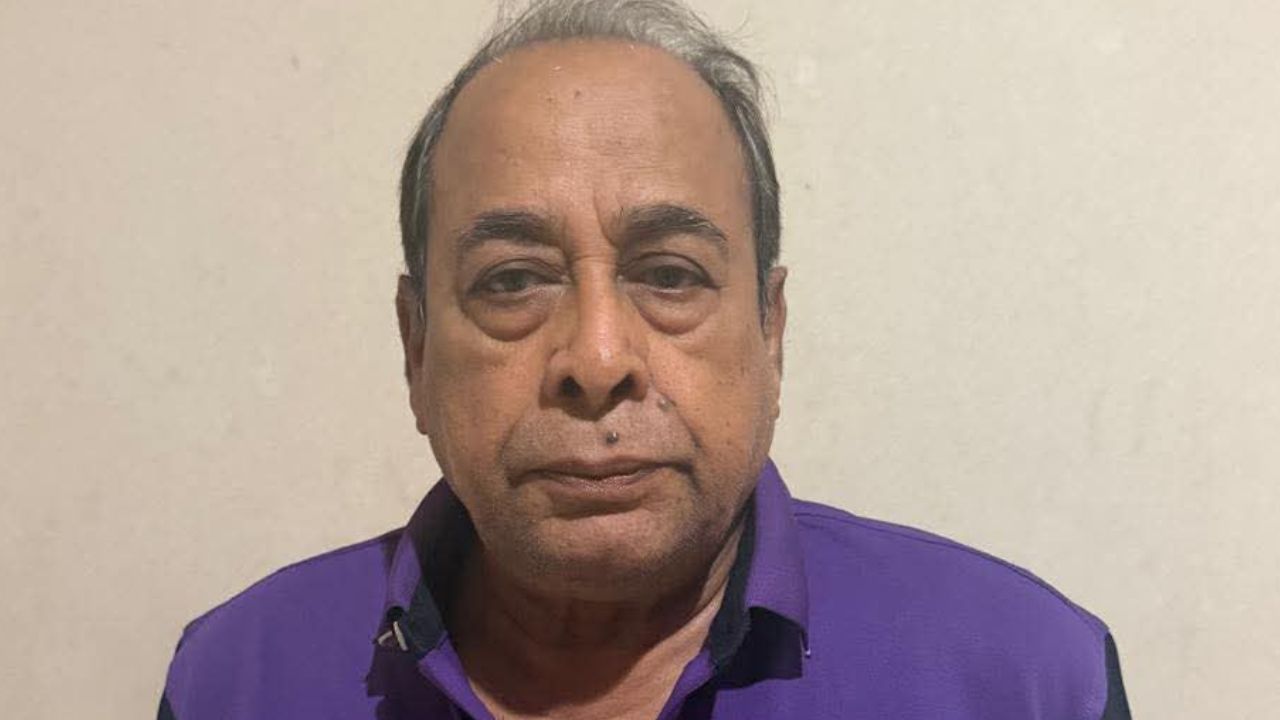

The government has ruled out reopening the investigation into the assassination of President Ziaur Rahman, confirming that fugitive army major Mozaffar Hossain, an accused in the case, will be tried under military law.
Home Minister Salahuddin Ahmed said that there was no scope for trying the same individual separately under two distinct legal frameworks, signalling that the government will not pursue a fresh civilian criminal probe into the 1981 assassination.
“His trial will be completed through a general court martial, which will consider the verdicts previously passed against those tried and executed in connection with the same case,” he explained.
The minister made these remarks during a press conference following a meeting with senior officials and members of Border Guard Bangladesh (BGB) at its Pilkhana headquarters in the capital on Monday.
Mozaffar’s arrest last week has brought the 45-year-old assassination case back into the public eye, raising questions over whether the government would reopen the investigation into Zia’s murder.

When asked about a petition filed by a lawyer in Chattogram seeking a reinvestigation, Salahuddin noted, “If any matter pertains to a civil court, it will be examined in accordance with the law.”
Addressing the possibility of fresh investigations or criminal charges against Mozaffar’s associates, he added, “The Military Act applies to members of the armed forces. As he was a fugitive accused in this case, the army will take the necessary measures according to its regulations. Should any legal issue subsequently fall under the jurisdiction of a civil court, it will be considered in line with the law.”
Ziaur Rahman, the then president of Bangladesh, was assassinated by a group of army personnel at the Chattogram Circuit House on 30 May 1981.
In the aftermath, 13 people were sentenced to death and five others received varying prison terms following a trial under military law on charges of mutiny.




A separate criminal case filed with the police was investigated by the Criminal Investigation Department (CID), which submitted a final report in 2001 citing a lack of witnesses and evidence. The court subsequently disposed of the case.
Although the BNP remained in power for five years following that report, it took no action to reopen the investigation or initiate a fresh trial.
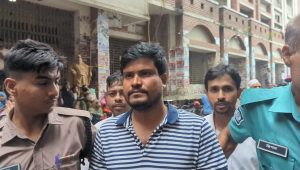
The issue resurfaced on 16 July when the Detective Branch of police announced Mozaffar’s arrest, saying he was involved in Zia’s assassination, before handing him over to the army the same day.
Within four days of his arrest, media reports citing various sources indicated that Mozaffar was present at the scene of the murder and was later tasked with burying Zia’s body. Following the burial on a hill in Rangunia, Mozaffar fled the country after sustaining injuries from police gunfire, remaining absent from media reports for nearly 45 years.
The home minister revealed that Mozaffar had been living in a neighbouring country under an assumed identity.
Border security
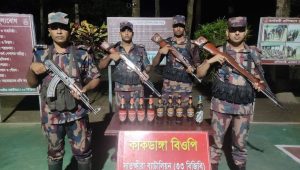
At the same event, the minister also touched on border security, confirming that new landmine detection gear had been handed over to the Border Guard Bangladesh (BGB).
He described the Myanmar border as particularly volatile, explaining that spillover from clashes between the country’s military and various rebel groups, including the Arakan Army, RSO, and ARSA, was creating serious security headaches for Bangladesh.
To help curb drug trafficking, cross-border gunfire, and general security risks, the government is looking into a proposal to put up 109 kilometres of barbed-wire fencing.
Addressing reports of India pushing people across the border, Salahuddin stressed that no illegal entries had been allowed, thanks to joint efforts by the BGB and local residents.
He mentioned that the issue would be taken up with the Indian government, adding that Bangladesh is open to reviewing official lists of citizens provided through diplomatic channels, conducting national verification, and bringing back verified citizens legally. but would not tolerate unauthorised entry through any other means.
To tighten security moving forward, the government is rolling out tech-based surveillance, boosting manpower, providing modern weapons, and putting the BGB’s dog squad to work against drug smugglers.
The ministry is also teaming up with other departments to upgrade BGB facilities, expand hospital capacity, and bring on more doctors and nurses.